
You are using an out of date browser. It may not display this or other websites correctly.
You should upgrade or use an alternative browser.
You should upgrade or use an alternative browser.
Squeeky Springs
- Thread starter masonj
- Start date

PeteVS
Well-known member
I remember being at a gas station with my uncle once when he was getting a lube job on his '51 Chebby. The grease monkey used a hammer and cold chisel to open up a gap between the rear spring leaves and shot some chassis grease in the opening. You could also disassemble the springs, clean them up and install the plastic liner material they sell at Speedway, etc.

Old Henry
Well-known member
Here is an idea that has been known to work:
Lift up the vehicle at the frame until the wheels are off the ground to "unspring" the springs as much as possible.
Using good heavy bearing grease, smear a heavy layer of grease on all surfaces of the springs from U-bolts to shackles, particularly on the tops/bottoms of the leaves at the end of the leaf above/below it.
Using duct tape, wrap the spring from the U-bolts to the shackles making a sleeve that will temporarily contain the grease and allow it to work its way between the leaves of the spring without attracting dirt and other road grime.
Drive the car for a couple weeks worth of good driving prior to removing the tape and thoroughly cleaning the spring(s) of excess grease. If you do not drive your car much, it may take longer to work the grease between the leaves of the spring(s).
This was demonstrated on the Do-It-Yourself Network
Last edited:
Old Henry
Well-known member
You could also disassemble the springs, clean them up and install the plastic liner material they sell at Speedway, etc.
That's probably the only real permanent fix. That's what I did on my front springs. My back springs on my 47 Super Deluxe have spring covers and 3 grease fittings to keep them lubricated.
Here are liners of various sizes at Mac's: http://macsautoparts.com/search.asp?sb=0&ls=y&camid=F30&year=0&make=&ss=spring+liner&x=16&y=6
tudorbilll
Junior Member
I had to dissasemble the rear of my 35 to stop the Squeeky spring use heavy grease.I was suprised how much whear there was.
PeteVS
Well-known member
Also, someone posted recently that painting spring leaves and not lubricating them makes the spring rate much higher (stiffer) because of increased friction between the leaves. I've been looking and posting for some time trying to find John Deere "Slip Plate" dry lubricant. I don't think anyone has stepped forward for a source. (I live in suburban New Jersey where the only John Deere presence is lawn mowers.)

Wltr_Mitty
Junior Member
You can buy Slip Plate at your local NAPA store. Stock #BK 33203. I use it when rebuilding spring packs and it works great. It goes on like an aerosol paint.
Clean the leafs individually and paint them with a good rust preventative paint. I first give them a coat of rust converter for good measure. Give the paint time to dry, then coat all of the bottom surfaces (except the main spring) with the Slip Plate and let it dry before reassembling.
Clean the leafs individually and paint them with a good rust preventative paint. I first give them a coat of rust converter for good measure. Give the paint time to dry, then coat all of the bottom surfaces (except the main spring) with the Slip Plate and let it dry before reassembling.

Steve Staysko
Senior Member
Order it direct from www.slipplate.com Slip plate is great stuff you can use it between your leaf springs of your antique cars and then you'll say now what do I do with the rest of the 3/4's of a quart. Well I've used it on the fifth wheel no more messy grease. I've painted it on my tractors snow plow blade and the snow doesn't stick to the blade. I even paint it in the shut and the auger area of my snow-blower and it stops the heavy wet snow from sticking to the metal discharge chute and throwing stage. Every spring I clean the bottom of my mower deck and paint it with slip plate and it keeps the mower deck free of clinging wet grass.


Mr 42
Senior Member
Remove the springs disasemble them remove all rust, and smoth out the ends Grease them and drive on for 50 more years.
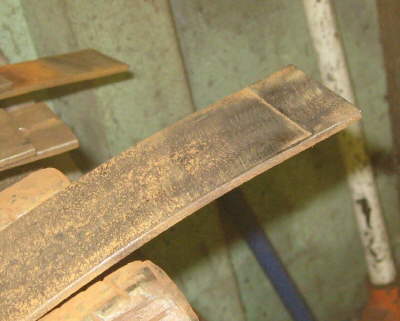
Clean off the wear marks, assemble them with some grease and they work like new. This is a dirty job, but well worth the effort.
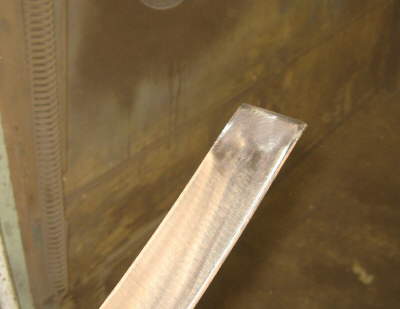
This is the underside of the spring, round of the ends a bit so it will slide better.
Clean off the wear marks, assemble them with some grease and they work like new. This is a dirty job, but well worth the effort.
This is the underside of the spring, round of the ends a bit so it will slide better.
Last edited:
jerry grayson
Well-known member
Mr42 has the answer. All the other lube and spray fixes are only a band aid. In 1936 Ford changed the design on springs to include a grease fitting and groves in each leaf. In your case the later pickups did not have a grease system. The springs did not squeek when new, so you need to return them to as new as possible. This means that the springs will have to be disassembled and the wear grooves ground down. Each leaf will wear a cross ways groove in the next bottom leaf over time. This is what is making the noise. See Mr42's pictures.
Remove the springs disasemble them remove all rust, and smoth out the ends Grease them and drive on for 50 more years.
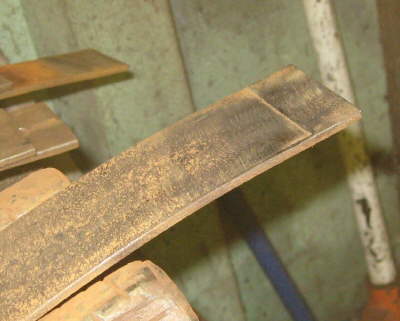
Clean off the wear marks, assemble them with some grease and they work like new. This is a dirty job, but well worth the effort.
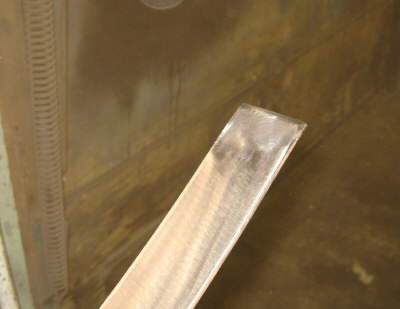
This is the underside of the spring, round of the ends a bit so it will slide better.
This


Clem Clement
Well-known member
I have removed the spring clamps, opened the leaves with 2 chiesels, washed between the leaves with carb cleaner and sprayed the leaves with Slip Plate.
I've wrapped the springs with duct tape. I'm wondering if that is a dumb move as it may trap water inside?
clem
I've wrapped the springs with duct tape. I'm wondering if that is a dumb move as it may trap water inside?
clem
Clem Clement
Well-known member
Now I'm thinking about trying to grind the depressionon the worn spring with a dremel. Then sliding a piece of tin can under the spring end. Whatayou thunk?
Clem
Clem
richard crow
Well-known member
back in the day we would mix old motor oil with gasolene 50/50 with the wheels hanging we sprayed between the leaves. it was also comman in this part of the country in the fall to spray the whole bottom of the car with oil to prevent rust. there was very little rubber bushings in those days you would get locked up today if you did it. it was also common pratice to spray the roads with oil to keep the dust down in the summer.
Clem Clement
Well-known member
For years I used to soak the underneath of my moderns. nothing rusts. My son had a pickup in Michigan for 5 years with no sign of rust. I would wipe the brake hoses wilthgas to remove the oil. I used only used oil for this job.
Clem
Clem