
Homemade Spring Spreader

Admiral

Well-known member
Hey guys,

Maybe this is old news but here’s an idea for a cheap and relatively easy way to make a spring spreader. All it takes is some 1-inch black pipe (24-inches long), a couple end caps, a bit of ½-by-20 running stock and some steel blocks. Here's what my concoction of iron looks like:
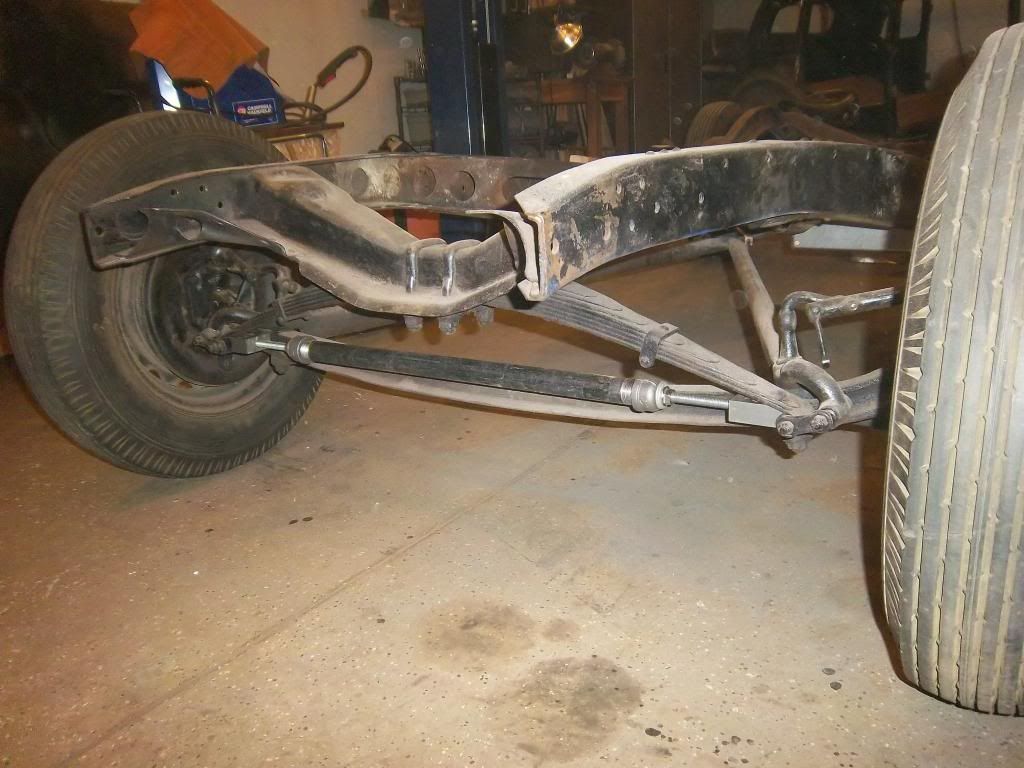
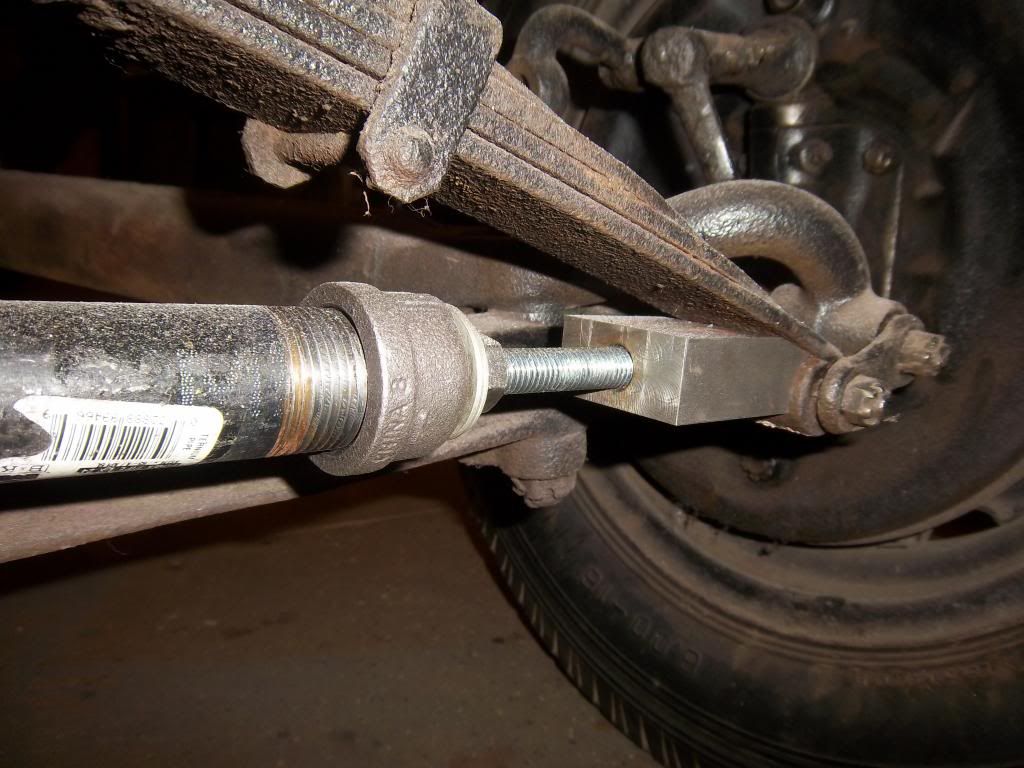
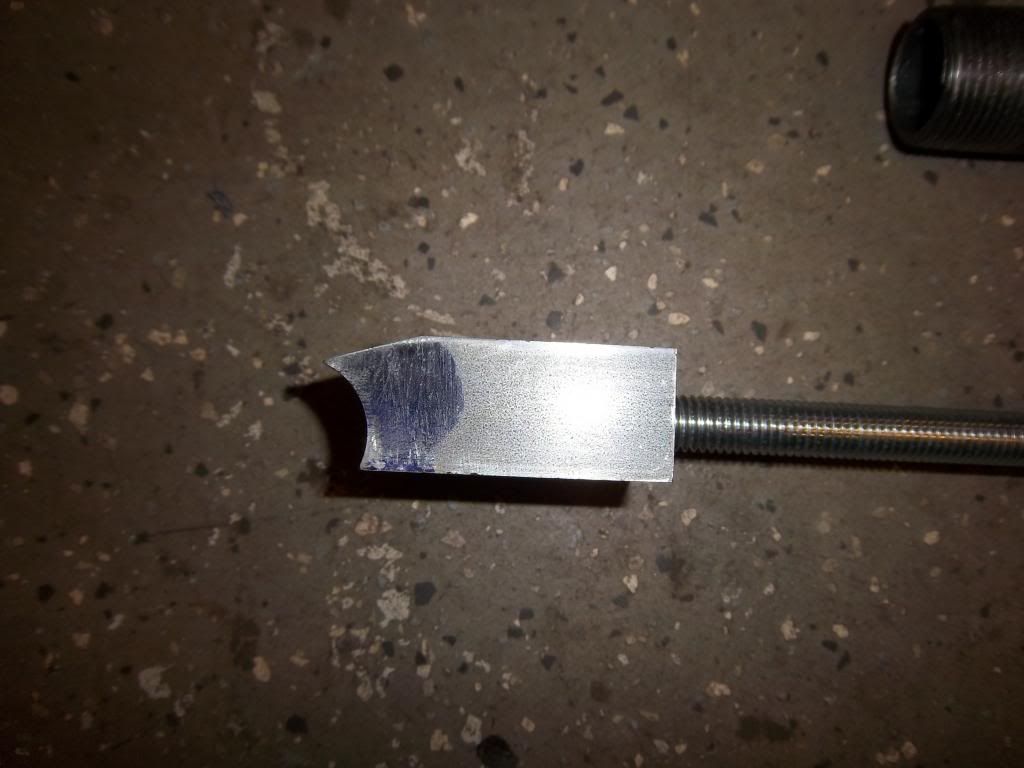
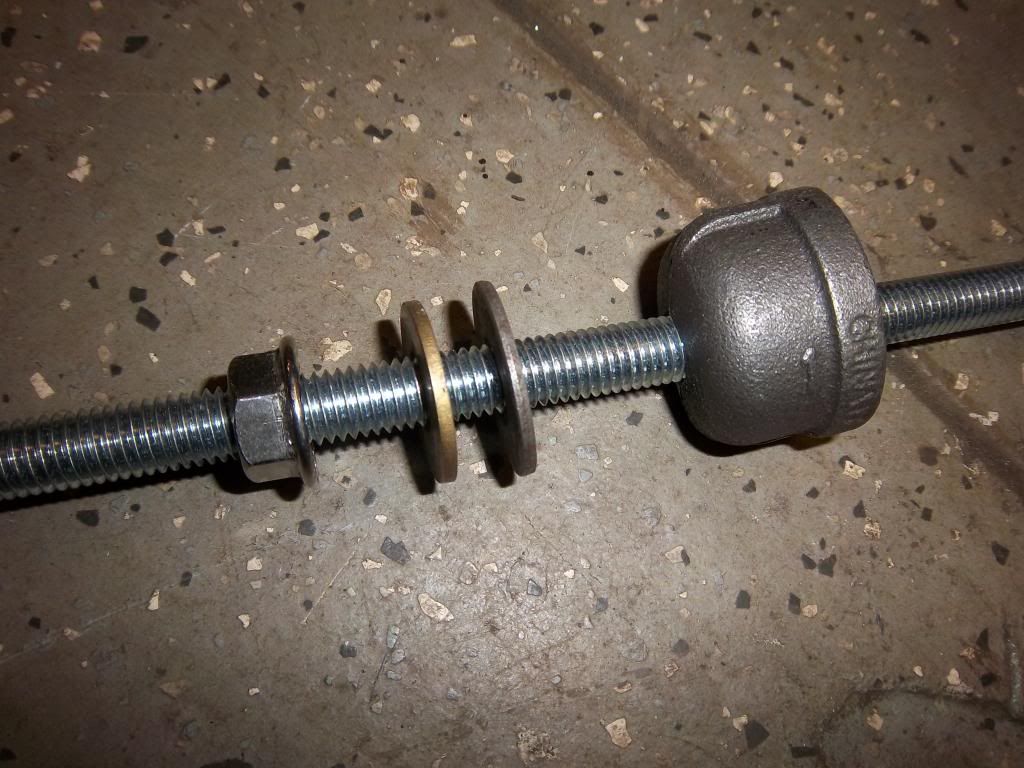
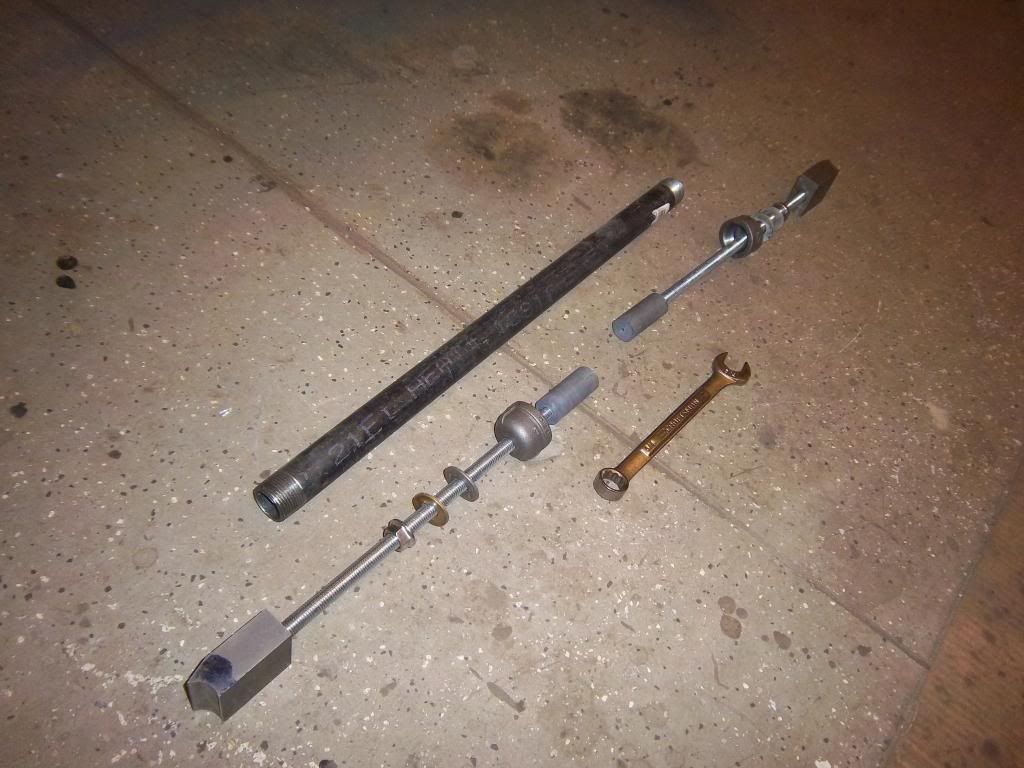


Just tighten the nut down on either side and the spreader gets wider. Loosen them to make it shorter. The hardest part is machining the end blocks that match up with the eyes of the spring, but you could just bring them to a point and fit them above the curved portion of the eye if you wanted.

The gray PVC cylinders on the ends of the running stock are to keep them from flopping around. They're machined to fit neatly inside the black pipe. I've also made some safety blocks that bolt around the spring so when I remove the U-bolts and/or the center bolt there are no unwanted surprises... and by that I mean exploding spring leaves!
 
Well, that is a novel design. I would be VERY concerned about the cast Chinese pipe caps. I just spread a 14 leaf wagon spring and I can imagine those cast iron caps giving up with the amount of force that would be put on them. How about a machined steel cap instead of a cast one?
 
Admiral;
I don't see any reason why it should not work.
Can you please post pictures of the safety Blocks.

THANKS
 
I've made and used a spreader using 1" all thread, and have been concerned about the possibility of it bending. I wouldn't want to be within a city block of a spreader using 1/2" all thread, sorry. The overextension of that length of thread stock is just too close to disaster for me.
 
How about a longer pipe so less all-thread hanging out in the breeze? Also, would 1" all thread slip inside a 1" pipe? Or too tight? Might be well supported if it fit.... just a thought.
 
Last edited:
Admiral, the basic concept looks good but that 1/2" all thread is not going to take the load. I made one using 3/4" water pipe and 3/4" all thread. The 3/4" all thread bowed under the load of a rear '35 sedan spring. 1" pipe and all thread would have been better but not even sure it would have withstude the load. I would also worry about those threaded pipe caps as someone else mentioned. I know you are proud of what you have made but be very careful using that one. Spreading those springs can be very dangerous....please take caution!!
 
just take the spring apart and use all thread to put it back together that is the way I did mine.Don't even like to use spring compressor on coil springs either these things can beat you to death
 
JM 35 and others are absolutely correct!! The 1/2" rod will fold and become a source for safety concerns. My "spreader" uses 1 inch diameter threads and is not as rigid as I might like to see.
 
I like the design, which is simple and effective. The engineering is in my opinion adequate as are the materials, with the exception of the Allthread rod.

The pipe appears to be of reasonable capacity and adequate to the task.

The end caps appear to be pressure designated and therefore would be made of Ductile or Nodular Iron which should be sufficient for the task, especially as a nut and washer are used to lock the thread against the cap and reinforce the connection regarding applied force. (To efficiently use this device without the screw action binding, the end cap should not be threaded and should be used as a Bolster.)

The use of a steel nut and a rolled thread on the threaded rod is encouraging. This arrangment while (in my opinion) is underated, would nevertheless probably prove effective due to the short length of the active or working length of the threaded rod.

The steel engaging blocks appear more than adequate to the task. In my opinion a locking nut should be applied to this connection.

My only reservation on this device is the sizing of the Allthread. As others have commented a 1" rod would alleviate many concerns. It's twice the diameter but many times more stronger in compression.

To return to the Endcap; should this cap not be of a rated capacity it could be readily replaced with a Scheduled Fitting. Or a large 1" nut welded to the pipe ends.
 
All-thread ® is not designed to take any loads from the side. I see spreaders like this and wonder just when it breaks, how bad the subsequent injury will be.
yeah, yeah, I know... "it worked for me"... those stories we all hear, all the time. How many do we NOT hear about the thing bending / breaking / someone getting hurt?
 
Thanks for the feedback, guys. I haven't put any real pressure on the assembly yet so I don't know how it'll perform but when I do get ready to pull the springs I'll use CAUTION. If I see ANY flexing, which there probably will be, I'll go back and get some larger running stock and machine up some tougher end caps. Stay tuned...
 
Here's one made using a super big turnbuckle. Works great and won't flex.
k2o2ue.jpg
 

Attachments

  • IMG_3328 (Small).jpg
    IMG_3328 (Small).jpg
    39.8 KB · Views: 57
  • IMG_3325 (Small).jpg
    IMG_3325 (Small).jpg
    44.6 KB · Views: 72
Last edited:
Most all thread rod is grade 3 or less, made to use with pipe hangers for the plumbing and fire protection industry.
Mcmaster carr and other suppliers offer grade 8 all thread rod.
I agree 1/2" dia. all thread rod is too weak for this application.

Bruce

Works good
Lasts long time
 
Most all thread rod is grade 3 or less, made to use with pipe hangers for the plumbing and fire protection industry.
Mcmaster carr and other suppliers offer grade 8 all thread rod.
I agree 1/2" dia. all thread rod is too weak for this application.

Bruce

Works good
Lasts long time
Grade #8 is too hard (brittle) for the application desired here. Threaded rod is simply a poor choice for this type of work / stress.
 
Here are photos of a home-made spring-spreader, that I had submitted to the "V8 TIMES", many years ago.
It was inexpensive, easy to make, easy to use, but it only worked on the front.
I think that the second time that I used it, the All-Thread did bend a little bit.
MIKE :)
CLICK ON PHOTOS TO ENLARGE - Twice
 

Attachments

  • spread1.jpg
    spread1.jpg
    439.2 KB · Views: 160
  • spread2.jpg
    spread2.jpg
    423.6 KB · Views: 130
  • spread3.jpg
    spread3.jpg
    438.9 KB · Views: 142
  • spread4.jpg
    spread4.jpg
    461.8 KB · Views: 127
  • spread5.jpg
    spread5.jpg
    486.7 KB · Views: 119
  • spread6.jpg
    spread6.jpg
    481.1 KB · Views: 133
  • spread7.jpg
    spread7.jpg
    46.6 KB · Views: 107
  • spread8.jpg
    spread8.jpg
    190 KB · Views: 78
Last edited:
Kube has some posts on these homemade spreaders and I agree some are not safe. Maybe Kube will post a picture of his spreader.
John
 
Back
Top