Dual-point distributors

Logan

Well-known member
I know mallory dual-point distributors use to be poplular in the model a's. My question is, why would their be a second set of points? Do both sets fire at the same time? or is the second delayed? Other than centrifical advance im wondering what the bonus may be in these distributors?
 
Well, in a nutshell, the theory is that the longer the points can stay closed, the longer the condenser has to be able to build up a charge before it fires again. This is called saturation. The mindset is that the more fuel you can pack into a cylinder and still burn it cleanly, the more power you will make.

Now back to coil saturation. You could accomplish this by leaving the points closed and waiting until the very last possible mili-second and then use a steep ramp on the cam lobe to throw open the points however then you would need to have a very stiff spring on the points and a steep exit ramp on that dist. cam lobe to get the points closed again. The downside to fast-opening lobe ramps is quick wear on points blocks (the thing that rides on the lobe) due the profile shape and the stiff spring, ...and the possibility of uncontrollable point bounce. If the points were to bounce and spark, it will cause a phantom spark and also discharge the condensor's energy being built up for the next cylinder, ...thus resulting in a weak spark for that next cylinder.

With the advent of dual points, this allows the dist. cam profile to gently ramp up and back down with lower tension on the points which allows the points to live longer. By strategically placing the points around the dist. cam, one set of points can be gradually opening just as the points on the opposite side are gradually closing. So this is clear, the coil will never spark if one set of points stays closed all the time because the condensor will always be grounded. Thus, just because the first set has opened, the second set has remained closed allowing the condensor to keep charging. As the first set of points is on its way closed, the second set begins to open, which causes the coil to spark but by the time this has happened, the first set of points is now closed while the second set is still opening. Because the first set is now closed, this allows the condensor to begin recharging again.

Now, where technology has improved is with the advent of electronic ignition. Most electronic ignition systems for use on Model A/B's today are hall-effect triggered meaning a magnet passes by and triggers the spark, This is very quick and precise. This also allows for exact timing (or firing) of each combustion chamber. This results in a smoother balance and more controlled ignition. I sometimes use the example of where 4 ponies hitched together can pull a bigger load than what 2 big horses hitched together with 2 ponies can. The difference is the 2 big horses are always trying to pull harder than the smaller ponies can because they are unequally yoked. With electronic triggering of the spark, the ability to all all four cylinders spark at exactly 22° BTDC is much better than maybe having #1 fire at 22°, having #2 fire at 18°, having #4 fire at 24°, and #3 fire at 19°, --all because of dist. cam wear and points block wear.


I hope this has been clear enough and not too boring!!

.
 
Last edited:
Excellent description. But the lobe changes in relation to the amount of cylinders,view
a 1cyl. lobe, it's very rounded as compared to a Model A with the flats between it's
less rounded lobes. Know look at an 8cyl., very pointy, no mater who built the dist.,
single point or dual point. The spring pressure on the points is in direct relation to
the RPM potential of the given engine, which can be viewed on a dist. machine. The
electronic trigger dist. have greater accuracy and higher RPM potential, to a point.

Example, the last Cushman scooter engine I built would only idle, due to after market
points, NOS points solved the problem of a weak spring on the points.
 
Brent is close enough for government work.
He may be using coil saturation time and condensor charging
terms slightly off.
The condensor's job is to tune the inductive reactance of the coil primary
to resonance. At this point the circuit impedence becomes high and reduces sparking at the points.
Other things happen also but that is the jist of it.
 
Hey Logan, how's things in FW? I have been running a mallory dual point in my 29 roadster with the only other modification being a Brumfield head. The points seem to last forever!! ( Points, cap, rotor still available from Summitt Racing) IMHO the biggest benefit to running this distributor is the centrifigal spark advance. If I could stumble into another one for the right price, I would get one for my sedan.

Later, Del
 
If you are looking for more coil saturation in your stock model A dist I do make some new cams with 10 more degrees dwell and they do make a difference from the feed back I have received.
I personally like the centrifigal spark advance my self.
 
Dual points give the coil more dwell. This might be useful on a high revving V8, but the Model A with only 4 cylinders already has more dwell than the V8 and the Model A engine also runs at a relatively low RPM. I just don't see the need for dual points.
 
Mallory probably just saw a marketing opportunity. Dual points for V-8's were all the rage in the '50's so the four banger guys would have to have theirs, too! Kind of like guys throwing money away buying premium gas for low compression engines!
 
In a nut shell. Not turning enough engine [dist] rpm to worry about not saturating the coil or point bounce with a high rpm standard dwell under short time conditions. She ain't no racing engine.
skip.

Your Commit below-->Brent I meant to suggest that even a stock Model 'A' engine turning 2600/2800 rpm balls out or a or full bore racing Model 'A' engine turning 5000 [?] rpm balls to the wall will not turn enough rpms to warrant the need for a dual point.

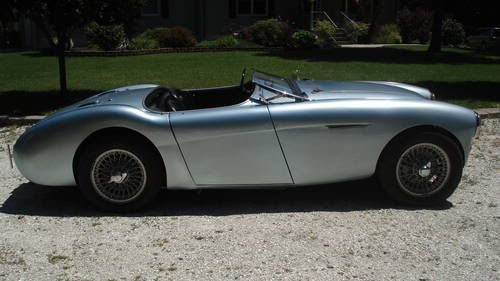
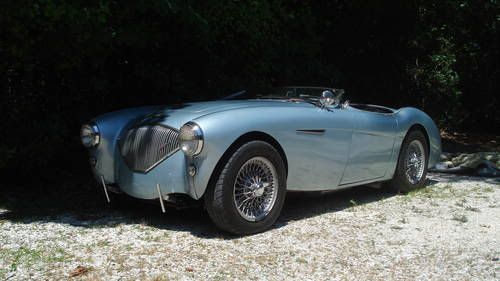
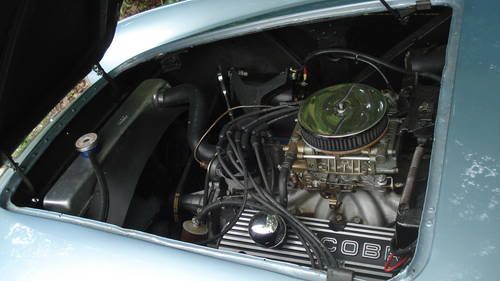
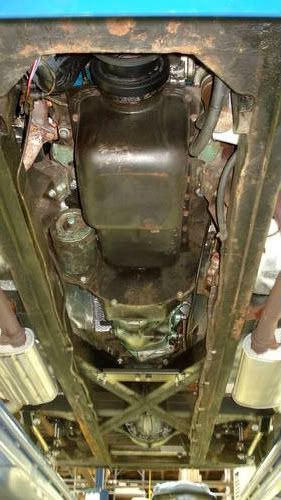
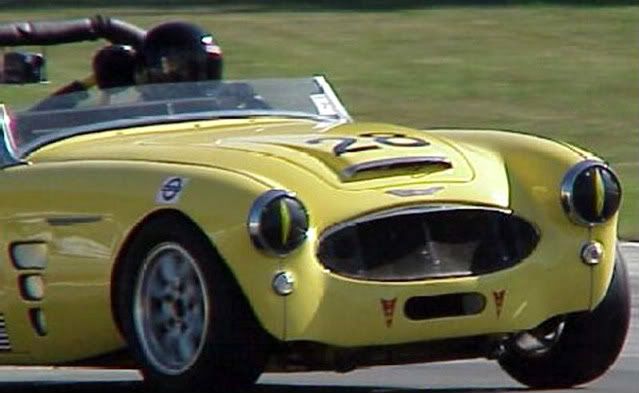
Now my Ford 289 in my 1954 Austin-Healey 100-4 with shift points at 7200 rpm to compete in SCCA A-Sports Race may have benefited with it's dual point.

Here she is as a street car B.F. [Before Racing]. Fourtintune Garages Inc. Still going strong under new ownership. Call Tommy up for a A-H $ if you want to add something neat to your stable.

skip.

1954-Austin-Healey-100-with-Ford-289-V8-RS.jpg


1954-Austin-Healey-100-with-Ford-289-V8-LF.jpg


1954-Austin-Healey-100-with-Ford-289-V8-Eng.jpg


1954-Austin-Healey-100-with-Ford-289-V8-B.jpg


Love the Nurf Bars and the 82 spoke wire wheels. Each hub, each nipple, and each spoke was fitted and trued up over several weeks by the skipster.

This 'yeller one is Mr. Bill's and it too is fitted with a Ford 289. It's a pretty famous car.

jeff.jpg


Interestingly enough Mr. Bill's dad was a Stars and Stripe reporter in the WWll Navy on board a fleet boat. Wrote a story about the skipper who was called to battle stations in the buff and stayed that way till it was 'stand down' when some crewman, who could then leave his station, handed the skipper a towel. Later his dad became the Los Angle's Times auto editor, then head of public relations for Studebaker and finally followed Mr. STP Andy Granatelli from DesPlains, Illinois to Florida until retirement to Mexico and lived on the Pacific coast. Mr. Bill's dad passed away a few years ago. His son Mr. Bill was my high school buddy and it was great to go over to his house...he had seven sisters!
 
Last edited:
.... She ain't no racing engine. skip.

:confused: ??? :o


Oh geez, --please excuse me, ...I did not realize my Model A engines were not a "racing engine". :rolleyes:
.
 

Attachments

  • 1-59.jpg
    1-59.jpg
    64.7 KB · Views: 59
  • DCP10991r.jpg
    DCP10991r.jpg
    119.3 KB · Views: 50
  • DCP10992r.jpg
    DCP10992r.jpg
    104.2 KB · Views: 49
  • Dsc00087r.jpg
    Dsc00087r.jpg
    109.1 KB · Views: 55
  • DSC00120.jpg
    DSC00120.jpg
    151.4 KB · Views: 50
  • IMG_3833.jpg
    IMG_3833.jpg
    138 KB · Views: 60
  • IMG_3832.jpg
    IMG_3832.jpg
    87.3 KB · Views: 57
  • PICT0141_JPG.jpg
    PICT0141_JPG.jpg
    106.4 KB · Views: 45
  • WCH07_5.jpg
    WCH07_5.jpg
    58.1 KB · Views: 46
  • PICT0181_JPG.jpg
    PICT0181_JPG.jpg
    77 KB · Views: 44
  • speedster78M.jpg
    speedster78M.jpg
    132.6 KB · Views: 49
  • 1-67.jpg
    1-67.jpg
    54.8 KB · Views: 49
  • DSC01940.JPG
    DSC01940.JPG
    153.6 KB · Views: 66
Before the V8 was introduced the little Ford & Chevy fours were being modified to go fast. They were popular right up to the war years and some would beat the pants off the stock V8s. It took the V8 a while to catch up.
 
Did these pre-war four bangers use dual point distributors? I think most probably used magneto ignition, which was the hot setup then, given coil technology of the time. I think mags had single points. With only 4 cylinders to fire and max RPM of, what, 5,000? dual points were probably overkill.
 
Did these pre-war four bangers use dual point distributors? I think most probably used magneto ignition, which was the hot setup then, given coil technology of the time. I think mags had single points. With only 4 cylinders to fire and max RPM of, what, 5,000? dual points were probably overkill.

The story was that the Ford distributor would have problems with spring bounce over 3,000 RPM's. so one fix was double springs. The more common magnetoe's were the Wico vertical and various side drives. Wico's had at most 12 degrees advance or lag angle and were designed for industrial or agriculture use, so the static advance had to be set to where the engine just would start without kicking back. This was with the impulse. Some would get the engine cranking and then turn the ignition on. I don't think the early use of dual point's would be overkill because of the quality of the other components. The older coils would fade as they got hot.

By the way, the engine in the photo I posted early has an original model "B" distributor with "stock" points and condenser and probably hit 4,000 Rpm's minimum in low and second with out a miss on its way to an 82 MPH run at the Antique Nationals this year.
 
Last edited:
In a nut shell. Not turning enough engine [dist] rpm to worry about not saturating the coil or point bounce with a high rpm shortened dwell. She ain't no racing engine.
skip.


If someone was putting dual point, centifical advance dist. in their car, most likely they got something else under the hood also. If someones running a bone stock car, they are most likely a purist, and would not be cought dead with a red and chrome distributor sticking out like a sore thumb. They probably have a hot engine, and are looking for a little more out of the dist.
 
I know mallory dual-point distributors use to be poplular in the model a's. My question is, why would their be a second set of points? Do both sets fire at the same time? or is the second delayed? Other than centrifical advance im wondering what the bonus may be in these distributors?
Just for the record I will post what I read in an early SOSS journal. Here is the dyno test said to have been made by Ron Kelley. these tests were made with a stock rebuilt model a engine. At 1000 rpm the stock engine produced 77.30 ft lbs torque and 14.70 hp. With the addition of the Mallory dual point dist the figures jumped to 115.00 ft lbs torque and 21.90 hp. At 1500 rpm stock 60.50 ft lbs torque and 17.30 hp. With the mallory it jumped to 97.50 ft lbs torque and 27.80 hp . At 17.50 rpm the stock engine produced 57.00 ft lbs torque and 19.00 hp. With the Mallory it jumped to 92.10 ft lbs torque and hp 30.70. At 2000 rpm the stock engine produced 64.30 ft lbs torque and 24.50 hp. With the mallory it jumped to 91.80 ft lbs torque and 35.00 hp. After 2000 rpms the power increase was very small. This sort of contradicts everything that I thought I knew about dual points distributors.

I installed a mallory dual point dist in our stock, at the time coupe in 94. I could notice a big improvement at low speed and it cured the clutch chatter that had been a result of adding float A motor mounts. These distributors are just about trouble free. I also have one on the speedster and the only thing I have had to replace on either of these distributors in over 15 years is the condenser. This could have probably been avoided if I had mounted the condenser on the coil bracket so it would have been farther away from the heat. I also think that the addition of a Pertronix flamethrower 40.000 volt coil would put the iceing on the cake.

I do like the Mallory distributors, in their place and they are better for the girls so that they can't mess up with the operation of the spark. As for my part I prefer the original distributor as I can damn well fix them and if the mallory ever gave problems it would be an expensive throw away. I also like to adjust the spark myself. I run the original dist in our roadster with a Pertronix coil and .035 air gap between the rotor tip and the contacts in the cap body and I think it out performs electronic and is easy to fix if a problem arises.
 
"Oh geez, --please excuse me, ...I did not realize my Model A engines were not a "racing engine". :rolleyes:"

Brent's club probably has some of the best vintage circle track cars in the country.

Either single or dual points can be made to work equally well. Spending money on a race type ignition for a relatively stock engine is not very good economics.
On a modified engine single points can be made to turn 10K rpm reliably..This has been demonstrated by race ignition manufacturers such as RotoFaze.
I ran a RotoFaze distributor on my last B engine...It made the exact same hp on the dyno with points or with an electronic trigger..This was in conjunction with a Jacobs computer ignition..This engine was turned 6200 twice a lap.
Probably the main advantage of an aftermarket distributor is the centrifugal advance feature that can be tailored to the engine and use.

http://s183.photobucket.com/albums/x62/wcvr/?action=view&current=13204358.mp4

.
 
If someone was putting dual point, centifical advance dist. in their car, most likely they got something else under the hood also. If someones running a bone stock car, they are most likely a purist, and would not be cought dead with a red and chrome distributor sticking out like a sore thumb. They probably have a hot engine, and are looking for a little more out of the dist.

Ummm, not necessarily. Often times speed equipment was purchased by a kid to use on his "hot rod" which was nothing more than an engine with stock internals and some equipment on the outside to make it look like it really goes fast. (sometimes this practice is even found with older adults today!! :rolleyes:)

If the youngster painted his stock cylinder head red, and changed the exhaust to a straight pipe, he could usually fool some of his friends. The two pix below show pictures of what appears to be a HOT banger-powered 1940s era 'hot rod' loaded with speed equipment. Truth of the matter is, the internals of that engine are totally stock, --and worn out at that! :p It doesn't run any better (faster) than what the two Snyder hi-compression headed, Bill Stipe cammed, "stock appearing" Model A engines that we had in restored Model A's that were entered in fine-point judging at French Lick this past summer! :D
 

Attachments

  • IMG_3312.jpg
    IMG_3312.jpg
    104.6 KB · Views: 54
  • IMG_3311.jpg
    IMG_3311.jpg
    83.5 KB · Views: 64
Without reading what everyone has written,, I'm sure the subject has been more than well covered.. The points are set appr 10 degrees apart from one another to allow for more dwell and more coil saturation while allowing for normal point gap and point cam ramp dimensions.. Does the everyday/average Model A need a dual-point ?? Nope !! Are dual-points helpful[ or were they helpful back in the day] on a high performance engine?? Yep !!
 
Without reading what everyone has written,, I'm sure the subject has been more than well covered.. The points are set appr 10 degrees apart from one another to allow for more dwell and more coil saturation while allowing for normal point gap and point cam ramp dimensions.. Does the everyday/average Model A need a dual-point ?? Nope !! Are dual-points helpful[ or were they helpful back in the day] on a high performance engine?? Yep !!
The Ron Kelley dyno tests showed a 7 to 12 horsepower increase in low to mid range rpm on an original engine and only a 2.2 increase at 2500 rpm. I would think that low and mid range would be more important to the average model A guy. I prefer the original distributor because I like to control the spark myself and I have been working on model A distributors since I was a teenager. I have a couple of the modern mallory dual point distributors. They do improve low and mid range power but tuning is different and they always seem either too retarded or TOO advanced. In other words if you tune out the timing knock they seem too retarded and throttle responce suffers.Degrees of advance can be adjusted. The procedure seemed Too complicated to me, so rather than run the risk of really assing up, I just run them the way that they came out of the box.

They would probabably help eliminate points bounce at higher RPM but acording to the dyno tests they wouldn't ad any horsepower.
 
Back
Top