Well, in a nutshell, the theory is that the longer the points can stay closed, the longer the condenser has to be able to build up a charge before it fires again. This is called saturation. The mindset is that the more fuel you can pack into a cylinder and still burn it cleanly, the more power you will make.
Now back to coil saturation. You could accomplish this by leaving the points closed and waiting until the very last possible mili-second and then use a steep ramp on the cam lobe to throw open the points however then you would need to have a very stiff spring on the points and a steep exit ramp on that dist. cam lobe to get the points closed again. The downside to fast-opening lobe ramps is quick wear on points blocks (the thing that rides on the lobe) due the profile shape and the stiff spring, ...and the possibility of uncontrollable point bounce. If the points were to bounce and spark, it will cause a phantom spark and also discharge the condensor's energy being built up for the next cylinder, ...thus resulting in a weak spark for that next cylinder.
With the advent of dual points, this allows the dist. cam profile to gently ramp up and back down with lower tension on the points which allows the points to live longer. By strategically placing the points around the dist. cam, one set of points can be gradually opening just as the points on the opposite side are gradually closing. So this is clear, the coil will never spark if one set of points stays closed all the time because the condensor will always be grounded. Thus, just because the first set has opened, the second set has remained closed allowing the condensor to keep charging. As the first set of points is on its way closed, the second set begins to open, which causes the coil to spark but by the time this has happened, the first set of points is now closed while the second set is still opening. Because the first set is now closed, this allows the condensor to begin recharging again.
Now, where technology has improved is with the advent of electronic ignition. Most electronic ignition systems for use on Model A/B's today are hall-effect triggered meaning a magnet passes by and triggers the spark, This is very quick and precise. This also allows for exact timing (or firing) of each combustion chamber. This results in a smoother balance and more controlled ignition. I sometimes use the example of where 4 ponies hitched together can pull a bigger load than what 2 big horses hitched together with 2 ponies can. The difference is the 2 big horses are always trying to pull harder than the smaller ponies can because they are unequally yoked. With electronic triggering of the spark, the ability to all all four cylinders spark at exactly 22° BTDC is much better than maybe having #1 fire at 22°, having #2 fire at 18°, having #4 fire at 24°, and #3 fire at 19°, --all because of dist. cam wear and points block wear.
I hope this has been clear enough and not too boring!!
.


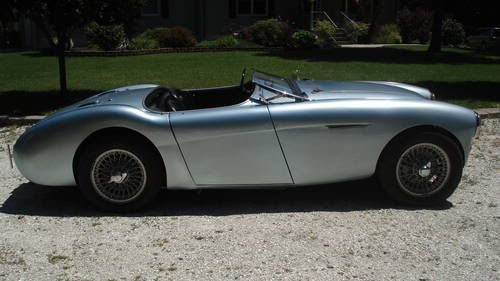
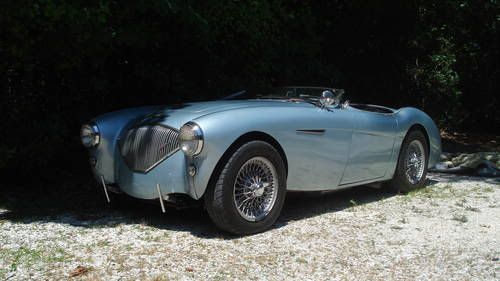
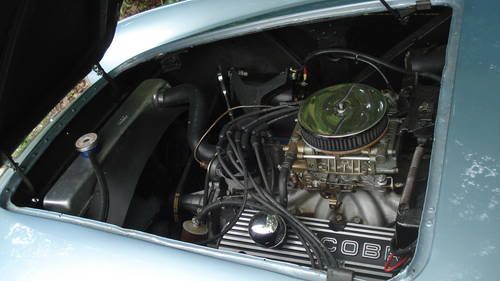
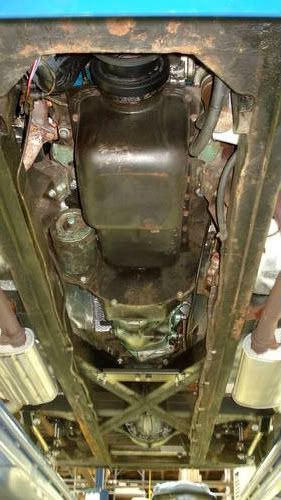
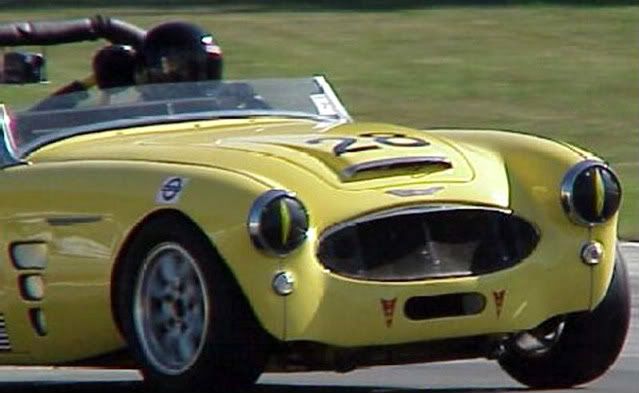


 It doesn't run any better (faster) than what the two Snyder hi-compression headed, Bill Stipe cammed, "stock appearing" Model A engines that we had in restored Model A's that were entered in fine-point judging at French Lick this past summer!


