Jim Brierley
Well-known member
Tom, Let us know what you did and how it turned out, thanks.


Tom, Let us know what you did and how it turned out, thanks.

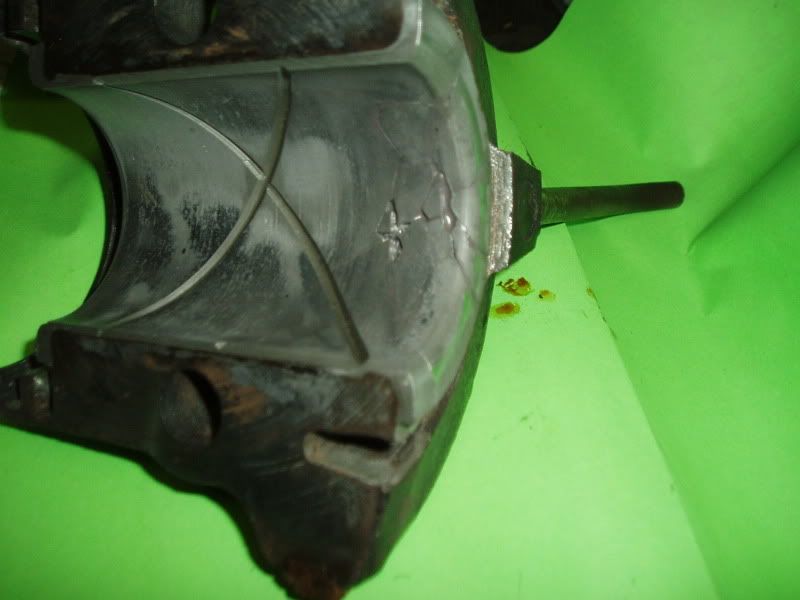
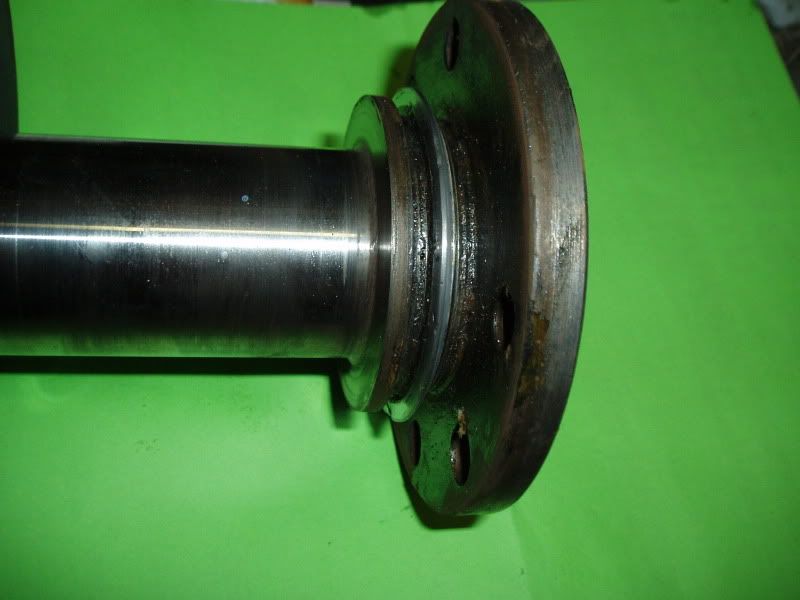

Tom, is there any reason you couldn't fill the voids in the babbit with ol JB? Just wondering, I would be tempted to get it smooth and encapsulate the babbit.

I've been working on an engine that this type of repair was done on.It looks like a good solder job and probably held out for some time though not a repair that you would want on a car that did any long distance touring.I guess out on the farm back in the forties you did what you could with what was available.I do find these back woods repairs ,patch up jobs interesting in that they just show how durable the old Model A was for the farmers who had them.Well, knowing in advance someone will try to publicly discredit me for making a contribution on this forum, I will nevertheless comment because I think this is interesting. I have seen this exact type of thrust face, and worse, damage "soldered" with salvaged babbitt material. The donor babbitt is melted out of old rods and mains. It is melted into a simple sheet metal trough and ends up stick-, or rod-shaped, and after thorough cleaning and preparation, is joined to the broken or voided babbitt with a huge soldering iron. If done with extreme prep and control, it "wets" well or "homogenizes" with the old babbitt and bonds to the old tinning, if there is any left. Then it is hand dressed and scraped to fit. I have seen this done on "T" and A main caps to repair broken babbitt and to build up thrust faces. I do not know how durable this "fix" is, just thought it may be interesting to you. Yes, Dearies, I know many reasons this could be a poor repair, I'm just reporting that I've seen it done.

I would second that motion!IMO, I would give Bill Barlow in Bend Oregon a call, without a doubt. If you provide him with accurate dimensions, of distance between the thrust faces, and the throw diameters, he can provide you with any of the caps you need, and they will fit perfectly. The caps that I received from Bill for an engine, were just like a piece of fine jewlery, as I was told by another FordBarner they would be. Shims come with the caps, at the right thickness, and marked for relative positioning. Usually no scraping required.
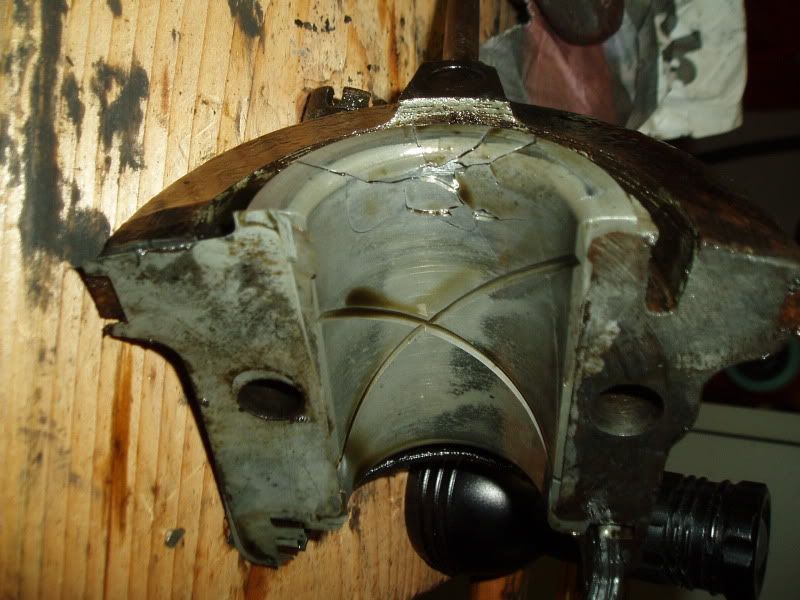

I'm doing a light overhaul on Mark's engine. I took it apart today and found all the babbit to be in great shape, except for this front of the rear main bearing cap. The engine has Silvolite STD. pistons with a little extra slop in the ring grooves, so it'll get new pistons and rings. The valves are all OK, so they won't be ground (or removed, as of now).
Since this is the front of the rear main, and has very little thrust applied to it, I told Mark if it was my engine, since the rest of the babbit is so good, I'd JB weld in the pieces and drive it until it needs a new babbit job.
The cap looks like it was well tinned, but the cap must have been too cool when the babbit was poured, so it didn't stick.
Also notice the oil pockets where the block meets the cap. The pocket on the driver's side ends about 5/8" from the rear and the pocket on the right side ends just 1 3/8" from the front.
The valve clearance ranges from .016 to .019", so we are thinking of installing adjustable lifters. There was some mention of some adjustables having too small of a base diameter. Is that still true today, or are both the single and double nut adjustables OK to use? Thanks
