Spring Spreader

Dangerous? Yes! People have been severely injured and even killed using one. I have one that that was made prior to WW II. It is well-made of heavy 1.75" thick-wall steel and it still develops a slight bend under a 12 spring load. Prior to its' use I attach some u-bolts around it and the axle just in case something nasty should occur. This is one place due concern for safety is a must.

Tom
 

Attachments

  • IMG_0983.JPG
    IMG_0983.JPG
    135 KB · Views: 105
  • IMG_0984.JPG
    IMG_0984.JPG
    130.8 KB · Views: 86
I use the weight of the car to get the load off the shackles. I get the car up on jack stands and come up on the bottom of the spring ends with floor jacks. At some point there will be no load on the shackles. I then can remove the links.
 
Norm, I purchased the exact one last week! It worked very well on installing the rear spring on my '32 pickup. It is a very simple design and very well made. Yes it is the most dangerous job that I have run into thus far.
 
I take the spring apart, and install the main leaf then the others. a friend has a tool that switches leafs together it works good
 
During the several years I have been contributing to the forums on the Ford Barn, the topic about "Spring Spreaders" for the Early Ford V8 front and rear springs has come up many times...
I have contributed many times with both text and pix of the spreader I made, and have used for many years, without a problem.. My spreader was built from memory of a spreader I used at a Ford Dealership that I worked at during the late 1940's, early '50's.. The design of the spreader I use will not work on Model A's or springs with reversed 'eyes'...
From my prospective, far to much hype is attached to the possible safety, or lack thereof, of a spring spreader. In reality, very little pressure is required to spread an Early Ford V8 spring to the point that the shackles can be removed, Of course the main trick is to jack the car up a little bit to relieve the weight off of the axle/spring..
A very common practice in the past was to use the standard Ford axle jack under the spring eye and a bumper jack to raise/low the body/chassis.. Here again the object is to take the load off of the spring shackle so one side can be removed...
When you review that attached pix of my spreader, you should note that the shape of the spreaders end, captures the entire spring eye, in lieu of being a "spade" shape that only engages the spring eye at one point adjacent to the eye and leaf....
 

Attachments

  • spr.sprdr.1.jpg
    spr.sprdr.1.jpg
    55.4 KB · Views: 147
  • spr.sprdr.2.jpg
    spr.sprdr.2.jpg
    61 KB · Views: 141
  • spr.sprdr.5.jpg
    spr.sprdr.5.jpg
    46.6 KB · Views: 142
Personally and I'm sure there is a few different technics.

I jack the car up till the wheels hang a couple inches. Put jackstands under the frame. The shim some boards under the wheels so they are just being supported.

Reason for hanging the wheels then shimming them to were they are supported, is the spring has all the tension off of it that is possible with it on the car. Also you have some up/down play in the the axle when reinstalling.

Spring spreader is best and safest way, in my opinion, for removal. I have one like Tom has. Install with the spreader or a good sized bottle jack works well too. With the bottle jack do one side at a time.

Probably not the best way but it works for me and feels safe.
 
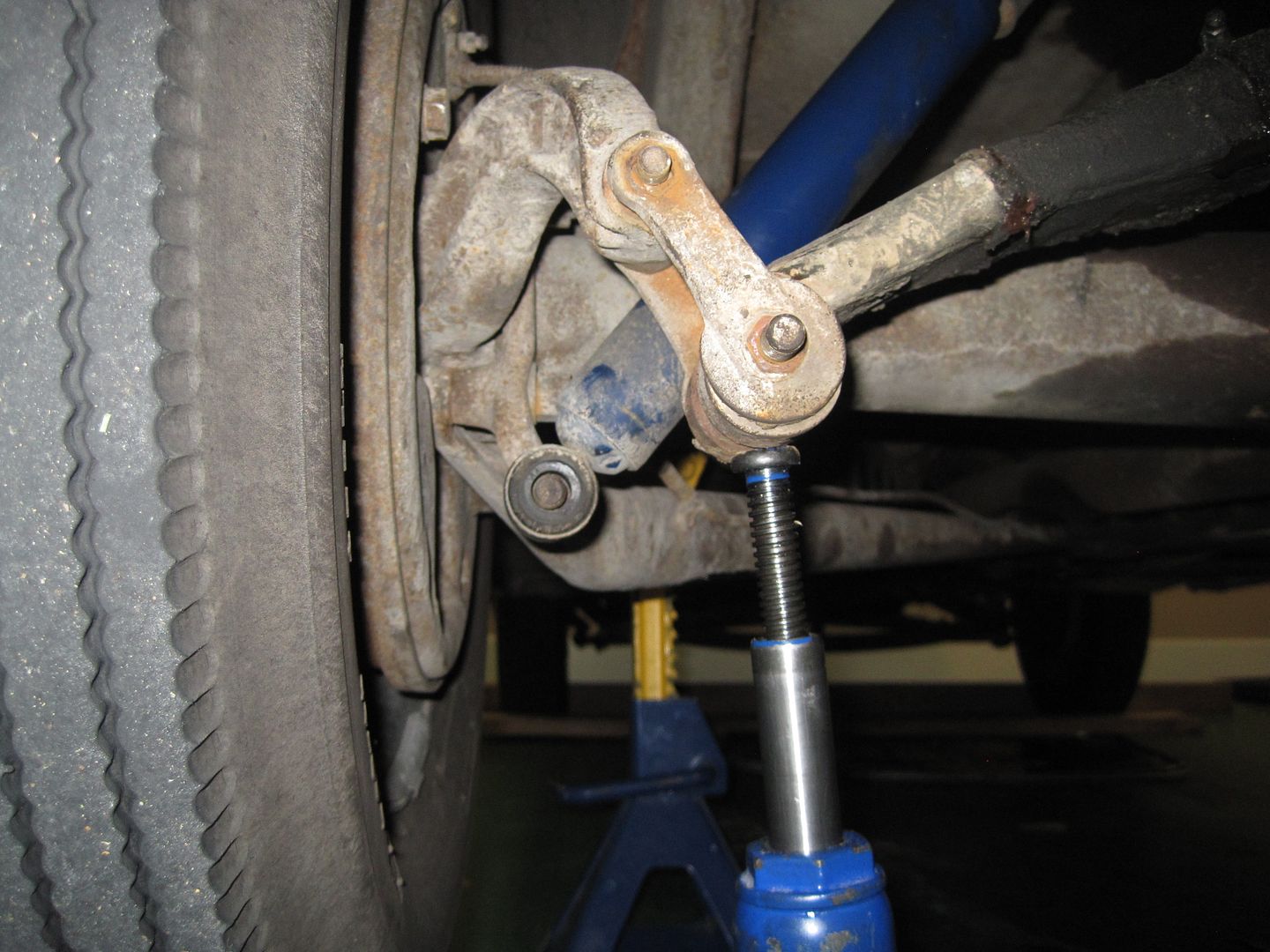
I've replaced many a spring without any spreader as several have described so far. Here's my description with pictures:

After resting the frame on jack stands so the wheels are off the ground I leave the axle hanging on the shock absorber and lift the end of the spring with a bottle jack just enough to take the pressure off of the shackle bolts. Nuts can be removed before or after placing the bottle jack.

IMG_4009.jpg


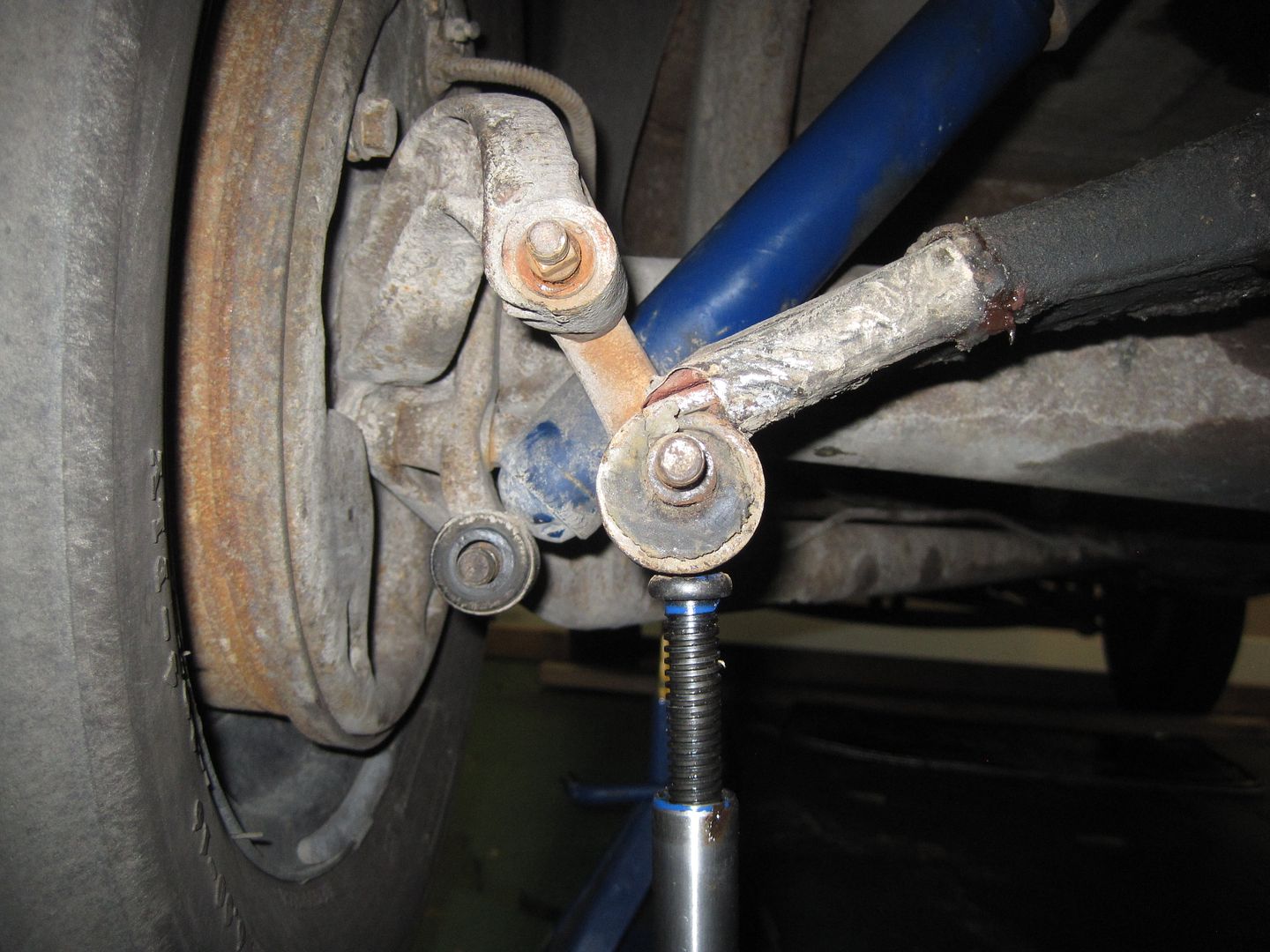
Then remove the shackle from one side.

IMG_4010.jpg


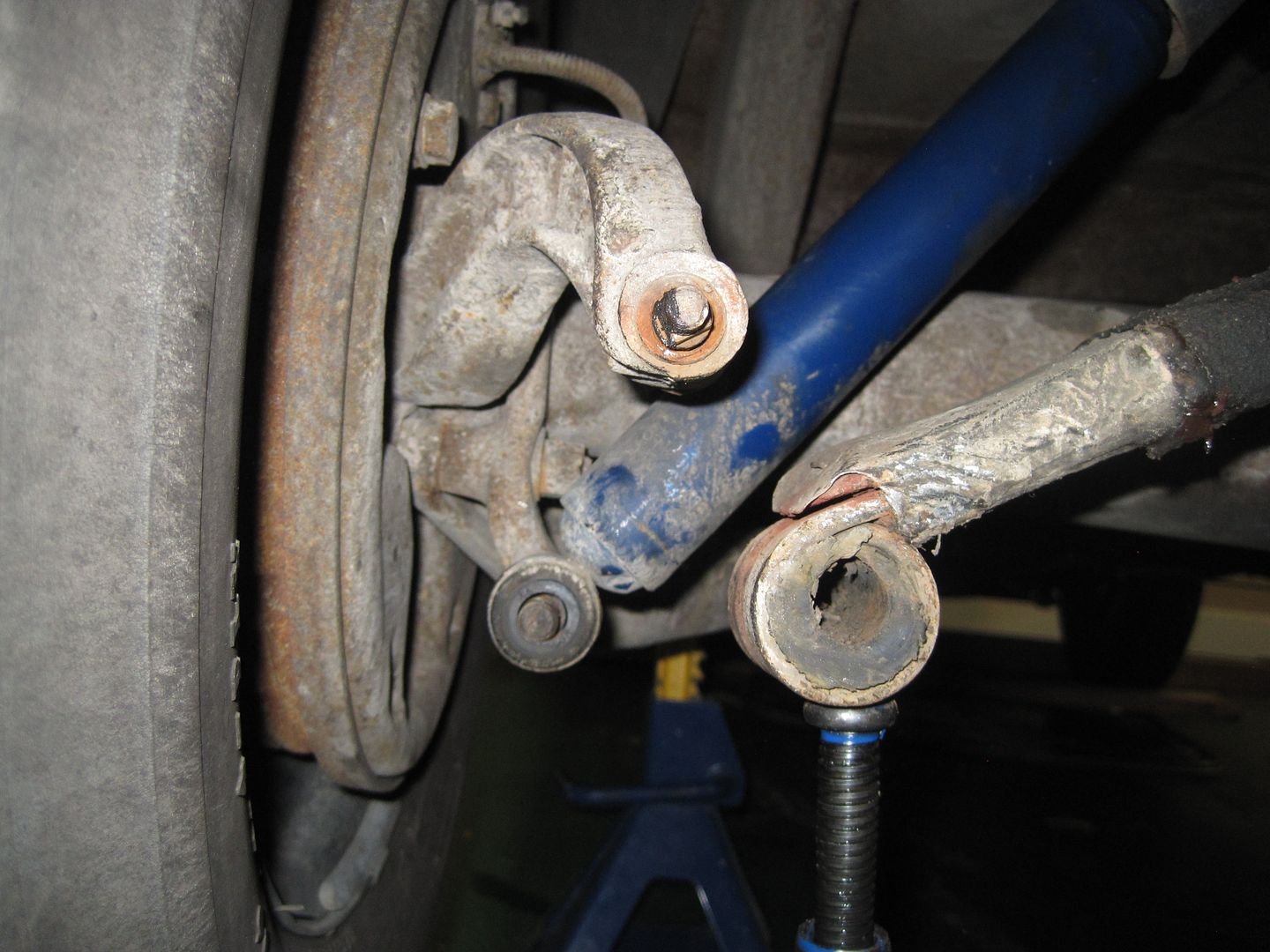
Then the other side. (Spring end did not budge a bit - held by the bottle jack.)

IMG_4011.jpg


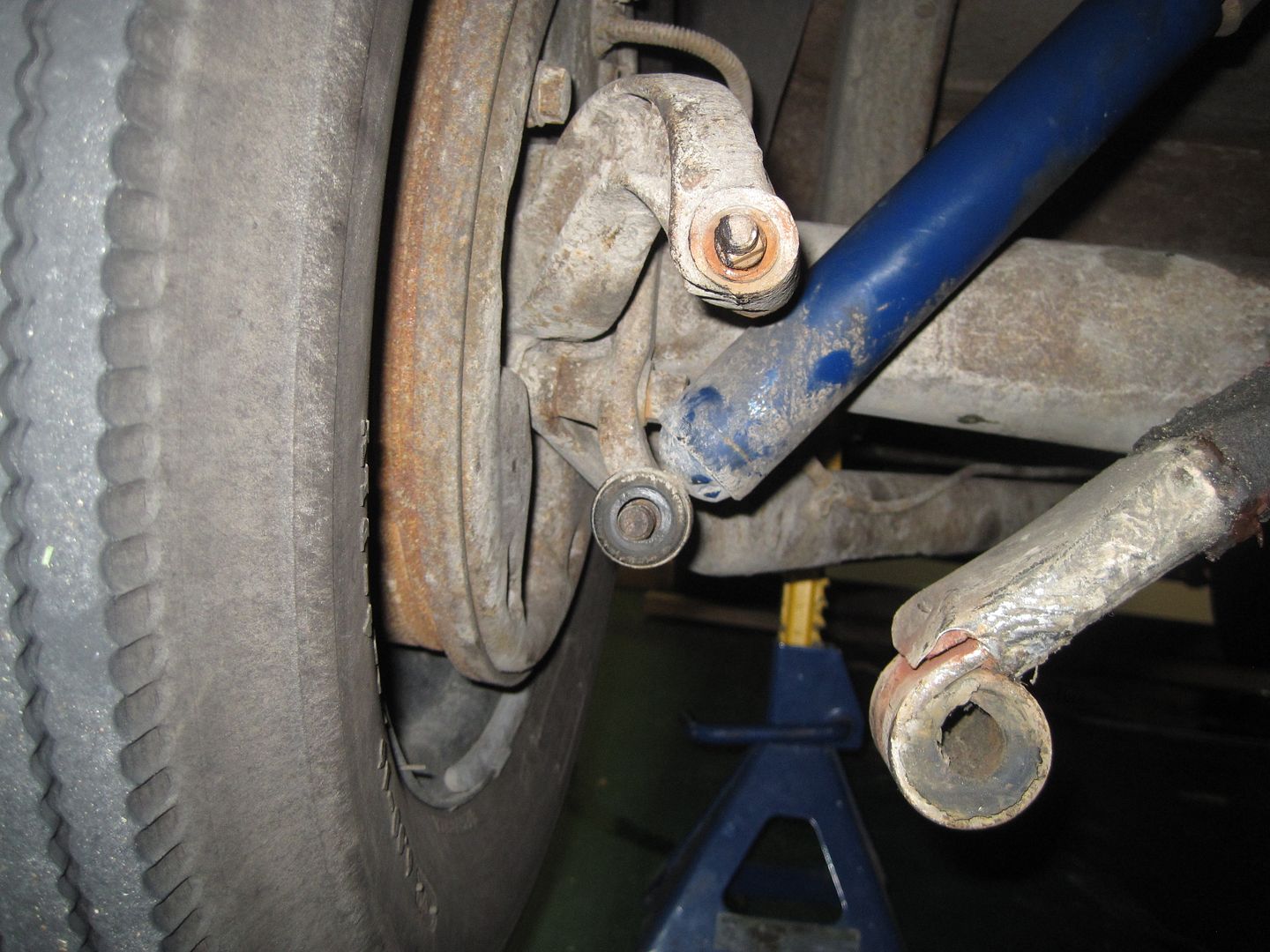
Lower the bottle jack and the spring slowly reaches it's limit of where it wants to bend to. No "boing" or nothin'.:)

IMG_4012.jpg


(Reverse procedure for installation)

On one occasion when doing this I intentionally knocked the bottle jack out from under the end of the spring that it was supporting just to see what would happen. It moved down the 2-3 inches it wanted to and stopped. No big deal. Nothing like what would happen if a spring spreader snapped under the tremendous pressure that it is under trying to stretch the spring instead of just deflecting one end of it as my approach does. By my rough physics calculations it takes 10 times the pressure to stretch the spring as it does to just deflect one end at a time. Just imagine what would happen if a spring spreader either snapped or slipped off of one end when under so much pressure. The pressure would launch the spreader in its entirety or in pieces in any direction to skewer whoever was handy.:(
 
Last edited:
That is what I tried to say in post #4. You sure did it better. I use the same procedure on my 32 front spring. Difference is I put wood blocks between the spring and axle with the shackles horizontal. I just jack up the axle to relieve to pressure as stated. The jack up procedure is good for the bent 32-34 rear springs as the differential makes a spreader difficult and maybe dangerous.
 
Hey professor, your shock is missing a nut.

That's because I was removing the rear axle and drive line to replace it. As soon as I got the spring disconnected I then put the floor jack under the axle, lifted the weight off of the shocks, pulled them off, and lowered the axle to the ground.
 
Just in case anyone didn't read this commentary at the bottom of my post about the danger of the spreaders compared to my approach:

"On one occasion when doing this I intentionally knocked the bottle jack out from under the end of the spring that it was supporting just to see what would happen. It moved down the 2-3 inches it wanted to and stopped. No big deal. Nothing like what would happen if a spring spreader snapped under the tremendous pressure that it is under trying to stretch the spring instead of just deflecting one end of it as my approach does. By my rough physics calculations it takes 10 times the pressure to stretch the spring as it does to just deflect one end at a time. Just imagine what would happen if a spring spreader either snapped or slipped off of one end when under so much pressure. The pressure would launch the spreader in its entirety or in pieces in any direction to skewer whoever was handy.:("
 
I think one thing to try is to loosen up the centre hangers and the central long bolt that holds all the pack together that should make it easier to spread. Last time if I remember I had all that tight and Jesus the amount of force I was using to spread the springs.. Wow! Lucky I was using a proper spring spreader.. And I had the springs lowered so they would have already be stretched out ..:eek:
 
I've never "invested" in a spreader.
I've done 10 rear end jobs and just use an 18" length of 3/8-16" threaded rod.
Put "C" clamps on each side of the center bolt, Remove the bolt, replace the bolt with the threaded rod with a nut on the top and bottom of the spring, remove "C" clamps, now unscrew one of the threaded rod nuts and everything comes easly apart. Use the same set up for re-assembly.
Keep it simple.
 
Since i posted previously i will repost. On the spring spreader issue of it shattering and destroying all that it holy :rolleyes: i dont worry. A good spreader is invalueable. Its safe and easy. If you have used one then you know. It can be done without one. Each spring is different in its tension.

To me a bottle jack works well, but not as safe as a spreader in my opinion. But works well. But is nearly impossible if there is no weight on the car. If it's a bare frame, you will need a spreader or at least a few bags of cement.

But really... Its not all that more dangerous then having an engine on a cherry picker.

Either or what ever works for you.
 
Last edited:
I had always used a 1 1/4" iron pipe cut to fit between the eyes of the spring. I would then jack the body up and the pipe held the spring in place. Most times I only needed to move the spring out of the way to remove the front or rear axle assembles. I bought a Port-a-power on Craigs List for $50. and wish I had done so 40 years ago.
 
Back
Top