

Kustom Komet
Member
Great success!
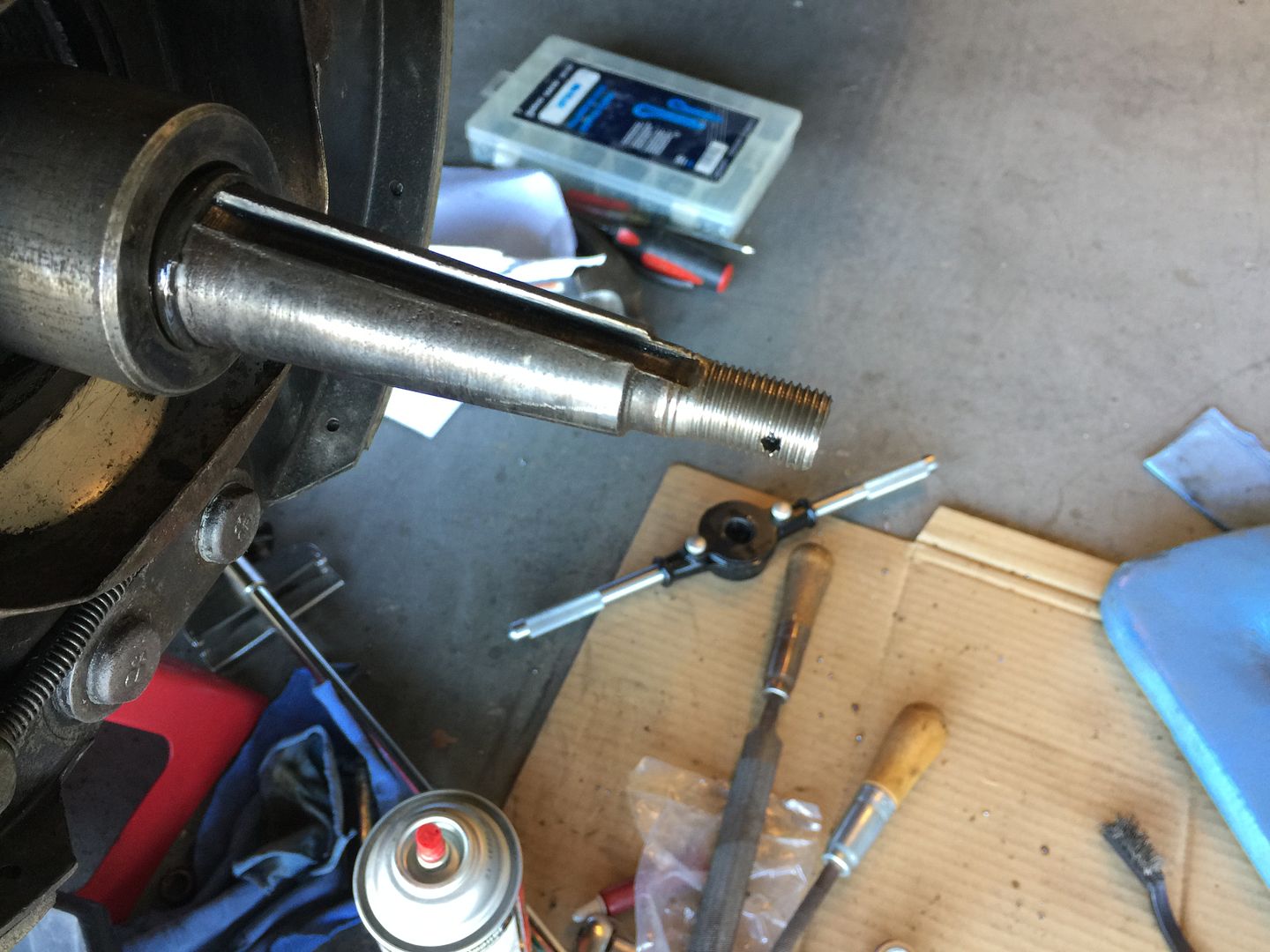
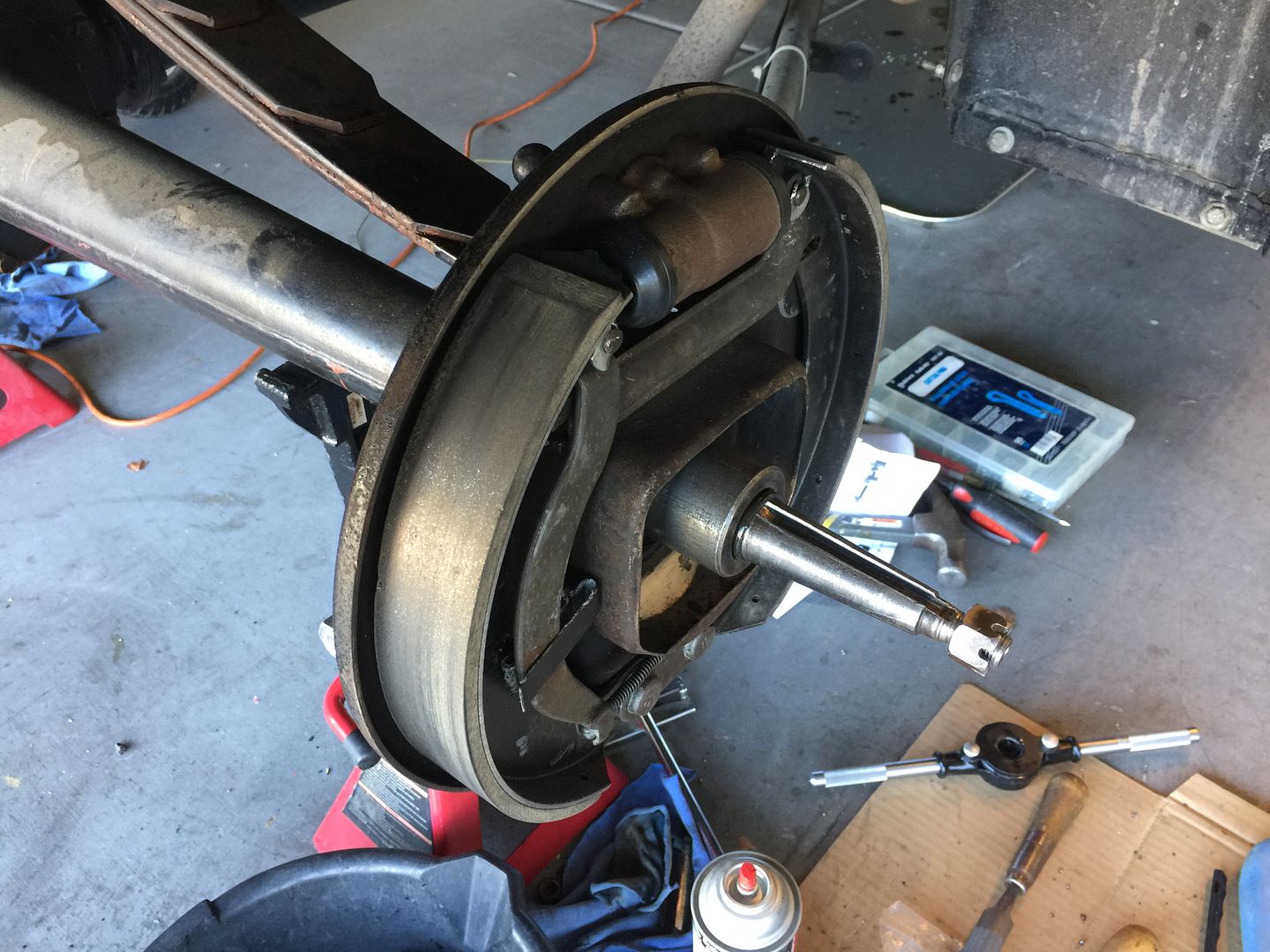
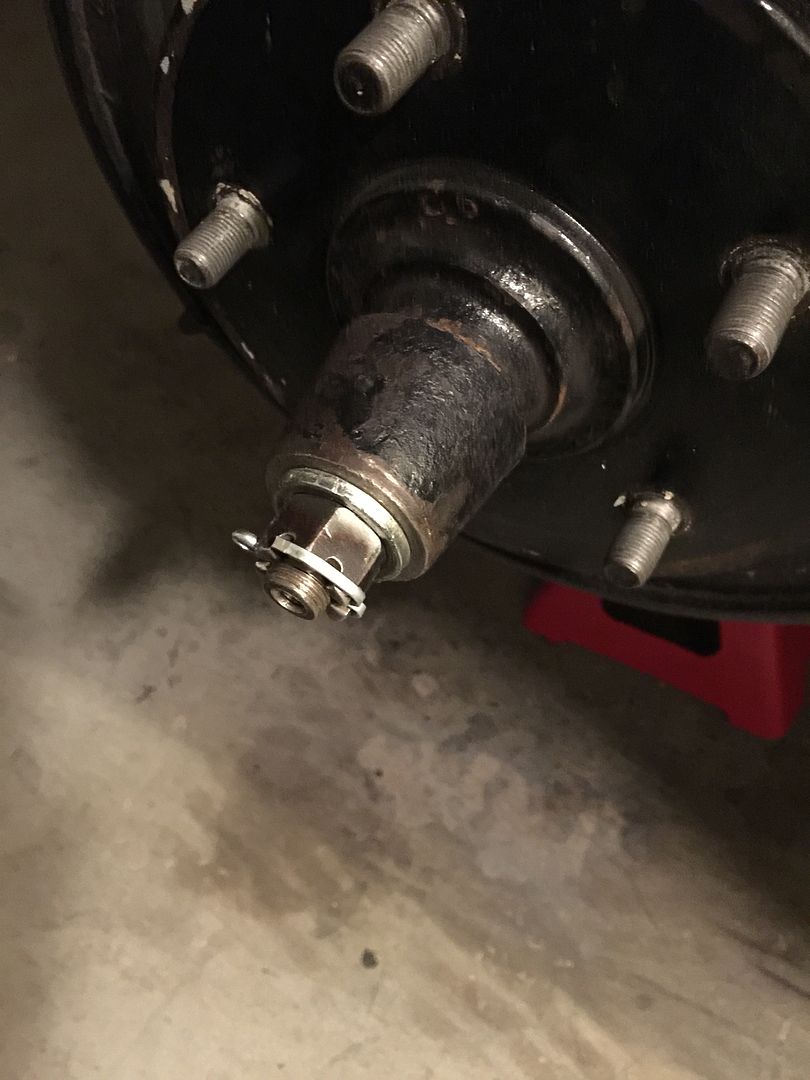
A friend came over and saved the day with a 40 year old Craftsman die set with the proper die wrench and die, and we followed the Fullraceflathead Youtube example and fired up the Henry Ford 40 horse lathe. Went very well, and not too tricky. I found a nice old tall hardened 9/16 castle nut in good shape, and it went right on and lined up perfectly with a window at 80 ft/lbs. Felt very nice torquing too, solid and precise.
I also finished up the Snyder's shock kit installation, which I'll detail in another thread.
One thing to note: In the video, Fullraceflathead filed all the threads off of his axle, taking it down to smooth bar stock, before getting it down to .562; but mine still had visible original thread left at the same .562. So check a bunch of times while filing, it's easy to take off too much material.
I understand the concept, the fit must be precise and the torque is taken by the hard seating of the tapers, more so than by the key. If I have to get into this rear end in the future, I'll look into the lapping.
Yes, and I nearly ordered one, before the friend came over with the right tools. It pays to have friends with very large tool cabinets.
Good info, I'll certainly check/re torque both sides in 50 miles.


A friend came over and saved the day with a 40 year old Craftsman die set with the proper die wrench and die, and we followed the Fullraceflathead Youtube example and fired up the Henry Ford 40 horse lathe. Went very well, and not too tricky. I found a nice old tall hardened 9/16 castle nut in good shape, and it went right on and lined up perfectly with a window at 80 ft/lbs. Felt very nice torquing too, solid and precise.
I also finished up the Snyder's shock kit installation, which I'll detail in another thread.
One thing to note: In the video, Fullraceflathead filed all the threads off of his axle, taking it down to smooth bar stock, before getting it down to .562; but mine still had visible original thread left at the same .562. So check a bunch of times while filing, it's easy to take off too much material.
Hey Roger,
By your responses, I'm not sure that you get how the mechanism should work regarding the rear axle, the hub, the key and cotter pin.
Check out the idea of LAPPING the axle to the hub...for a perfect fit. This is how a properly installed hub/axle relationship is formed, and how the hub stays fastened to the axle when torqued sufficiently. The key is not for holding the hub from turning, although it will do this duty for a short while , until something snaps if not torqued correctly.
I understand the concept, the fit must be precise and the torque is taken by the hard seating of the tapers, more so than by the key. If I have to get into this rear end in the future, I'll look into the lapping.
Yes, and I nearly ordered one, before the friend came over with the right tools. It pays to have friends with very large tool cabinets.
Are you saying that the axle nuts get a little loose after driving, even with the cotter pins installed?
No, the nut won't move but the hub will creep toward the differential until it finds a home. If allowed to run loose, it will wear the hub and key way. Check it at 50 mile intervals until the nut stops tightening while using proper torque settings.
Good info, I'll certainly check/re torque both sides in 50 miles.


