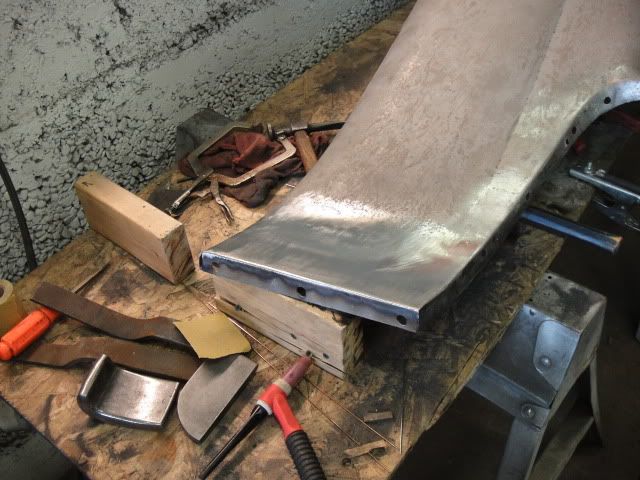
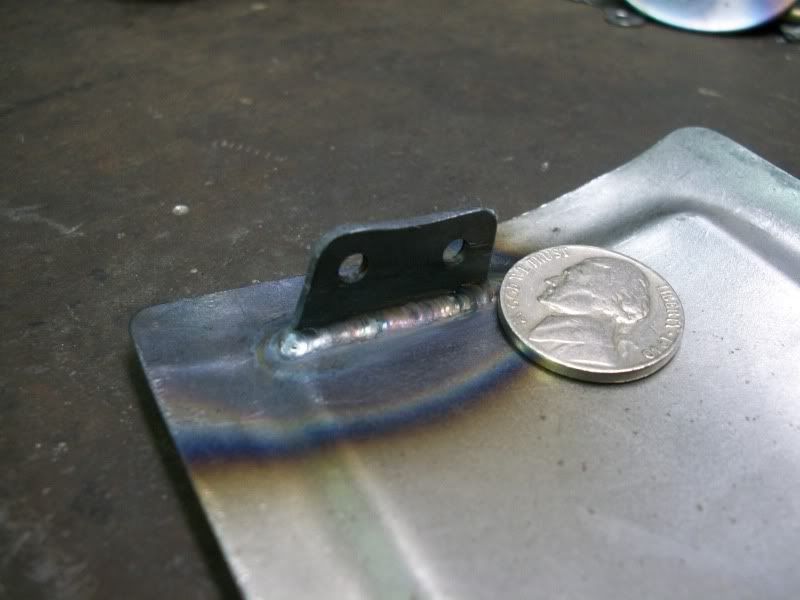
I weld sheet metal on a part-time professional basis. I work almost exclusively with 18 and 16 ga. All is done with a MIG with hardware store wire. Many times I have to fill gaps, some pretty big. I like a thin gap between the metal I'm working, maybe 1/16 inch but sometimes I have to fill 1/2 inch holes. I use the stitch method. I'll quickly zap some solid metal, then thru the lenses as it starts to cool I feed directly into the puddle again. Experience tells you when to feed back in as it cools; to hot and you blow a bigger hole. Too cool and your weld has pin holes. While pinholes will keep you from certifying on nuclear reactors, on body work they're quickly filled with one part filler.
A good weld, proper temp with wire speed and rhythym correct, will fill gaps with very little grinding to be done. Seconds with a flapper wheel can have it ready for final finish.
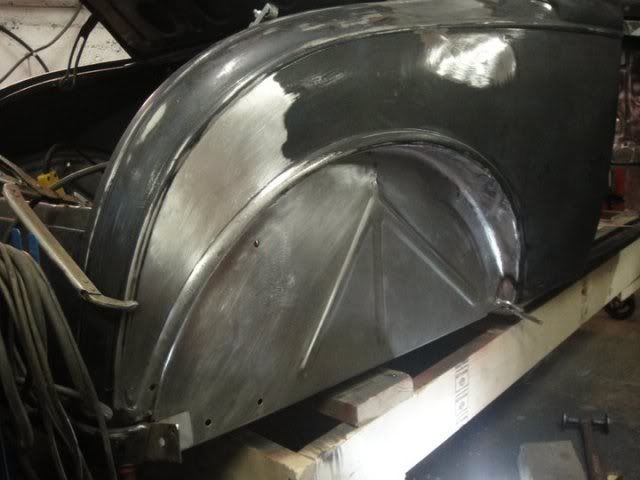
Early Ford metal is excellent quality and my educated guess is most is at 18 Ga. There is some thinner (20?) on inner panels, bracing, and fender wells. This can be tough to get the temp and wire feed down low enough to weld well. But with practice and a backer (brass or copper) you can fill this, too. On rusty edges I often cut a tack strip of varying width. Since I'm not going to Pebble Beach or for the Riddler award, I'll put the backer on the less visible side of the weld. Make some holes (drill, plasma) on both sides of the gap and fill a little rosette puddle. Then you can go back and fill the gap. Strong, simple, works great on body panels as it cuts down on distortion because of the added thickness. Am I the only one who uses these crutches?