Vapor lock!

This thread is getting awfully technical.
Don't laugh but in Vietnam we had a Ford econoline that liked to vapor lock. A good ole country boy suggested putting clothes pins on the fuel line between the fuel pump and the carburetor, it worked! I have used this simple remedy a few other times with success.
 
I can get a little bit of the dreaded "vapor lock" now ---winter gas, big crack in ex manifold at #2 blowing on carb, the inside of the carb has some crap in it, the bowl has xtra vents--- the gasket--it is torn in 4-5 places(some stick to the top, some to the bottom),all my "tuneup" parts are at least 20 years old, the muffler was part of a buy 5 for 100$ deal in the late 70s, my average speed is whatever the rest of traffic is doing, I have never seen any bubbles in my fuel system ---cast iron bowls don't get bubbles , I run the mixture lean, and use a lot of advance.

One thing I did do -many years ago is to remove the burrs at the ends of the fuel pipe so there was no restriction there

After 45 min of idling, and idle speed parade it sputters a little during the parade, push in the clutch, rev engine a little --perhaps 5 seconds it clears out.

Driving at 50, stop for yard sale, leave idling ---start driving again, sputters for 500 feet,then normal

In NJ the only choice is this ethonal stuff

most likely when I get gas again the problem will go away, no problems last summer once the winter gas was out of the system ---although the manifold crack is larger this year

I have engine pans, am not afraid of the original 2 blade fan--it was nos when I started using it

The 46 I had was another story, it would go fine unless I stopped ---the battery wasn't very good, no chance of cranking through it, I had a routine, vice grips for tank drain plug, small can, fill carb, push car, jump in, pop clutch in 2nd gear, repeat if it didn't suck up a prime---I could go anywhere as long as i didn't stop and expect to restart when the engine was warm

 
I would still love to know why some cars get the problem and a friend a few doors down does not? Why is there that much heat buildup that would cause the problem in the engine compartment in some cars and not in others? Nobody in our club here in Florida has the problem so I can't get first hand data. What is the block temp when it happens? What is the carb temp? What is the water temp? Guess we will never know.
 
I would still love to know why some cars get the problem and a friend a few doors down does not? Why is there that much heat buildup that would cause the problem in the engine compartment in some cars and not in others? Nobody in our club here in Florida has the problem so I can't get first hand data. What is the block temp when it happens? What is the carb temp? What is the water temp? Guess we will never know.

Mike,

I agree, but you don't have to go "a few doors down"; one fellow in our club has three A's, all with same ignition, head, engine pans, etc., and run well--same driver, same weather, and same gasoline. Two never vapor lock; one always does on warm days. Swapping carbs did not change anything!! Curiouser and curiouser.

I'm wondering if anyone in Florida has the problem. I'm guessing that you guys who live where there's no doubt it's going to be hot a lot get a less volatile grade of gasoline formulated for you.

Steve
 
Swapping carbs did not change anything!!
Steve,
What about swapping the fuel line between a car without the problem and the car with it?

I got the feeling from reading these posts that vapor lock (which I've never had, knock on wood) occurs because of rapid expansion of gasses from boiling fuel. Sort of like steam pressure, impeding incoming fuel flow, right? Could that be happening inside the fuel line rather than the carb? I'm wondering if thin fuel lines could cause it.

Ray,
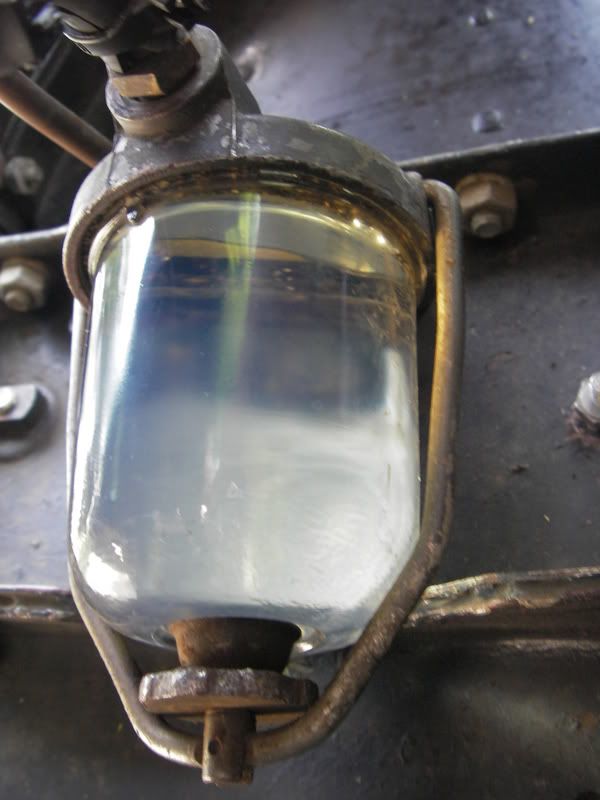
The cars belong to a friend in our club. I haven't compared the various fuel lines myself. My own experience regarding the fuel line has been contradictory: Insulating the lines on the two cars I've worked on semed to help. On the other hand, I've watched substantial volumes of vapor bubble burp over out of the sediment bowl and flow all the way down the line with the running motor barely stumble. Here's a photo of a growing vapor bubble in my sediment bowl. After it grew to totally cover the screen, the whole bubble would burp down the fuel line, and then the cycle would repeat.

post2007MARCrepairs043.jpg


I posted a series of photos showing the whole process in an earlier thread; it didn't matter.

Steve
 
Back
Top