PeteVS
Well-known member
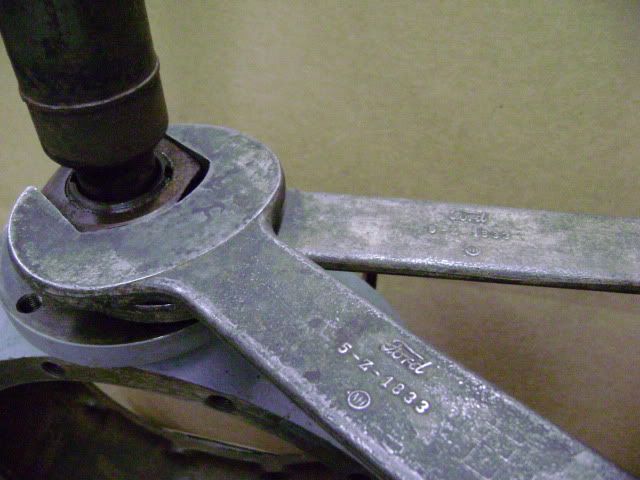
Last year, I started to assemble a banjo rear (first time for me) with a new 3.25 ring and pinion. I got the rear all disassembled and cleaned up. Then, I loosely assembled the bearings and race onto the pinion, heated up the casting and got the pinion assembly into it. So far, so good. Then, I started to set the bearing pre-load. I supported the banjo assembly by the pinion shaft in an old 6 x 6 coupling in a pipe vise. I started tightening the main pinion nut. Turn the nut and "goink!" The bearing wasn't sliding smoothly- it would jump with each twist on the nut. Tighten again, "goink!" Too loose. Tighten again, "goink!" Still too loose. Tighten again, "goink!" Feels good, but maybe just a little more. This time, no "goink." "I think I'll stop here," I think. So, I slip on the washer, then the lock nut and then go to bend over the tabs with a hammer and drift. "GOINK!!" Oh no! Now it feels too tight! I agonized over this for a few months.

Today, I set up a little pusher (You can do ANYTHING with a couple of threaded rods!) and "goink," now it's loosened up. I now have it set so it feels right. (Bruce is missing a part for his K R Wilson pinion preload torque meter.) Should I have put some NEVER SIEZE on the pinion shaft before I started? Also, should I leave it a little on the loose side while I set pinion back lash and then disassemble and reset the pre-load? Thanks for any experienced advice here!!
Today, I set up a little pusher (You can do ANYTHING with a couple of threaded rods!) and "goink," now it's loosened up. I now have it set so it feels right. (Bruce is missing a part for his K R Wilson pinion preload torque meter.) Should I have put some NEVER SIEZE on the pinion shaft before I started? Also, should I leave it a little on the loose side while I set pinion back lash and then disassemble and reset the pre-load? Thanks for any experienced advice here!!

 but you feel some drag.