
You are using an out of date browser. It may not display this or other websites correctly.
You should upgrade or use an alternative browser.
You should upgrade or use an alternative browser.
Need help from the flathead gurus...? Valve clearance issue
- Thread starter crazycasey
- Start date
crazycasey
Senior Member
I'm surprised you are finding so much variation in the lifter heights. Are these new lifters? Why the variation? Has anyone else run across this amount of variation in a set of lifters?
I'm going to assume they were the set that came out of my motor. Unless some of them were swapped out when the valves were being adjusted.
crazycasey
Senior Member
So, after rearranging all of my lifters (they haven't been run on THIS cam yet, and they're all in really good condition), all of my intakes are between 0.011"-0.014" and all of my exhausts are between 0.015"-0.021". I only have a couple outliers; the majority of the valves are at the low end of the spec. I'd like to bring all of the intakes to 0.011" and all of the exhausts to 0.015".
My question is, can I take 0.003"-0.006" off of my clearance by hand lapping the valve into the seat?
If not, can I take the valves to the machine shop to have JUST the faces recut, or do I have to have the seats recut as well (I've already hand lapped all valves to their respective seats before attempting the adjustment).

flatheadmurre
Well-known member
Starting to think your machineshop has given you a few not to good advices here.
Putting used lifters on a new camshaft without resurfacing them is a gamble...with all the money involved why wouldn´t they resurface them for you ?
My suggestion to make this go togetter as fast and smooth a possible is a couple of A101 valve spring shims and a set of adjustable lifters...just my 2c.
Otherwise resurface the lifters and get a set of lashcaps.
You shouldn´t try and lap the valve into the seat grind the seat or valve instead and either is just fine without affecting the other.

JSeery
Member Emeritus
Now the next question, and GOSFAST already brought it up, is who set the spring height and pressure and how did they do it?
"I'm assuming you haven't gotten anywhere near the spring hgt/pressure requirements yet? I've posted up here many times against using the Chevy length valves and am in the middle (still) of setting up an "adjustable spring-seat-register" to deal with this very issue. Comp Cam's is holding us up at the moment with mfg the necessary spring seat locators for the Flathead guides."
The only reason I bring it up is if your going to all of this trouble with the clearance issue might want to be sure the spring height and pressure is correct.
I have never heard of anyone recommending used lifters on a new cam. The used lifters might explain your variation in lifter height. Used lifters can be resurfaced but I thought they were not a flat surface and had a slight curve to them. I'm not a used parts (in this area) type of guy, need an engine builder with used lifter experience to jump in on this one!

Bored&Stroked
Well-known member
The lifters should have a slight convex shape to the bottoms of them - they should not be surfaced to a flat state. It sounds like he has a set of used lifters - which could explain the large differences in length.
Lapping: This procedure can't be used to tighten up your clearances - it is only to fine tune the sealing surfaces, not anything more.
As many noted: I'd be suspect of the whole valve train setup:
a) Spring heights need to be correctly setup - such that you have the correct amount of pressure on the valve seats. Using Chevy valves makes this a bit more difficult - but there are plenty of ways to deal with it - depending on the combination of lifter types/lengths, shims, retainers, lash-caps, keepers, etc..
b) The lifters should be newly resurfaced - or new. Unless the bottoms of the lifters are practically new (and convex) - you probably do not want to reuse them "as is". I would not - it is not worth saving a few bucks in this area.
c) Machine Shop: The comment about "not being hard enough" would worry me. Seems like a way to sell you more parts and/or work - has nothing to do with Chevy valves. Truth be told, the stem ends have a lot more pressure and wear tendencies with a rocker arm, than a direct tappet on a flathead.
If it was me - I'd find a much better machine shop and ensure that everything gets done by experienced flathead folks.
Punting: If you have the capabilities and equipment to measure and set spring heights, you may be able to use the same valves, same guides and change the lifters to adjustables . . . but that is a big assumption on my part. It is really important to know what your current spring heights/pressures are - before thinking of that approach.
Best of luck . . .
B&S
crazycasey
Senior Member
Now the next question, and GOSFAST already brought it up, is who set the spring height and pressure and how did they do it?
"I'm assuming you haven't gotten anywhere near the spring hgt/pressure requirements yet? I've posted up here many times against using the Chevy length valves and am in the middle (still) of setting up an "adjustable spring-seat-register" to deal with this very issue. Comp Cam's is holding us up at the moment with mfg the necessary spring seat locators for the Flathead guides."
The only reason I bring it up is if your going to all of this trouble with the clearance issue might want to be sure the spring height and pressure is correct.
I have never heard of anyone recommending used lifters on a new cam. The used lifters might explain your variation in lifter height. Used lifters can be resurfaced but I thought they were not a flat surface and had a slight curve to them. I'm not a used parts (in this area) type of guy, need an engine builder with used lifter experience to jump in on this one!
Ok, so I wasn't trying to turn this into a shop-bashing thread. There were a handful of things that were overlooked, and the general quality of the work was not the best, and some of the advice given may not have been right. I've had to take the block/crank/rods into a different machine shop to have a some of the work redone. To be fair, I really screwed up, and told the first shop that price was a primary consideration and the car was a "build to sell". This has ALL been a big learning curve for me in what not to do when you build an engine.
As for the lifters, they HAVE BEEN resurfaced. That said, they are all over the place in terms of height, but when the initial valve install was done, the valve stem lengths were matched (sort of) to the lifter lengths I have in the engine. The majority of them are within a few thousands, and that's why I was able to help my valve adjustment by switching a few of them around.
The springs were single springs with a progressive wind sourced from Egge, and I was charged $40. I can't find ANY spring set on Egge's site for $40, so
I'm not sure what I have. I asked for Zephyr springs, as I'd read a few articles that THAT was the hot setup for a street flathead with an Isky 88. I've read a few sites that say the same, but they ALL mention shimming the spring for a 2.00" installed height, and these springs have NO shims. I will sort all of this out.
I've had to scrap and start over so much of this project at this point, that I'm probably nearing $5,000 in for parts and machine shop fees on a basic street flathead that's still in pieces. I'd like to not scrap the valvetrain at this point, if possible. There's a lot that's NOT ideal on this build, but it will work, and work well. Example, I've got four ring pistons and the heavy wrist pins that Egge sells that add almost a pound to the total reciprocating weight of the engine...should have read the book FIRST! But now I've got a crankshaft balanced to those heavy parts, so I'm NOT going to do that over.
crazycasey
Senior Member
The lifters should have a slight convex shape to the bottoms of them - they should not be surfaced to a flat state. It sounds like he has a set of used lifters - which could explain the large differences in length.
Lapping: This procedure can't be used to tighten up your clearances - it is only to fine tune the sealing surfaces, not anything more.
As many noted: I'd be suspect of the whole valve train setup:
a) Spring heights need to be correctly setup - such that you have the correct amount of pressure on the valve seats. Using Chevy valves makes this a bit more difficult - but there are plenty of ways to deal with it - depending on the combination of lifter types/lengths, shims, retainers, lash-caps, keepers, etc..
b) The lifters should be newly resurfaced - or new. Unless the bottoms of the lifters are practically new (and convex) - you probably do not want to reuse them "as is". I would not - it is not worth saving a few bucks in this area.
c) Machine Shop: The comment about "not being hard enough" would worry me. Seems like a way to sell you more parts and/or work - has nothing to do with Chevy valves. Truth be told, the stem ends have a lot more pressure and wear tendencies with a rocker arm, than a direct tappet on a flathead.
If it was me - I'd find a much better machine shop and ensure that everything gets done by experienced flathead folks.
Punting: If you have the capabilities and equipment to measure and set spring heights, you may be able to use the same valves, same guides and change the lifters to adjustables . . . but that is a big assumption on my part. It is really important to know what your current spring heights/pressures are - before thinking of that approach.
Best of luck . . .
B&S
Saw your reply after my other reply.
The lifters ARE resurfaced flat. Does that mean they're junk!? I can't imagine anybody resurfacing lifters is NOT just surfacing them flat. Is this one of those esoteric ideal vs. reality arguments that everybody gets into on the Internet? We've both talked Hemi's over on the other site...I'm plenty used to those.
Machine shop; already on to the second shop. They machine all the motors for one of the most well-known flathead builders in California. I've paid to do just about everything twice now, with the exception of the valve job, so what the hell, might as well do that too!?
Thanks for the advice.
crazycasey
Senior Member
The lifters should have a slight convex shape to the bottoms of them - they should not be surfaced to a flat state. It sounds like he has a set of used lifters - which could explain the large differences in length.
Lapping: This procedure can't be used to tighten up your clearances - it is only to fine tune the sealing surfaces, not anything more.
As many noted: I'd be suspect of the whole valve train setup:
a) Spring heights need to be correctly setup - such that you have the correct amount of pressure on the valve seats. Using Chevy valves makes this a bit more difficult - but there are plenty of ways to deal with it - depending on the combination of lifter types/lengths, shims, retainers, lash-caps, keepers, etc..
b) The lifters should be newly resurfaced - or new. Unless the bottoms of the lifters are practically new (and convex) - you probably do not want to reuse them "as is". I would not - it is not worth saving a few bucks in this area.
c) Machine Shop: The comment about "not being hard enough" would worry me. Seems like a way to sell you more parts and/or work - has nothing to do with Chevy valves. Truth be told, the stem ends have a lot more pressure and wear tendencies with a rocker arm, than a direct tappet on a flathead.
If it was me - I'd find a much better machine shop and ensure that everything gets done by experienced flathead folks.
Punting: If you have the capabilities and equipment to measure and set spring heights, you may be able to use the same valves, same guides and change the lifters to adjustables . . . but that is a big assumption on my part. It is really important to know what your current spring heights/pressures are - before thinking of that approach.
Best of luck . . .
B&S
I'm going to have to read up on spring installed height. I don't believe I'm going to have the capability to measure this myself.
JSeery
Member Emeritus
Lot of issues here and sorry we are the bearers of bad news, but there is NO way the valve springs could be installed correctly without shims. This is a sure sign someone has no idea what their doing! In fact with the Chevy valves it should require a LOT of shim which is a whole different discussion.
The curve surface on the lifter is not a nice thing to have, it is how they work. As far as I know not just anyone can properly resurface lifters. Another consideration is the cam warranty will be voided with used lifters (at least that is my understanding) and with $5K in the engine I wouldn't want to be tearing it down to replace the cam and lifters again in a few hundred (maybe a few thousand) miles.
The curve surface on the lifter is not a nice thing to have, it is how they work. As far as I know not just anyone can properly resurface lifters. Another consideration is the cam warranty will be voided with used lifters (at least that is my understanding) and with $5K in the engine I wouldn't want to be tearing it down to replace the cam and lifters again in a few hundred (maybe a few thousand) miles.
Last edited:
Lot of issues here and sorry we are the bearers of bad news, but there is NO way the valve springs could be installed correctly without shims. This is a sure sign someone has no idea what their doing! In fact with the Chevy valves it should require a LOT of shim which is a whole different discussion.
The curve surface on the lifter is not a nice thing to have, it is how they work. As far as I know not just anyone can properly resurface lifters. Another consideration is the cam warranty will be voided with used lifters (at least that is my understanding) and with $5K in the engine I wouldn't want to be tearing it down to replace the cam and lifters again in a few hundred (maybe a few thousand) miles.
And with a flat cam lobe and concave lifters, where is that missing metal hiding?!

rotorwrench
Well-known member
All cam followers (lifters) have a radius grind and it is a special large radius. This takes special equipment that not all machine shops have. I wouldn't let a machine shop do my followers till they sold me that they can do it correctly. Many of these old engines have chilled cast iron followers and this process doesn't always have a lot of depth to the hardness. The more you grind on them the thinner the hard surface is. Your follower height dimensions being all over the place is not good. I would consider purchasing NOS if you are grind adjusting clearances or at least a decent set of hollow adjustables. Johnson's haven't been around for a long time but a used set of those with a regrind are preferable to some of the new sets. The solid cast iron ones work OK on a tractor but they are a bit heavy for anything more than a stock engine.
crazycasey
Senior Member
Lot of issues here and sorry we are the bearers of bad news, but there is NO way the valve springs could be installed correctly without shims. This is a sure sign someone has no idea what their doing! In fact with the Chevy valves it should require a LOT of shim which is a whole different discussion.
The curve surface on the lifter is not a nice thing to have, it is how they work. As far as I know not just anyone can properly resurface lifters. Another consideration is the cam warranty will be voided with used lifters (at least that is my understanding) and with $5K in the engine I wouldn't want to be tearing it down to replace the cam and lifters again in a few hundred (maybe a few thousand) miles.
Ok. I have to clarify a few things so that I can start moving forward.
First, do the adjustable lifters have this curved bottom? It must be VERY subtle, because the ones I have seen have looked flat.
Second, if my lifters have been surfaced, I'm going to assume a new set of stock lifters will take up my 0.003"-0.006" slack. This seems like the easiest answer, salvaging as many of the parts as I already have.
Third, I've read horror stories about adjustable lifters backing off. Is there any real concern here?
Fourth, the Chevy valves are supposed to need 0.070"-0.100" removed to work with adjustable lifters. This is said to remove all the hardness from the valve tip. I've read that this isn't actually a big concern, and I've read that it is. In my opinion, that's another reason to find a set of stock lifters and go that route. Opinions?
Fifth, am I correct in understanding that ANYTHING I do to shim the valve spring is NOT going to affect the tip of the valve stem in relation to the lifter face (i.e. I can sort the clearances out BEFORE I worry about installed height, or do I need to figure that out first)!?
Sixth, and finally...due to my limited tools/abilities, is there a more simple answer? Can I buy Ford Valves and Zephyr springs and adjustable lifters and just stick them all together without shims, etc, etc!?
crazycasey
Senior Member
All cam followers (lifters) have a radius grind and it is a special large radius. This takes special equipment that not all machine shops have. I wouldn't let a machine shop do my followers till they sold me that they can do it correctly. Many of these old engines have chilled cast iron followers and this process doesn't always have a lot of depth to the hardness. The more you grind on them the thinner the hard surface is. Your follower height dimensions being all over the place is not good. I would consider purchasing NOS if you are grind adjusting clearances or at least a decent set of hollow adjustables. Johnson's haven't been around for a long time but a used set of those with a regrind are preferable to some of the new sets. The solid cast iron ones work OK on a tractor but they are a bit heavy for anything more than a stock engine.
Thanks! You answered my question about the cam follower radius. You also answered my question about adjustable lifter quality. There is a set of NOS hollow-bodied followers available to me...I just have to find out if they're the long version or the short version. Evidently there were two types!? This will allow me to dial my valve clearances in. Then I just need to sort spring pressure/installed height.
flatheadmurre
Well-known member
If your tappets has been surfaced you should have a nice consistent swirlpattern on them.
Not sure how many actually is ground with a radius...my tobin-arp does them with an angle.
You can check your adjustable lifters with a torq wrench.
Stainless valves and hardened tips...wow..
Valve spring shims don´t affect anything else then the pressure of the valvespring.
Not sure how many actually is ground with a radius...my tobin-arp does them with an angle.
You can check your adjustable lifters with a torq wrench.
Stainless valves and hardened tips...wow..
Valve spring shims don´t affect anything else then the pressure of the valvespring.

GOSFAST
Well-known member
Hi Casey, I know exactly what you're experiencing with this build, been down this road too many times with "new" customers, we don't have the problem anymore now after the fact.
Any decent shop should have set you up with a nice package (see below) that would solve ALL your problems you have now, NOT created a bunch of new ones? Those tappets are the original Johnson's and the owner of Topline (Johnson-Tappet) today is a very close friend of one of my own good friends, Greg R.
We try to keep things simple over here, life is already too complicated for many, including myself.
Here's a couple shots below here, I know it's late in the game for you at this stage but it may help others here on their future builds??
Thanks, Gary in N.Y.
P.S. Whatever you do don't "give up" at this point, it WILL come together in the end! I'm certain about this. The components below here will fit about 99% of all Flathead builds and most times without a single issue. The new spring locators we've been working on are the only items not in the pictures, they will be coming soon we hope. If you "click" on the either photo it will take you to site with much many Flathead shots.
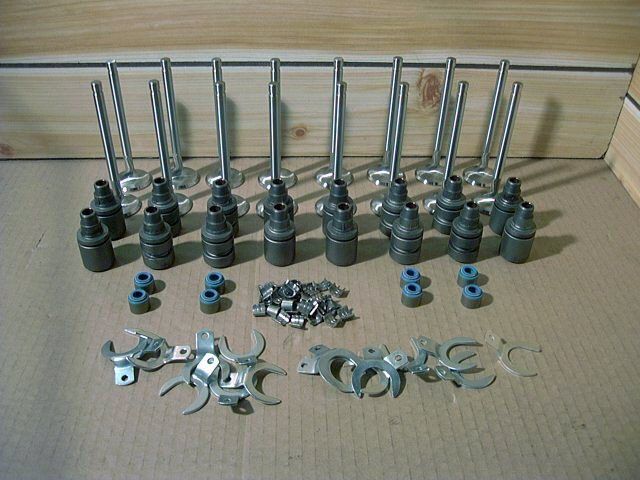
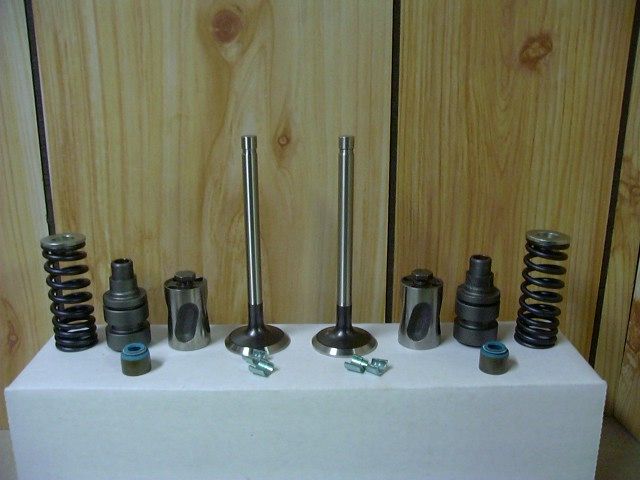
Any decent shop should have set you up with a nice package (see below) that would solve ALL your problems you have now, NOT created a bunch of new ones? Those tappets are the original Johnson's and the owner of Topline (Johnson-Tappet) today is a very close friend of one of my own good friends, Greg R.
We try to keep things simple over here, life is already too complicated for many, including myself.
Here's a couple shots below here, I know it's late in the game for you at this stage but it may help others here on their future builds??
Thanks, Gary in N.Y.
P.S. Whatever you do don't "give up" at this point, it WILL come together in the end! I'm certain about this. The components below here will fit about 99% of all Flathead builds and most times without a single issue. The new spring locators we've been working on are the only items not in the pictures, they will be coming soon we hope. If you "click" on the either photo it will take you to site with much many Flathead shots.


Last edited:
JSeery
Member Emeritus
I use adjustable (hollow) lifters, but it may be a little difficult for you to go that way at this point. They are much easier to use with a few modifications to the block. NOS lifers sounds like a good way to go. Don't forget about lash caps if you end up way short with your new lifters.
crazycasey
Senior Member
Hi Casey, I know exactly what you're experiencing with this build, been down this road too many times with "new" customers, we don't have the problem anymore now after the fact.
Any decent shop should have set you up with a nice package (see below) that would solve ALL your problems you have now, NOT created a bunch of new ones?
We try to keep things simple over here, life is already too complicated for many, including myself.
Here's a couple shots below here, I know it's late in the game for you at this stage but it may help others here on their future builds??
Thanks, Gary in N.Y.
P.S. Whatever you do don't "give up" at this point, it WILL come together in the end! I'm certain about this. The components below here will fit about 99% of all Flathead builds and most times without a single issue. The new spring locators we've been working on are the only items not in the pictures, they will be coming soon we hope. If you "click" on the either photo it will take you to site with much many Flathead shots.
Yep, that's beautiful! Are those the Comp adjustable tappets? And are those a "Zephyr" spring or a stock spring? After doing a little more research, it appears I have stock springs in this motor, so those will need to be changed as well. If you had the spring locators ready to ship I'd probably just give you my credit card number and start fresh at this point. I really thought I was FINALLY on the home stretch with this thing.
It seems like the basic answer is that you can't build a flathead with Chevy valves, unless you have the ability to make/modify the spring seat or retainer.