
You are using an out of date browser. It may not display this or other websites correctly.
You should upgrade or use an alternative browser.
You should upgrade or use an alternative browser.
Model A CRASH??
- Thread starter 1928Pickuppain
- Start date


Stew Masche
Senior Member
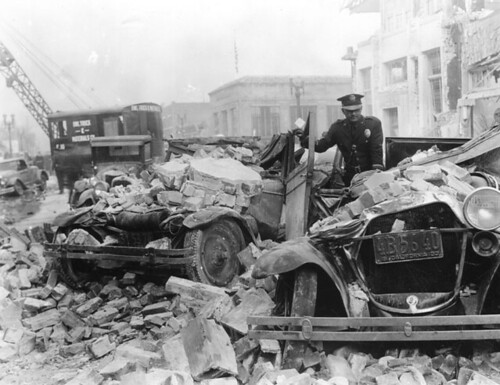
is this the one you meant, Tom?
I believe the officers name was Barney Rubble.
Stew Masche
Senior Member
These all look like they belong in a Laurel and Hardy film.
Well ! Here's another fine mess I've gotten myself into.
I hope I can die in my sleep just like my Grandfather......
and not hollerin' and screamin' like all the other people who were riding in his car with him.
Happy Trails !
Well ! Here's another fine mess I've gotten myself into.
I hope I can die in my sleep just like my Grandfather......
and not hollerin' and screamin' like all the other people who were riding in his car with him.
Happy Trails !
the common thread to many of these modern wrecks, or perhaps older wrecks, whether they involve a Model "A" or not, is aggressive driving. In today's world I personally ascribe a lot of that to SUV's/pickup trucks although that is putting a bulls-eye around myself on this forum.
I know that a lot of people resent those of us who drive trucks and SUV types, but I don't think we drive any more aggressively than the Camry, foreign sports car and Prius-types. The simple fact is that trucks and SUVs have a lot of utility these days, compared to small cars, and that makes them popular. There are just a lot more trucks on the road, and it follows that a larger percentage will be involved in wrecks. I feel a lot safer in my Suburban than I have felt in the smaller cars I drove for my employer in years past, but I don't drive aggressively in any vehicle.

ericr
Well-known member
I know that a lot of people resent those of us who drive trucks and SUV types, but I don't think we drive any more aggressively than the Camry, foreign sports car and Prius-types. The simple fact is that trucks and SUVs have a lot of utility these days, compared to small cars, and that makes them popular. There are just a lot more trucks on the road, and it follows that a larger percentage will be involved in wrecks. I feel a lot safer in my Suburban than I have felt in the smaller cars I drove for my employer in years past, but I don't drive aggressively in any vehicle.
I know that stereotypes in general are often inaccurate and unfair. If Southern drivers are as courtly in driving as they usually are in person, I'm sure the SUV perception there differs from my perception.

markwill
Junior Member
I believe the most dangerous time for American automobiles would be the late 50's and early 60's. These cars had a lot of power and speed and the last thing on the mfr's mind was safety. It is hard to believe now but we did not even have seat belts. The dashes and instruments in these cars could be extremly dangerous to passengers. Anybody agree or disagree.
I tend to agree with JBohannon, some of us from the "over fifty" clan will remember seeing an auto safety film (yes they were films back then) called Signal 30. This film clearly supports what JBohannon stated. You can can view the film in its entirety on youtube at https://www.youtube.com/watch?v=9mGPz2a5P_E

Charlville
Senior Member
Being a regular visitor to the USA from the UK, the things that scare me the most is the speed that people drive at and the tailgating...

Tom Wesenberg
Well-known member
Being a regular visitor to the USA from the UK, the things that scare me the most is the speed that people drive at and the tailgating...
Yep, that's two of the worst things people do here, and that's why you see multi car crashes when there is snow or fog. The idiots don't even slow down for ice on the road, and don't leave distance between cars.

mshmodela
Well-known member
Yep, that's two of the worst things people do here, and that's why you see multi car crashes when there is snow or fog. The idiots don't even slow down for ice on the road, and don't leave distance between cars.
Or those 4WD/AWD folks who think their vehicles can stop on a dime... I've owned 4 different 4WD vehicles and they don't stop any differently.

Synchro909
Well-known member
Recently, on an about 20 mile trip home, I was nearly wiped out 5 times by drivers who seemed to think it was OK to do stupid things in front of the old car. They all wanted to be in front of it. I asked one of them why he pulled in front of me - was it because he thought I was going to be slow? Well, I'm here waiting at the same set of lights that you are, only you get to wait longer. Besides, why would anyone think it smart to pull in front of a car with brakes that are obviously not going to be as good as yours? Didn't think that through too well, did you, sport!
Seems plenty of modern drivers think these cars shouldn't be on the road so it's OK to break the law. I've decided to put a dash cam in my A. Won't save my life but would help with an insurance clam.
Seems plenty of modern drivers think these cars shouldn't be on the road so it's OK to break the law. I've decided to put a dash cam in my A. Won't save my life but would help with an insurance clam.


grumpyoldsman
Senior Member
5 years ago i rolled my 30 town sedan over going about 25 miles per hour going around a corner, about $400 later the car was repaired $1000000. Later my wife was fixed. The one im building now will have seat belts
I tend to agree with JBohannon, some of us from the "over fifty" clan will remember seeing an auto safety film (yes they were films back then) called Signal 30. This film clearly supports what JBohannon stated. You can can view the film in its entirety on youtube at https://www.youtube.com/watch?v=9mGPz2a5P_E
According to the CDC data quoted above, deaths per million miles traveled were much higher in the 20s and 30s than in the 50's, and are much lower than that today. Driving has become consistently safer over the last 100 years. The data do not support the idea that driving in the 50s was more dangerous than earlier, quite the opposite in fact.
Regarding the '28 Phaeton (#3 above), I witnessed this accident about 5 or 6 years ago. The accident took place on a two-lane, paved, county road. We were following the phaeton at about 35 or 40 mph. A pickup truck travelling in the opposite direction turned left in front of the phaeton. The phaeton's driver applied the brakes (rear wheels locked up) reducing the speed a bit. All four passengers in the phaeton were wearing lap belts and received various injuries, the folks in the front seat required hospitalization. The phaeton's engine broke loose from the mounts and slid rearward and downward with the transmission, but did NOT enter the passenger compartment. The passengers all eventually recovered from their injuries and the phaeton was rebuilt and is still on the road. If your Model A does not have seat belts, I would certainly install them and wear them!


modelAtony
Senior Member
Im wondering how model A hold up in a crash of different speeds dose any one have any pics of model As after crashes im just curious.
Most all pictures of wrecked A's I've seen are pretty well protected in the windshield and cowl area. Seems that most of the crash force is taken away by the fenders and hood area. Have always notice the cab area is pretty well protected. Have fun modelAtony tony white Lafayette, LA

BILL WILLIAMSON
Well-known member
During WW 2 when tires were scarce, folks would carry a bare, rough old wheel for a spare & run it on the rim, if they had a flat. It also prevented theft of the spare tireTracked this location down to Sixth and Figueroa in Los Angeles
Sure don't look anything like that today.
Google maps would not let me save a pic.

Bill W.
Last edited: