
You are using an out of date browser. It may not display this or other websites correctly.
You should upgrade or use an alternative browser.
You should upgrade or use an alternative browser.
Is there an easy axle seal tool?
- Thread starter Talkwrench
- Start date


Ralph Moore
Well-known member
When you say "way around" are you talking direction of installation ?
woodiewagon46
BANNED
Brattons, 800-255-1929, makes a seal driver for $7 that threads onto a length of 1/2" pipe that allows you to drive in the seals.


JM 35 Sedan
Well-known member
Here are some pictures of the tools I use to remove old seals and put new seals in place. The pusher plug is just a two diameter aluminum piece I made on a lathe. The removal tool is just a small diameter rod that I bent into the shape that worked for me. I assume we are talking about the seals inside the axle housings, at the wheel bearing end?
Attachments


Last edited:

Chris Nelson
Senior Member
I just use a large socket, the diameter of the seal. I put it on upside down onto some long extensions. I drop the seal into the housing and position it with a long rod and then drive it into the hole using the socket and extensions. Works well and I don't have to buy anything.

Henry Floored
Well-known member
I am in the process of making up a new and improved seal installer. In fact it is mostly done. Just have to weld the flange that presses against the seal itself. My installer is made from an old axle and is piloted top and bottom. I will post pics in the next few days.

37 Coupe
Well-known member
Here is an alignment tool I made years ago to press in axle housing seals. Mayby overkill but it works.The big aluminum base holds the wheel bearing part of the axle housing and the delrin plug on top aligns the inside of the housing the steel sleeve outside of this presses in the seal.I made this for 37-41 housings.
Attachments


supereal
Well-known member
For years I have used a PVC pipe coupling that just fits the inside of the hub. Place a wooden block on the coupling and drive it down far enough so the split ring will fit the groove. At our shop, we have a drawer full of drivers, but this one is cheap and effective. If it get shaggy, a new one from the plumbing department of the nearest store will replace it.
Bruce Lancaster
Member Emeritus
JM 35's home made looks essentially like the Bratton's...theirs comes as just the aluminum part and you screw it onto a piece of 1/2" pipe.
The KRW is much the same, except of course in price, and adds a sort of bullet shaped nose making it a touch easier to putt the seal on it and find the hole at the other end of the tunnel.
With an inserter of any sort the job is easy, and Ford helped a bit with the shape of the recess...when the seal gets to the right place, it neatly finds the recess and locates so all you need is to give it a couple of taps in.
I'm talking axle seal #4245 inside the axle housing...this discussion is muddled, and it is unclear if that is right or if the inquiry is about the 1175 seal that goes into the hub.
That one has for me always been a wrestling match trying to apply sufficient force all around, sometimes involving a flat piece of wood and a mallet.
Bratton's has a new tool for THAT one. I just bought it, have not had a chance to try it out. It is a stepped piece of aluminum, with a flat that supports the shell 360 and a step that locates in the seal lip. They provide a short steel handle to smack with the hammer. Looks to be a significant improvement over the side of a 2X4 in keeping the thing straight while applying violence.

Old Col
Senior Member
Hi T/W, the blokes have missed part of your question, in the first pic with the screwdriver , that side faces the inside ....or if you like,the oil side. Here's a couple of shots of another version of "the tool" 
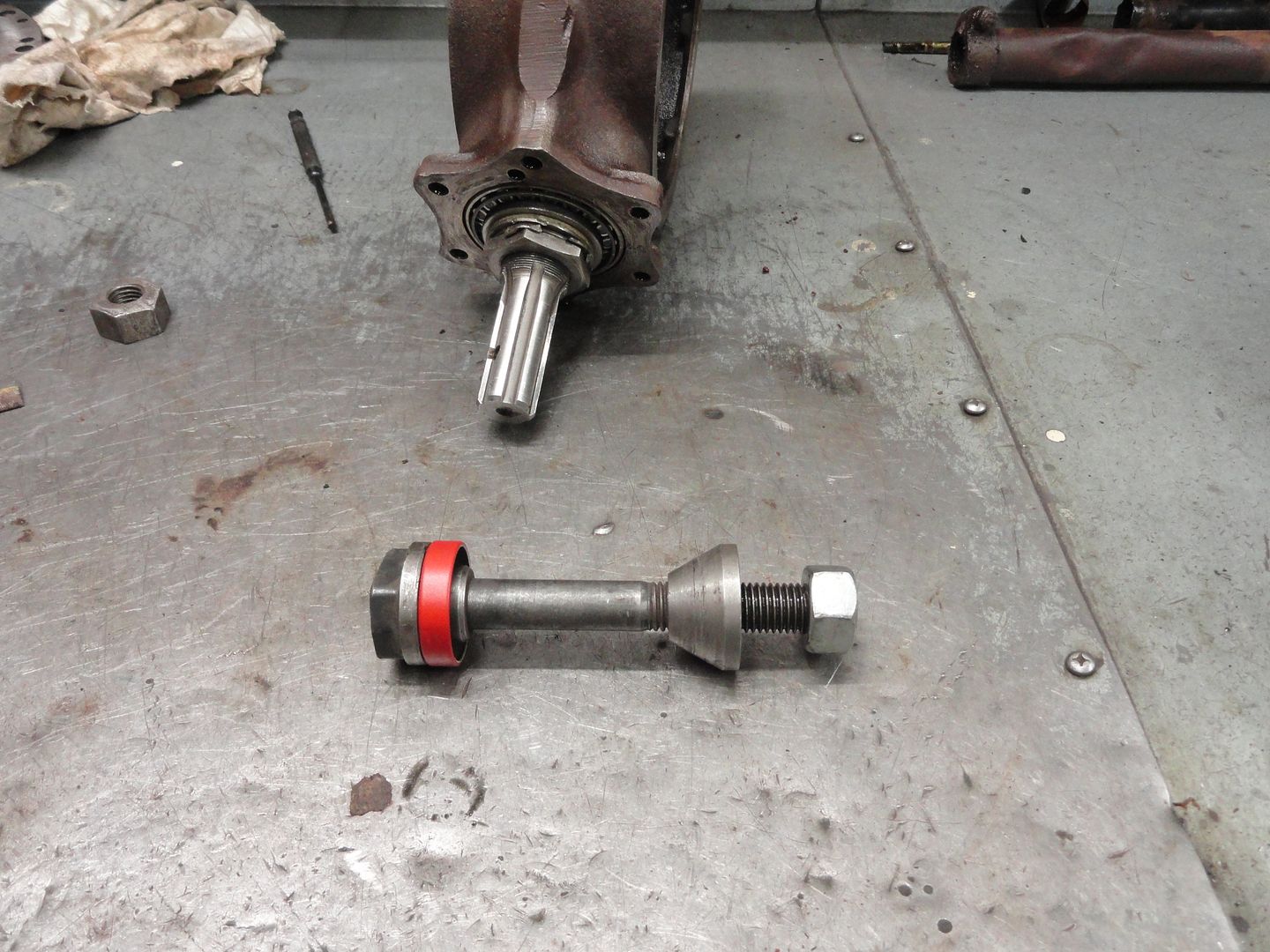
above shows the seal sitting on the stepped plate....
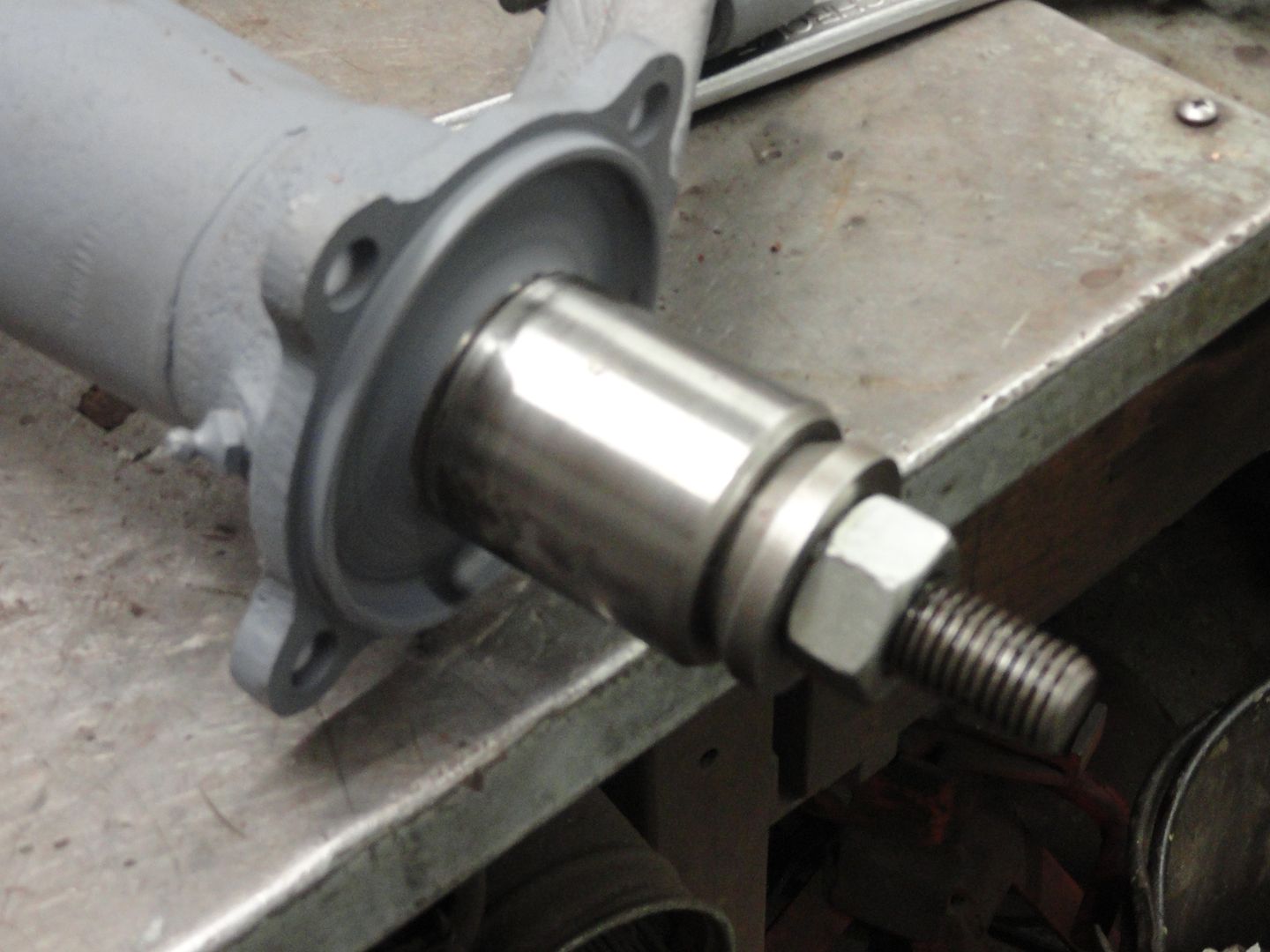
.....and the whole lot is dropped down the axle tube ,then the cone centralises all and the nut is simply wound on until it's all seated......easy....

above shows the seal sitting on the stepped plate....

.....and the whole lot is dropped down the axle tube ,then the cone centralises all and the nut is simply wound on until it's all seated......easy....
Talkwrench
Well-known member
Thanks guys. Neat tool Col, I was starting to come up with that sort of idea last night after stuffing around wit a flat disc I had and was tapping from the top but it wasn't working.. Also thanks the correct way the seals go in , Lawrie was with me and said it went that way.. I was over thinking again..
JM 35 Sedan
Well-known member
Old Col, I don't think we missed that question, but instead misunderstood what was being asked. Post #3 asked for a definition of the question, but being on the other side of the world, you all were probably sleeping .
I have always placed these lip seals so that the lip points in the direction of whatever you are trying to contain. In this case I usually install the seal so the lip faces out towards the threaded end of the axle. This is apparently just the opposite of what you are saying if I am seeing those pictures correctly.
. I have always placed these lip seals so that the lip points in the direction of whatever you are trying to contain. In this case I usually install the seal so the lip faces out towards the threaded end of the axle. This is apparently just the opposite of what you are saying if I am seeing those pictures correctly.
Last edited:
Bruce Lancaster
Member Emeritus
There are fragmented discussions of two different seals going on above, if you look closely!
4245, the one inside axle housing, points in toward differential to keep the 140 out of the brakes and inside the rear end. There is a third one of these behind the front bearing it torque tube...it points toward trans, to keep trans and U-joint lube at home.
1175, the one in the rotating hub, points outward to keep the grease inside the bearing.
Talkwrench
Well-known member
Yes John I was asking about the direction of installation. Tried to make it easy with the pictures. Less blabbing..
At this stage Bruce just talking about the inside of the axle housing.
We may get caught up in the definition of "the lip"?
Lawrie confirmed with me this morning he places the "open" end, the picture with the screwdriver under the lip towards the centre of the diff .
We are trying to contain the oil from the diff going through to the brakes aren't we John? the seal in the brake hub keeps the wheel bearing grease going the other way...?
JM 35 Sedan
Well-known member
Read all the posts on this thread and then decide for yourself.....

http://www.fordbarn.com/forum/showthread.php?t=136802&highlight=rear+axle+seals
http://www.fordbarn.com/forum/showthread.php?t=136802&highlight=rear+axle+seals
Talkwrench
Well-known member
Holy cow  ! Lol...
Bruce Lancaster
Member Emeritus
Yep, they all go in both ways, and reverse of that for RHD cars and those sold below the equator...
And it looks like Ford had problems convincing dealer mechanics to put'em in right from the earliest days.
The clearest statement of the gospel from Ford is in the Model A Bulletins (same layout as '32-48) in July, 1928, page 266. Dealer mechanics were already installing them wrong! The bulletin gives cutaway drawings of hub, axle ends, and torque tube with seals shown.