

You are using an out of date browser. It may not display this or other websites correctly.
You should upgrade or use an alternative browser.
You should upgrade or use an alternative browser.
Interesting Article - WW2 Ford Variants
- Thread starter petehoovie
- Start date

miniceptor86
Senior Member
Gotta like the green pickup with the pup tent!

highbeams
Well-known member
Semper Fi - '66-'68I have seen a lot of military vehicles during my military career, but never
like these three. Love um!
Looks like the rear end has chains to the wheels from a single axle.
Thanks for sharing.
petehoovie
Well-known member
I have seen a lot of military vehicles during my military career, but never
like these three. Love um!
Looks like the rear end has chains to the wheels from a single axle.
Thanks for sharing.
Last edited:

jayvee34
Senior Member
Looks like ring gear and pinion to drivers.
Yes they do, my mistake for thinking they were chain driven.


corvette8n
Well-known member
My brother had a 1967(?) DAF flat 2 cylinder, centrifugal clutch, pulley driven transmission. I remember pulling the motor and carrying it down the cellar to rebuild the clutch. Cool little car.

1952henry
Well-known member
This outfit was in good company with Mercedes Benz and their Unimog. The portal axles had a lot of gears and goodies in them. Not a lot more complicated than the front axle from a WW2 Mack NO 7.5 ton 6x6. No u-joints or cv joints in the turning knuckle. Torque was delivered to the wheels via pinions and ring gears.
Last edited:

ford38v8
Well-known member
.
That could be a little bit interesting trying to figure a FINAL drive ratio on that contraption. Realistically assuming that the four wheels would turn at the same speed, I see THREE sets of ring and pinion ratios that need to be figured into the equation.
Coop
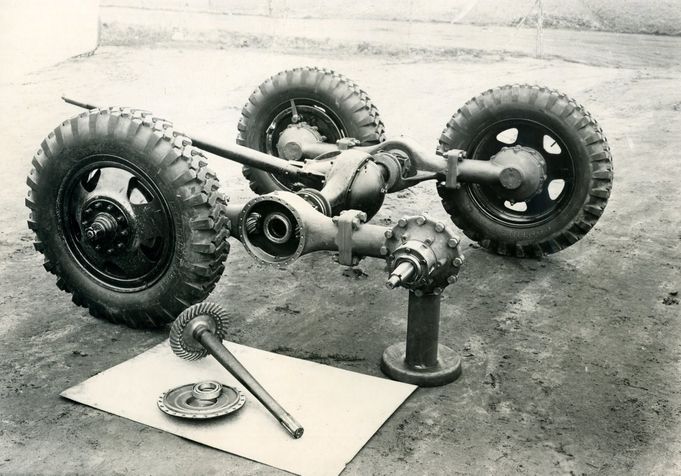
Something to ponder… it would seem to make sense that the final axle drive ring/pinion would be the same ratio as the primary axle drive assembly, one ratio canceling the other… except for a perceived need for clocking to prevent aggravated wear patterns. I would assume that a minor ratio difference would be a given in such a complicated arrangement of gearing, if for that reason alone.
petehoovie
Well-known member
Ya think?

rotorwrench
Well-known member
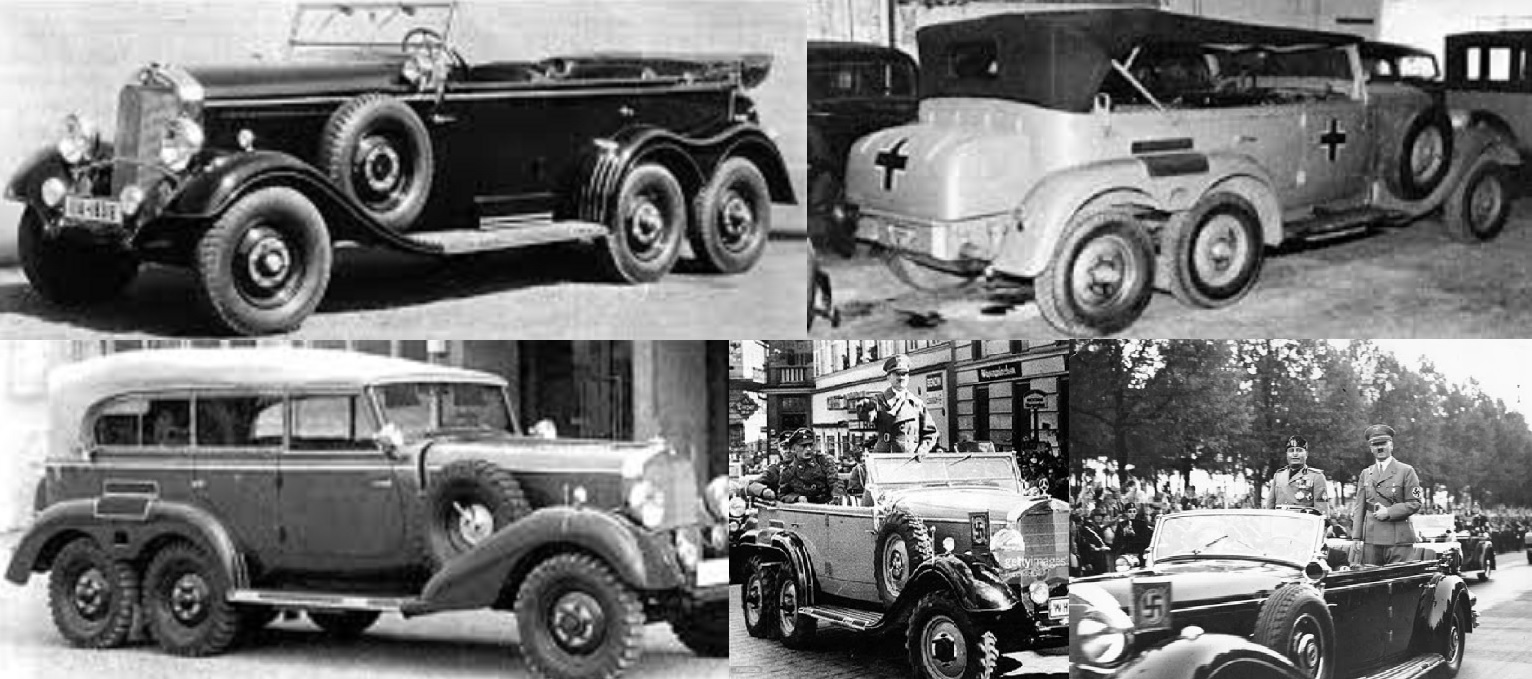
DAF in Eindhoven was an up and coming conversion company in 1936 when they started developing those dual rear drive set ups. The Dutch military may have had an interest in those types but after the German invasion in 1940, the Werhermacht were too busy ripping off a lot of what was available in the Netherlands. Late in the war DAF was starting to prototype things for the Germann invaders but they didn't get much in production before the Werhermacht bugged out after allied forces finally retook the Netherlands.
The M39 Pantserwagon was one of the few products that were made for the Dutch military prior to the German invasion.
The M39 Pantserwagon was one of the few products that were made for the Dutch military prior to the German invasion.
Last edited:
petehoovie
Well-known member
DAF in Eindhoven was an up and coming conversion company in 1936 when they started developing those dual rear drive set ups.
The M39 Pantserwagon was one of the few products that were made for the Dutch military prior to the German invasion.


flatford8
Well-known member
I like it too!…. the tandem axle must have been for traction…….or would ammo be a lot of weight in the small cargo box?…….MarkGotta like the green pickup with the pup tent!

drolston
Well-known member
The outboard banjos appear to be a ring gear driving two pinions to the front and rear wheel on each side. Big gear driving little gear puts a hell of a lot of torque on the big gear axle, - judging from the size of the ring and pinion (~4:1), about four times the torque. But that appears to be a pretty stout shaft. Reduction in the wheel hubs would mitigate that torque requirement, but from the size of those hubs, maybe only 2:1.
So, if they wanted a 5:1 ratio from engine to wheel for reasonable road speed, the center ring and pinion would have to be 10:1. No way that fits in the carrier depicted, so the transmission probably has something line 2:1 reduction in high gear.
All pure speculation on my part, but I am fascinated by such contraptions.
petehoovie
Well-known member
Cool stuff. My friend has a ww2 Mack NO, I'll have to ask him about the front axle now.
