
You are using an out of date browser. It may not display this or other websites correctly.
You should upgrade or use an alternative browser.
You should upgrade or use an alternative browser.
Head Gasket question
- Thread starter Django
- Start date

Jack E/NJ
Well-known member
Haven't used them but I think the original Denver heads were HC iron. Some aftermarket HC aluminum heads also may have inherited the Denver moniker. I don't think it makes a big difference which gasket is used even though Felpro advertises that some of their gaskets are specially made for aluminum. I usually slather a good layer of grease on all surfaces before assembly no matter which metal or gasket.
Jack E/NJ
Jack E/NJ
jerry grayson
Well-known member
I don't believe that.They're not that rare are they?
Spoke to an engine builder and he confirmed that the Fel-Pro set will be better than the copper because when cold, the copper is going to seep a little.

Flathead Fever
Well-known member
I would use the Felpro gaskets on a street driven flathead. Modern composite gaskets are designed to deal with the different expansion rates between the cast iron block and the aluminum heads. The instructions that come with new Edelbrock aluminum heads suggest using Felpro gaskets. This style of gasket is used on all modern engines and rarely do modern engines with cast iron blocks and aluminum heads have gasket issues unless the engine has been overheated and the head gets warped.
I can also see using copper head gaskets if you are looking for a period perfect restoration of a vintage race car or hot rod, especially where the edges of the copper gasket will be visible. There is only one correct way to restore a car and that is to use the parts and technology that were available at the time the car was originally built.
I can also see using copper head gaskets if you are looking for a period perfect restoration of a vintage race car or hot rod, especially where the edges of the copper gasket will be visible. There is only one correct way to restore a car and that is to use the parts and technology that were available at the time the car was originally built.

FRANK PKNY
Well-known member
The Felpro gaskets are much more forgiving. Work for me very well have not had any problems with them. Like Flathead Fever says they are a modern design. JMHO


Django
Well-known member
Do these gaskets require some grease or that spray like the copper gaskets before putting them down. I know the studs will need some silicone around them right? My thought is that since they are composite, they don't need any spray or grease since they are modern technology, but I just want to confirm before we proceed.
Jack E/NJ
Well-known member
Grease helps keep the composites from tearing and sticking if/when the heads are removed the next time. Less scraping needed. When assembling, also make sure those stud & nut threads are clean and well-lubed with something like never-seez. I usually torque to about 10 ft-lbs less than spec. I rarely go to full spec torque on initial assembly. I then continue to re-torque until all the nuts seemed to have reached this equilibrium torque value, ie nuts don't turn any further. This sometimes takes a half-dozen re-torques till the nuts stop moving at 10 ft-lbs less than spec. Knock on wood, haven't had any leaks yet not going to full spec torque with either my flat- or over-head rebuilds. 8^)
Jack E/NJ
Jack E/NJ
Bruce Lancaster
Member Emeritus
What numbers are on the heads? Denvers are iron...there were 3 different versions with different CC's. All the Denver prefixes contain an "S" for special or some such, indicating parts that were over the counter and not used in production.


GOSFAST
Well-known member
The 7548B head gaskets go on absolutely dry, no type of sealer (or oil?) at all!!
The only gaskets from Fel-Pro that use sealer would be the later "Flatties" using the copper 1055's/1056's. These would get copper-cement-spray!
Thanks, Gary in N.Y.
P.S. We've recently devised a procedure to "dowel-pin" the heads to the block, we can do both aluminum or cast iron heads! It greatly extends gasket life, especially with the aluminum heads and the copper gaskets! It can/should only be done at "rebuild" time!
http://good-times.webshots.com/album/567557661EjkkPG
Last edited:
Bruce Lancaster
Member Emeritus
The commonest Denvers and highest compression ones are iron with PN 81AS-number (I think 60 CC). The regular production heads were just 81A-number...Ford was heavily into cryptic markins, so 81A heads just have the A, Denvers just the AS, enough for the parts man to separate passenger/truck/HC heads.
Lots of 21 stud Ford USA heads and some 24's were made in aluminum, along with many Canadian Ford heads. Most were eventually replaced with iron heads due to corrosion.
Eyeball the upper edges of your heads...I don't think you will find anything, but some late '30's Ford heads had numbers cast there.

hop up
Senior Member
Hey them heads look NOS and please share more pics of the Cabriolet in the background,
Sorry, I must have my heads mixed up. The 24 stud heads don't say anything. But I know I have a 21 stud aluminum head somewhere that says Ford on it.
I've heard these heads referred to as "Denver" all the time. So they are not?
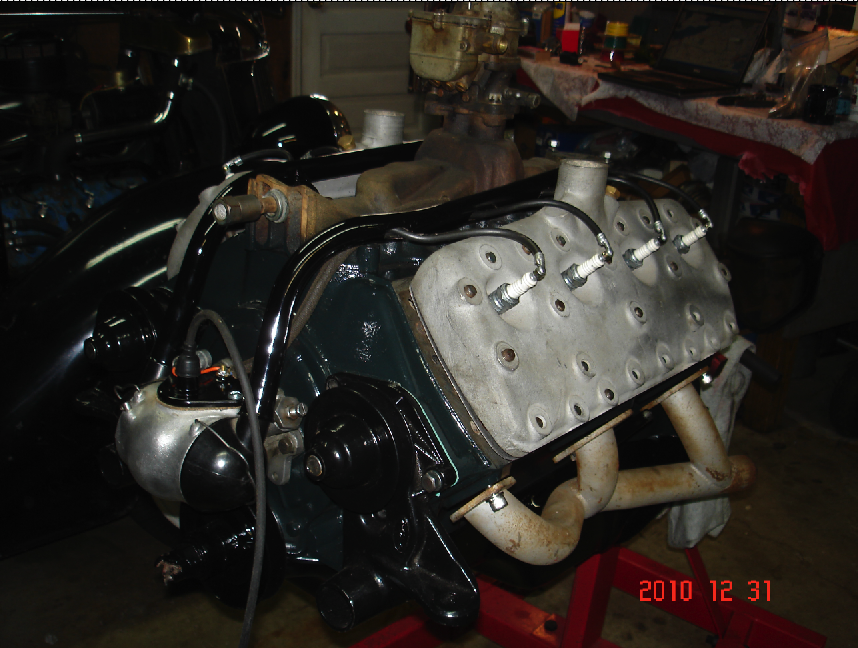
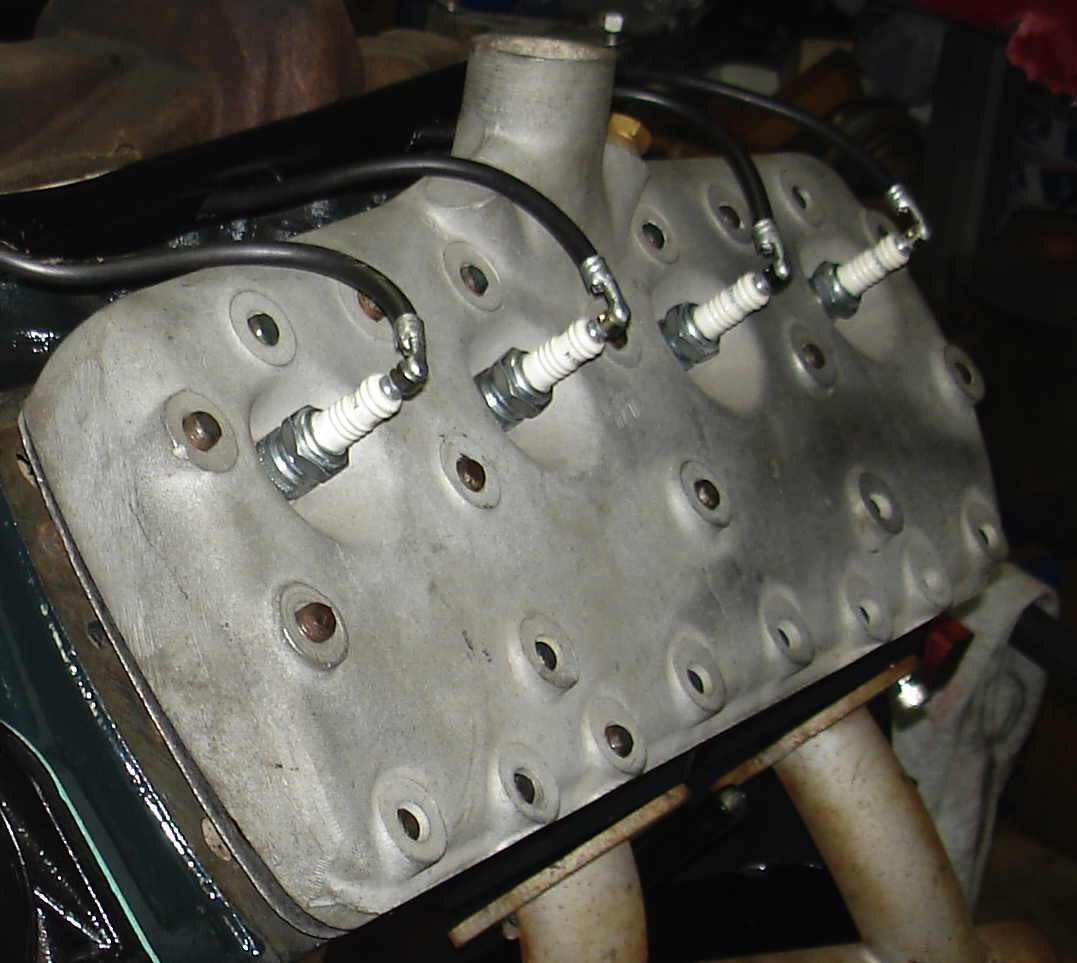
Both my 3 window coupe and 33 roadster have blown (B&M superchargers) on 296" Ford 8BA flatheads. One built by Mark Kirby back in the late 90s and the current one built by myself. I use Graphtite head gaskets on both. The coupe has 25,000 miles of problem free driving, and yes, I do put my foot into it on occasion..These are very healthy motors and never had a problem with the head gaskets after a couple of retorques. I am a strong advocate of head studs, although they are a pain to get off if the occasion should arise...In my opinion, they are the only gaskets to use..Both engines have 425 Offy heads, modified, 140 lb crank pressure, 5 lb boost..This has to be a good test of head gaskets!!!!