Crank Pulley

psimet

Senior Member
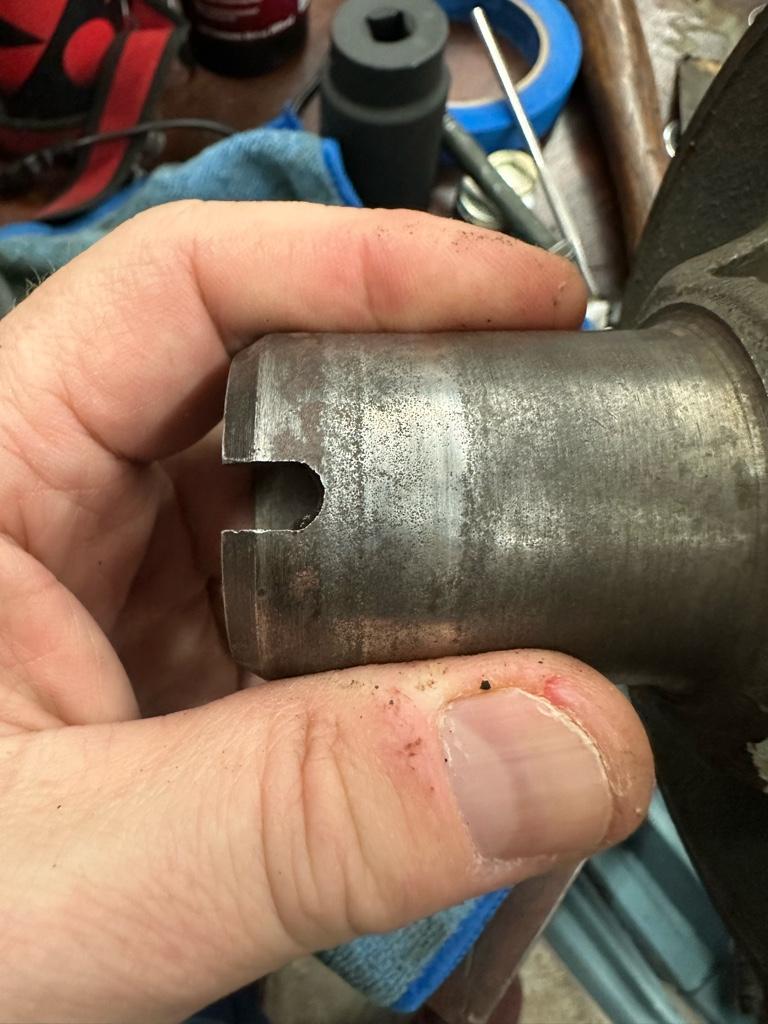
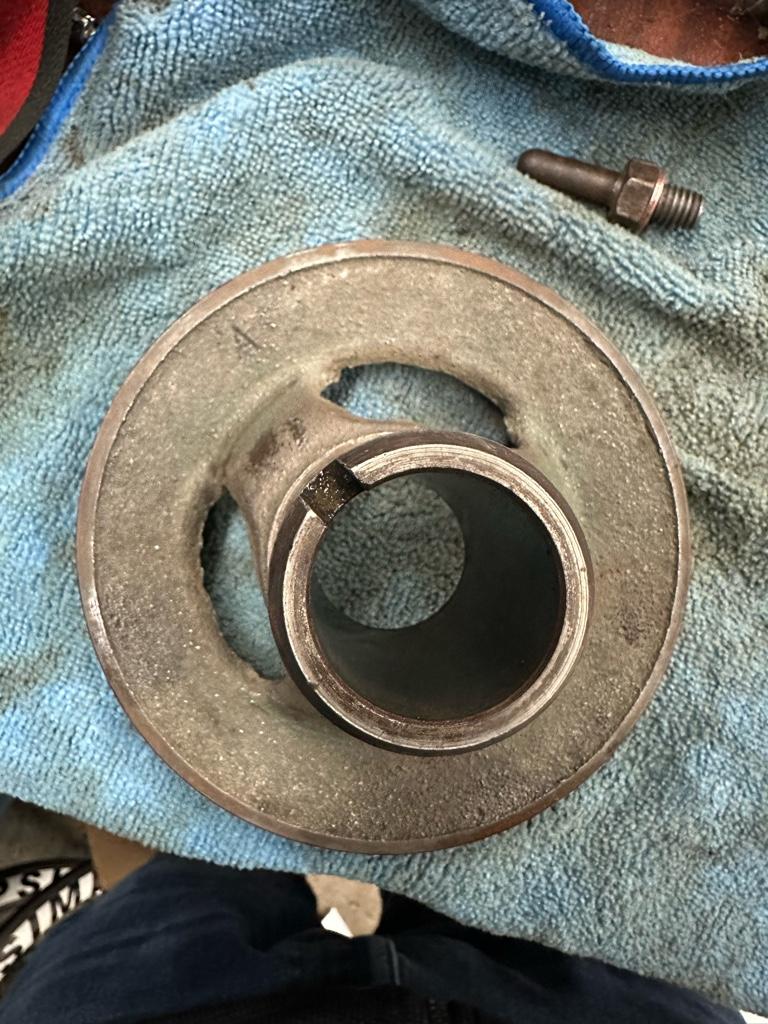
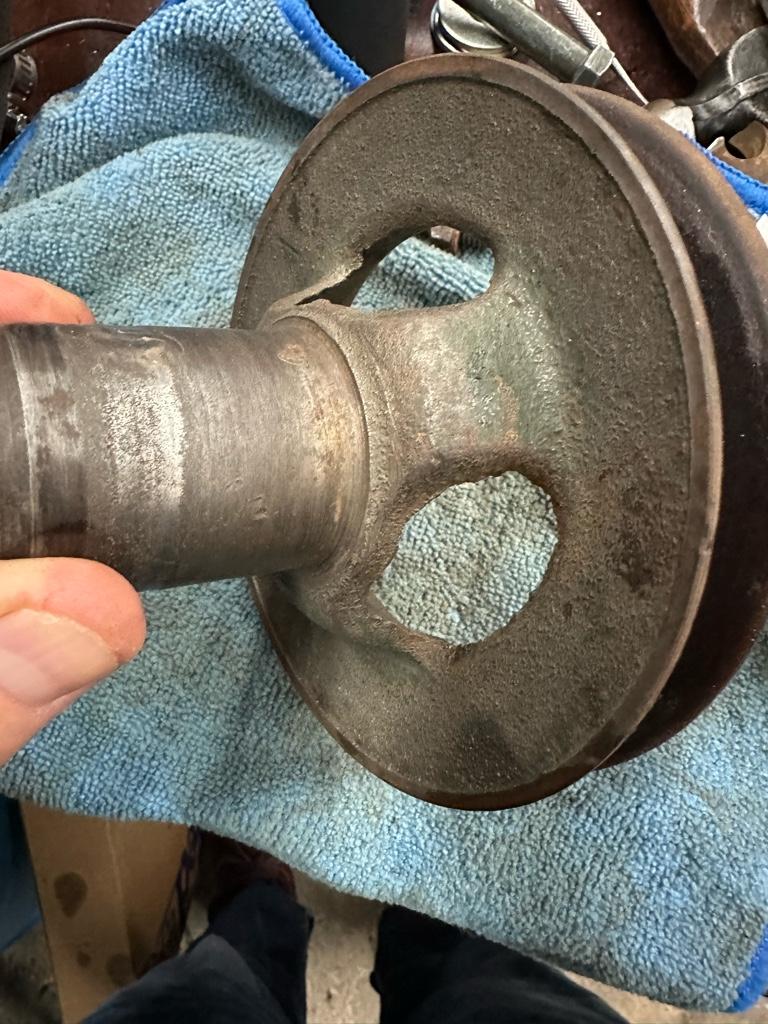
Putting together my engine and I have the option of using my original pulley (Sept 1928 car) or the one the guy had set next to the engine to go with it before he passed. I just pulled the original one and cleaned it up slightly. Has wear on it from the seal in front. Has “A” cast into it.
5d1731918defa1cba1a2bbd7fde4d554.jpg

ec8dbd949e8a7f588dfdf2e906a1ec0b.jpg

690d3b38ce6c60bd3ad8752d479d3261.jpg

5bc762e8b77f609e879eac6127f9a6a0.jpg
c81b4d5c0fbbc309eff85b82376167ce.jpg


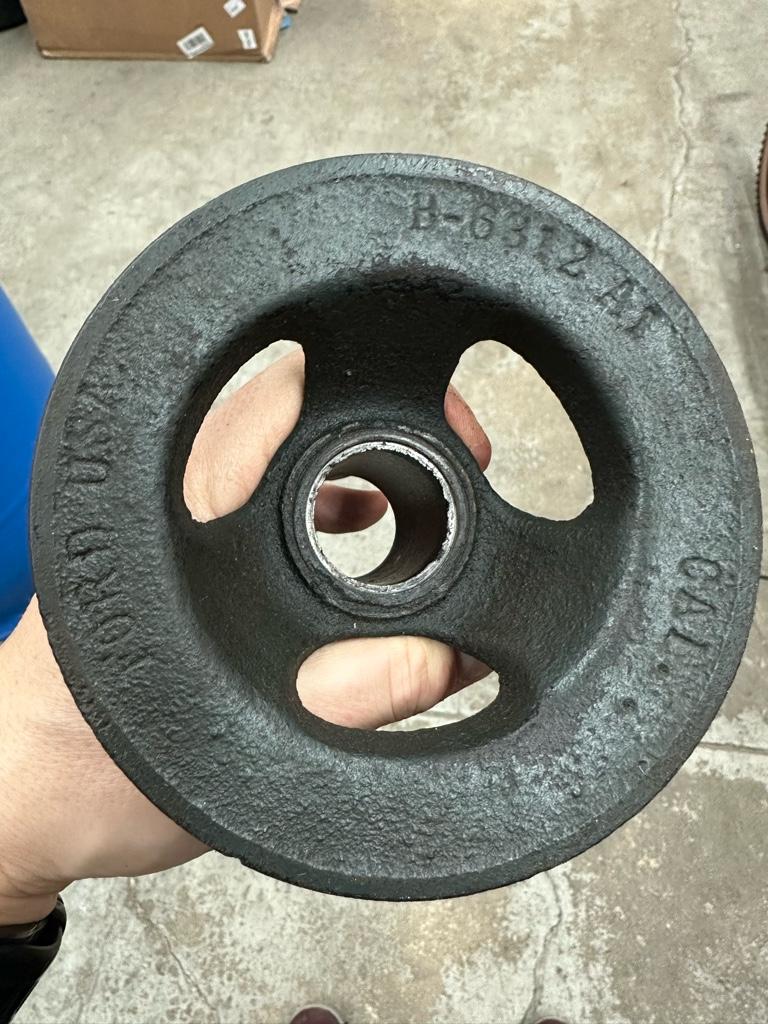
The other has a “B” part number. I don’t like the key way notch on it but otherwise is in good shape
41aab31e3c56532da095d01ffbca42e8.jpg

74ac5ee0cec08e1202d62674c08f6c25.jpg


I don’t believe I have any want to put in the 2 piece style. I think I’d like to stick with my original if the wear isn’t too bad. Also that small divot - hoping that’s ok.

Planning on cleaning and re-painting either one I choose.
 
If you have a lathe, you can mount the pulley and polish the seal area. The better the polish the longer the seal will last. The seal area also has to be concentric to the bore.
 
Last edited:
I do have a small lathe in my shop. I was going to ask if anyone had a tolerance spec for the diameter there.
 
I do have a small lathe in my shop. I was going to ask if anyone had a tolerance spec for the diameter there.

If you are using the original rope type front seal you do have a bit more leeway than if you were using a lip seal. I would take a minimal amount off, low thousandths, or better yet simply polish with progressively finer sandpaper. Or just get a new one-piece pulley with a fresh surface. They are not horribly expensive.
 
Last edited:
Your pulley that was on the motor is a Model B service replacement, PN B-6312-A1. The original pulley for your 1928 car has PN A-6312. The fit, form & function of the A-6312 & B-6312-A1 are the same.
 
Last edited:
If you are using the original rope type front seal you do have a bit more leeway than if you were using a lip seal. I would take a minimal amount off, low thousandths, or better yet simply polish with progressively finer sandpaper. Or just get a new one-piece pulley with a fresh surface. They are not horribly expensive.


I’m using the seal and gasket set Antique Engine Rebuilding provided with the work they did on the short block I acquired. I believe it’s a Snyder’s kit and I believe I saw 2 modern rope seals in there.

I just saw something about the lipseal option coming from Burtz I believe(?) which I do find interesting but not a game changer for me. Even though the engine received their “touring package” work I don’t foresee me driving this a ton. Not restoring the whole car. It’s a survivor and I have grown fond of keeping it that way.
 
I would just polish it with a pc of scotch Brite.


Did that by hand already. Was thinking I would do that or super fine emery cloth.

8003cc440ac5bff46c9306d1b1911d81.jpg

That was it before.

e6f0a653dad70205c8a1e7d1989a91cc.jpg

That’s it after a quick wipe with a scotchbrite pad and quick rinse in the parts washer.

There’s definitely a more pronounced depression where the old rope seals burnished it.

I guess I’m saying I’d like to re use this one but want to know the objections to doing that before I do. Like how deep of a depression is too deep, etc.

I guess if I’m using the rope seal it’s not all that important as long as it’s smooth.
 
I'd be concerned with the chewed up keyway.Why is it chewed up? Run loose?Why was it run loose? If the crank snout stands proud of the pulley,the pulley will never tighten.It'll walk and back and forth and eat the keyway like that.
 
Use the A marked pulley with the good keyway slot. But polish it more with some fine sandpaper and then crocus cloth. I wouldn't worry about the small amount of wear if you are using a rope type seal.
 
The second photo from the top of your initial post seems to show a chunk taken out right in the sealing surface, and ridges surrounding it like something it it pretty hard. I'd be a bit concerned about smoothing that out to get a good seal. As others have noted, actual OD is not as important with the rope seals, but concentricity and smoothness are critical.
 
The second photo from the top of your initial post seems to show a chunk taken out right in the sealing surface, and ridges surrounding it like something it it pretty hard. I'd be a bit concerned about smoothing that out to get a good seal. As others have noted, actual OD is not as important with the rope seals, but concentricity and smoothness are critical.


That’s why I posted it. It seems like it’s always been there from casting. It’s not on the sealing surface though. It’s way in front of that. I’ll post a pic of it where it’s all visible here in a bit.
 
That divot is far ahead of the sealing surface.Speedi sleeves work nice,but one to fit that is around $40.and a new pulley is less than $30.It does look like a casting flaw,not damage doen to it.
 
Should the new pulleys be checked for balance? Some I have seen appear to have the bore somewhat off-center in the casting. Also, how effective for leak control is the reverse grooving available on some replacement pulleys?
 
The divot in post #15 is not what I was referring to. See attached.
 

Attachments

  • Screenshot 2025-02-19 at 11.47.09.jpg
    Screenshot 2025-02-19 at 11.47.09.jpg
    18 KB · Views: 30
When you get ready to install the old or a new pulley, do not hammer it on as this can damage the thrust bearing for the crankshaft. Use a series of bolts, starting long, then medium length, then a shorter one. Use a ball bearing as a thrust washer so that the bolts do not turn the pulley as you push it on. Carefully align the notch in the pulley with the key and make sure it does not rotate when pushing it on.
 
Back
Top