
Correct setup for crab style distributor

tony starr

Senior Member
Hi all,

I've been reading (a lot) about coils, condensors and ballast resistors (mostly threads from Bubbas Ignition) and I'm just looking for clarification on the correct setup for my crab style distributor.

Below are a few photos and what I'm thinking has happened to my 1941 Ford prior to my ownership... Obviously someone has swapped the original "helmet" style distributor for the crab and it also looks like they've by-passed the under dash resistor (seems the wires tapped in blue are meant to be connected to the ballast resistor here).
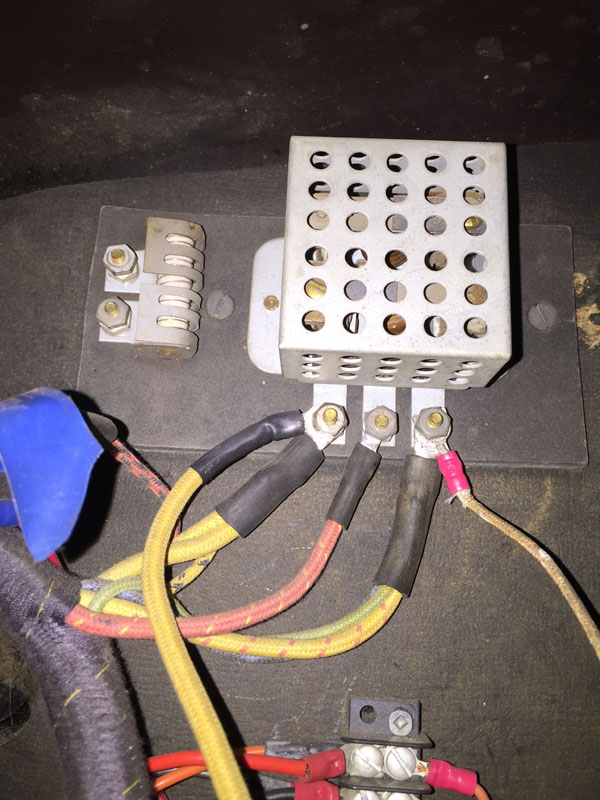
41_underdash.jpg


Which from what I've read, would make sense due to the use of an aftermarket style coil (which probably has an internal resistor - I'm yet to check the resistance).
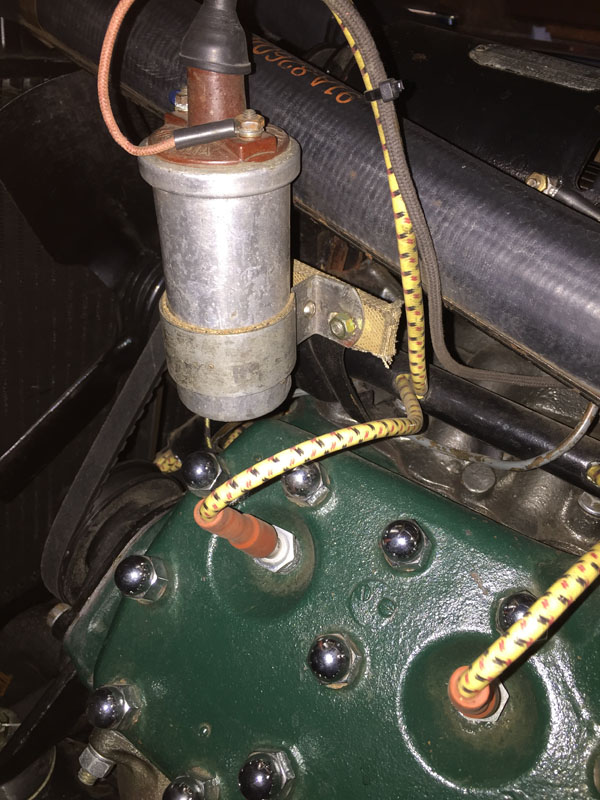
41_coilaf.jpg


I do have an original style coil I'd like to get rebuilt (Skip - does he still perform these rebuilds?) and put back on but I'll need to re-connect the current by-pass to ballast resistor.
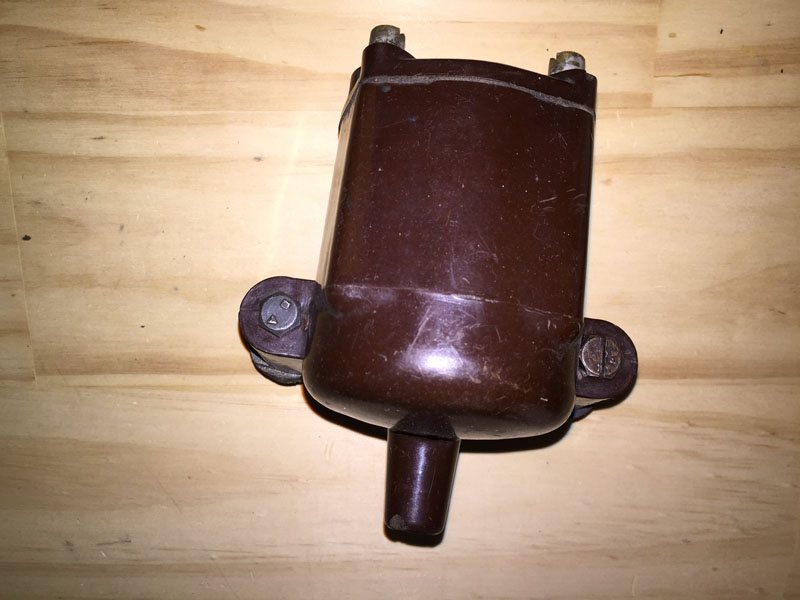
41_coilog.jpg


It also looks like I have a different style condensor.
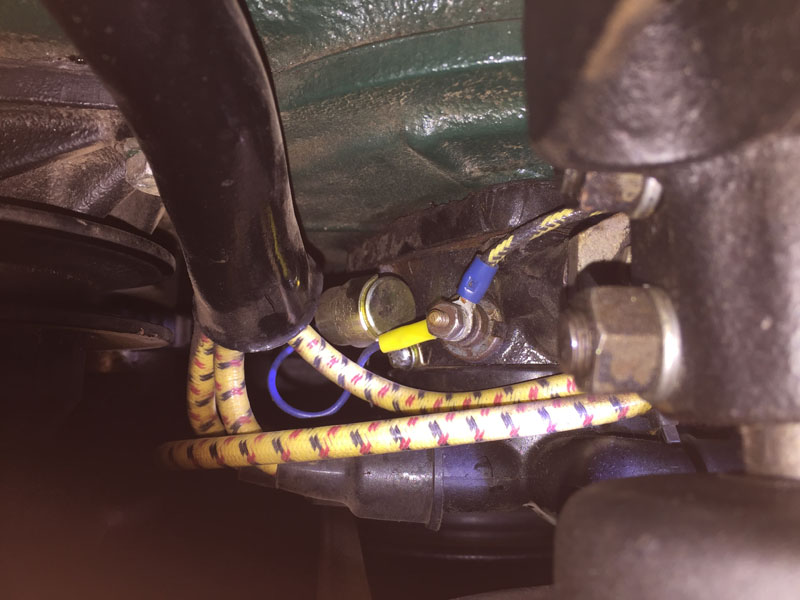
41_condensor.jpg


What I'd ideally like to do is put back the ignition system back to the original style Ford, even though a crab style distributor isn't original for '41.

The car runs fine as is, although there was one night where I was stuck in traffic - the flathead was running a little warm - plus it was a warm night and the car just quit on me and wouldn't re-start. At the time I was thinking condensor and then maybe the coil got too hot (it is currently sitting right next to the upper water hose). After the car cooled down a little, it started right-up, ran fine again and hasn't been a problem since. But I'd like to replace the condensor and coil anyway.

Any advice or suggestion would be greatly appreciated!

Regards,
-tony.
 
I'd stick with the crab as they are bloody good dizzys. I found the original style condensor to be hit and miss as to whether they are any good. I actually bought ones that were duds.
Someone recommended I use a Nissan skyline one which I do. Fits perfect just need to bend the mounting tab up a scratch and grind a gnats off the edge so it clears the cap Bosch GH208-C is the part.
I used a round type coil and the car always ran like a "hairy goat", then the coil **** itself so I got a rebuilt one from skip, installed that and it runs like a clock now and also starts real easy as well.
Yes I think originally the round coil had a built in resistor and I was getting reduced spark because the under dash one was still hooked up. Get a skips rebuilt you wont regret it.

GB
 
Last edited:
It is not clear if you want to stay with the crab or go back to the helmet? The coil you have would be for the crab. Bubba sells ignition condensers for a magneto that work very well on the crab. Skip still rebuilds as far as I know. If you have skip rebuild either the crab or a helmet coil you want to reinsert the original Ford resistor, it should be 0.5 ohm
 
Bosch GH208-C is the part

Thanks Graeme. I think what I have currently on there is a Bosch condensor. And when the car did stall on me that one time, I did think condensor due to having condensor issues with my Model A. But maybe the coil was the problem that night. I need to obviously check it.

-
 
"warm in traffic" classic vapor lock problem. The modern coil without resister is also a normally trouble free system.
 
I should keep my nose out of this one; but for a lifetime I question why Ford products has a ballast resistor?? nobody else did. What I mean is, in my prime (before 12vt)
We serviced Chrysler products, back then most were like 36 Plymouths 40s DeSotos
Buicks and none had resistors except Ford Products. I see dropping 12vts down with
resistor but dropping 6vt down, I don't get it. Got a 48 Ford tractor no resistor and
shame on me but-same points going on 15yrs (6vt pos grd) and this is no toy, used
7 days a week since my father bought it new. Later on about 1956 starter solonoid
shot 12 vts to the coil then dropped volts to the resistor when running-I can see that,
but dropping a whimpy 6vt to 4vt or whatever unless a 2 pole starter soloniod is used. My kids 30 A Ford 6vt to the coil : So bottom line, my 46 has a resistor so does that mean its starting on a resisted 4+ or - volts? No, I aint put volt meter on
coil on 46 yet to see but I will. I just see no reason. feel free to bash me sam

I have always wondered the same questions you have here. Why drop that 6V down to the coil?
 
"warm in traffic" classic vapor lock problem. The modern coil without resister is also a normally trouble free system.

And that's probably what the issue was that night. This car does have an inline electric fuel pump for easy starting after it has been sitting for days. But even turning that on, didn't help until the car had cooled.

-
 
The inline electric fuel pump should have taken care of any vapor lock issues, if that was actually your problem. I'm thinking a heated coil or condenser was at fault as someone else previously mentioned.

I recently had Skip Haney rewind two of the original coils that were used with the crab/rabit ear type distributors used from '42 to '48. I plan to use these with a Harmon - Collins dual point, dual coil distributor on a Flathead powered hotrod I started to build years ago but never finished. I chose to go with original looking Ford coils rather than having two of what I consider to be modern looking cylindrical coils mounted on top of the engine in full view. I usually prefer to run stock original Ford distributors on my '35's and after having a couple breakdowns in traffic in the past, today I wouldn't go any further than the end of my driveway without having an original Ford style coil that's been rewound by Skip.
 

Attachments

  • '42 - '48 Ford Coils, Skip Haney rewinds.jpg
    '42 - '48 Ford Coils, Skip Haney rewinds.jpg
    70 KB · Views: 54
  • '42 - '48 Ford Coils, Skip Haney rewinds (2).jpg
    '42 - '48 Ford Coils, Skip Haney rewinds (2).jpg
    84.5 KB · Views: 48
  • '42 - '48 Ford Coils, Skip Haney rewinds (3).jpg
    '42 - '48 Ford Coils, Skip Haney rewinds (3).jpg
    79.9 KB · Views: 47
  • Skip Haney Coil Rewind Info Sheet.jpg
    Skip Haney Coil Rewind Info Sheet.jpg
    52.1 KB · Views: 71
The old plastic case coils were constructed with an iron core running through and surrounding the windings with the primary winding on the inside so they needed a bit of current control in the form of a ballast resistor to keep the heat build up to a minimum and make the design more reliable. They still have a very good high tension voltage output despite the way they were designed. The can type coils have the primary of the correct resistance value wound on the outside of the secondary with only an inner core and a dielectric oil providing an adequate insulator so they don't need current control to keep them operating reliably as long as the input voltage is no more than around 7 volts DC.

Skip Haney vastly improved the materials utilized in his rebuilds so that the reliability is even better but they still need a current control ballast to keep the generated heat in a stable range. Just don't forget to turn off your ignition after you park your old Ford for the day.
 
Bigjob, to answer your question;
The Ford 6 volt system runs a 4 1/2 volt ignition coil.
What happens is that when you first turn the key on, the coil gets 6 volts. This means that when you hit the starter button and the starter drags the battery voltage down, you are still getting a good 4 1/2 volts to the coil, maybe as much as 6 volts. This means the ignition system is not robbed and probably gets a voltage boost while the engine is starting.
What happens though is that very quickly the resistor heats up and as it does so, it drops the voltage to the coil to the voltage that the coil is designed to run on.
It is a very simple system, and credit to Henry Ford, that he was a fan of simple .
The fact that his coils have not stood the test of time is a different thing.

I hope that clarifies things a bit.

Tony, are you still using the H.T. distribution tubes from the early distributor. It appears you have two H.T. leads crossing over above the dizzy?
 
Tony, are you still using the H.T. distribution tubes from the early distributor. It appears you have two H.T. leads crossing over above the dizzy?

Yes, I still have the spark plug wire tubes in place but not the insulators before the distributor cap.

-
 
Another question. As a quick solution and to take my current after market coil out of the equation, would another 6-volt universal coil installed with a primary resistance of 1.04-1.27 and secondary 7700-9500 ohms require me to re-connect the under dash ballast resistor? Some of these brand new universal 6-volt coils mention the need for an external resistor.

Thanks.
 
Back
Top