Spring spreader tool????

You probably don't need one.

I have said this already. Do you know you need one or are just not sure?

What angle are you shackles hanging at?

I'm trying to help, but can't make out if you're listening or not.

Mart.
 
One on e-pay for approx $125
32-48 Ford Model B 18 48 Front Rear spring spreader Lincoln Mercury Coupe Sedan
 
I don't use a spreader on a complete car. I jack the car up and put it on stands. I put a floor jack under each end of the spring and jack them evenly untill the load is off the shackles. Remove one set of links andthen the other. This is what I do on the back of 32's with the bent spring. On the front ,I use blocks of wood beween the spring and the axle.
If you do use a spreader, make sure it has room to retract enough to get the load off the spring once it is released. The 40's springs have a lot of free arch and sometimes you can't get the spreader out. I use a portapower on axles out of the car.
 
I have a post on your other thread about a homemade one. It cost me a hell of a lot less that $125.00.
 
I'll just put my 02cents to this. Probably 5cents more then anyone wants to hear. :).

You don't have to have a spreader to do the front spring due to the weight of the engine. Is a spreader easier? In my opinion, yes.

Jack the car up from the front axle. Take it up fairly far. Then put jack stands under the frame of the car. (dont forget to block the rear wheels and pull the parking brake).

Next before you lower the axle down, get a few 2x6s and shim the wheels so they just come down an inch or two and the car is resting on the jackstands on the frame. Why? Because if you just let the axle drop you will have to jack the spring up further then if it was supported.

Now put your bottle jack under the leaf spring eye and start jacking it up. As you go watch a few things. 1: if the frame starts to leave the jackstand, then there is not enough weight (down force) to un-spring the spring. 2. where the bottle jack is on the spring eye. The spring will expand (move out) as it is being lifted. Lower the bottle jack and re-adjust the position if needed. Make sure the jack doesn't interfere with the removal of your shackle.

Once you have the pressure off the shackle (with the shackle nuts loosened wiggle the shackle bars, then it is fairly close). Depending on the shackle that is being replaced with and the one that is on it now, you will be able to change out the bars. Or replace it completely with new shackles.

Do one at a time and keep an eye on the jackstands. Take your time.

Many times replacing the rear spring (especial if the spring has any spring left to it and not worn completely out), it will not work unless you drop 5-6 hundred pounds of concrete over the rear axle. At least that is what happened for me.

Best of luck, be safe, and have fun.
 
Last edited:
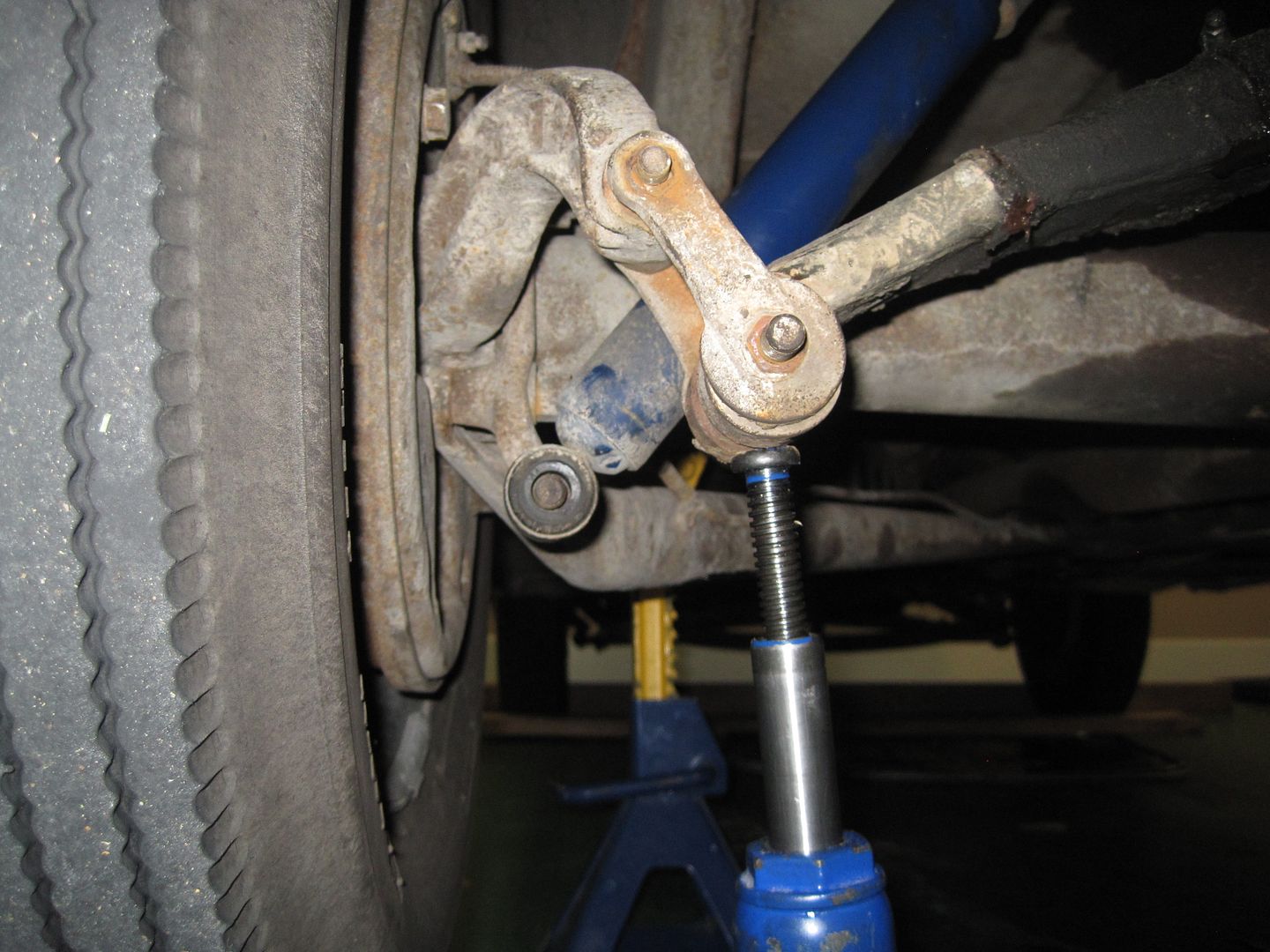
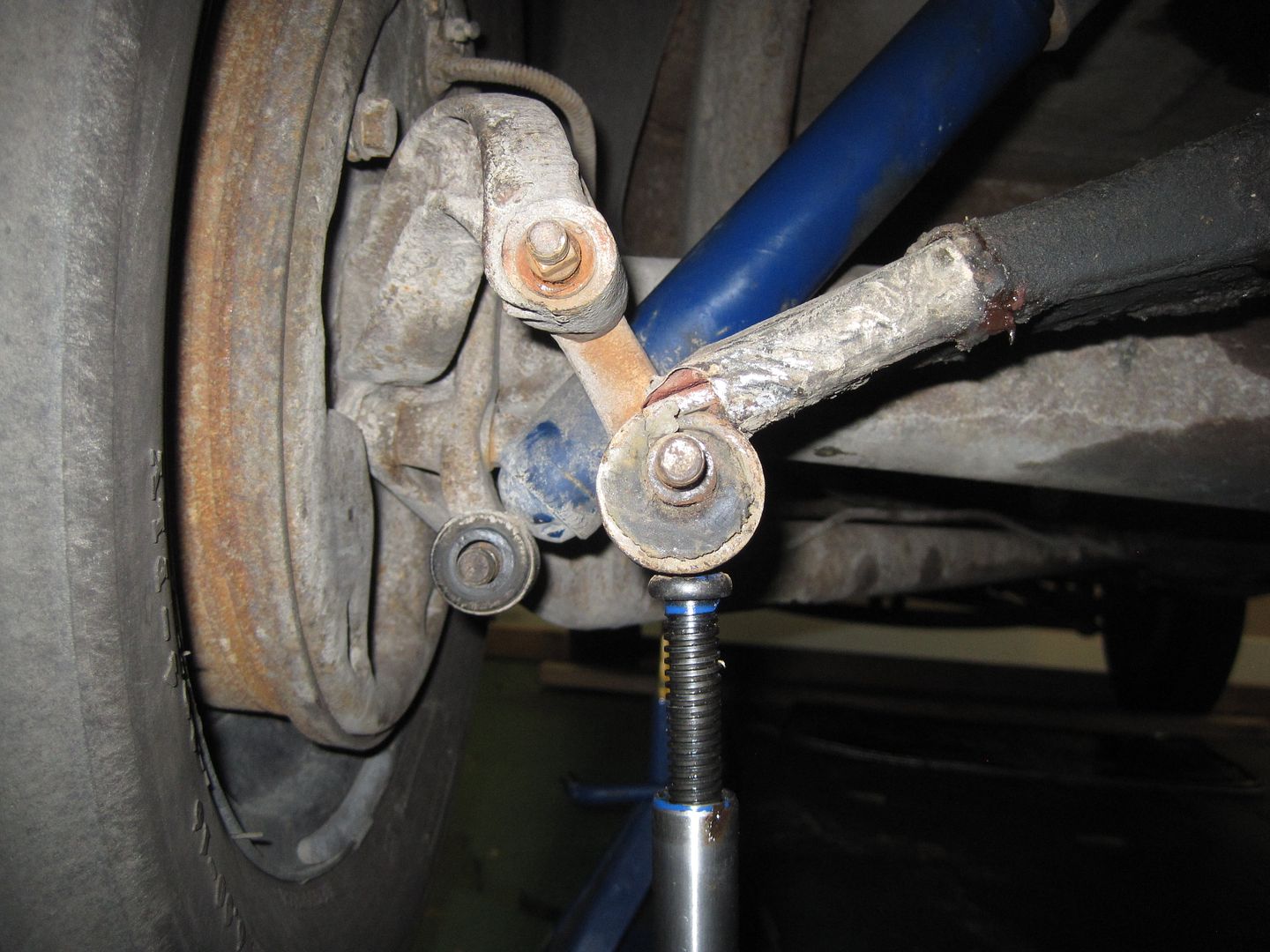
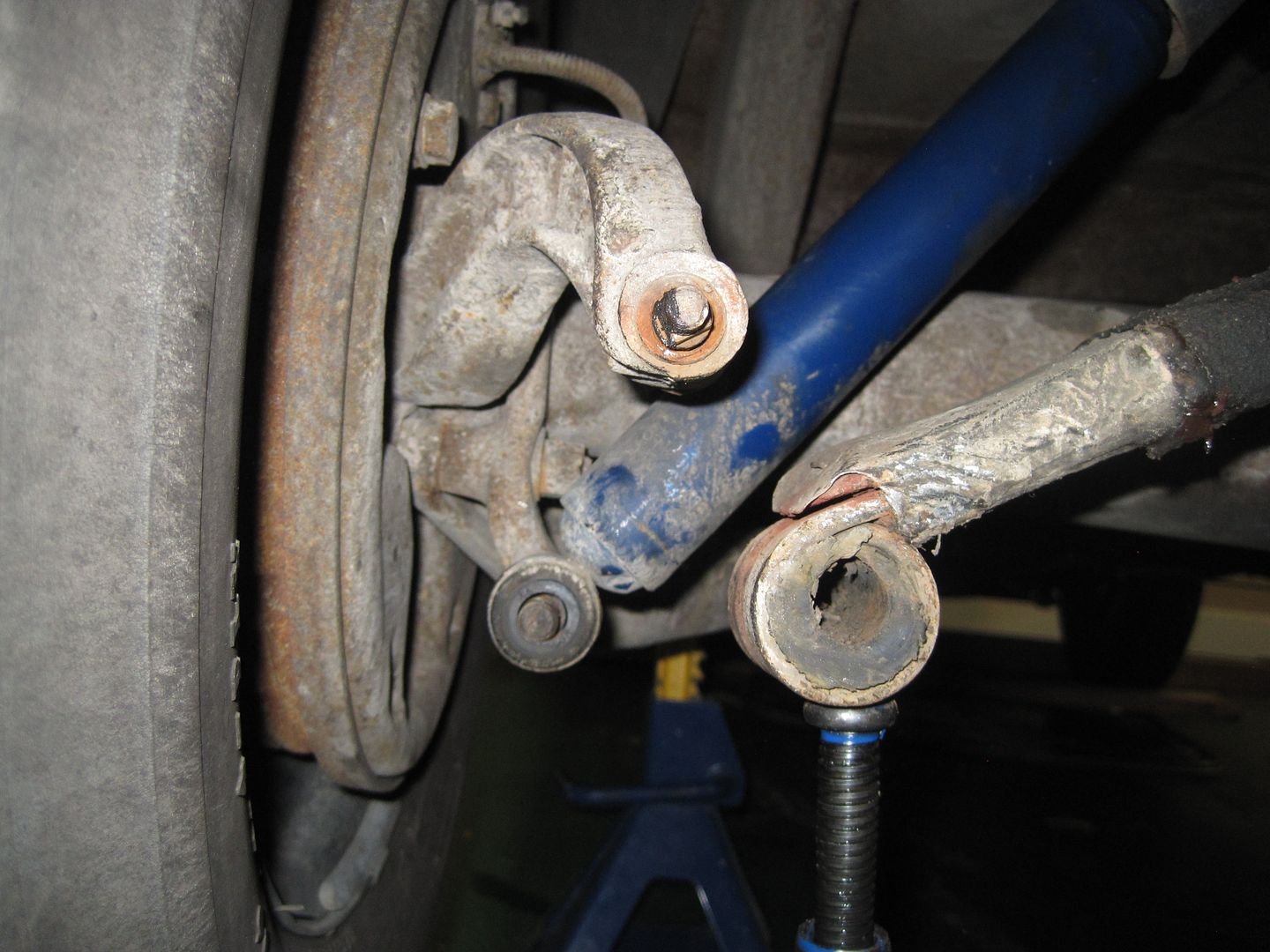
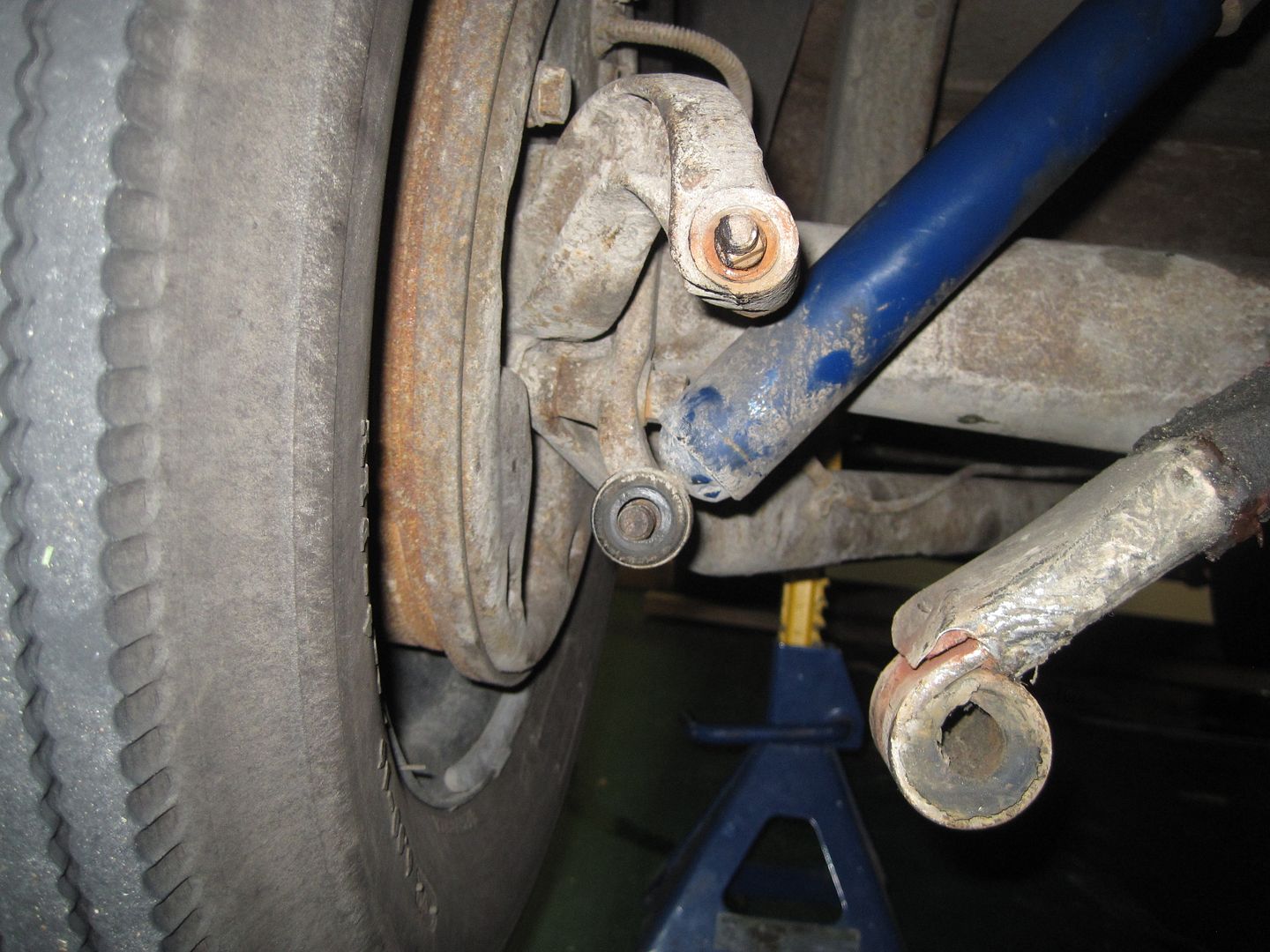
Here's how I disconnect my spring without incident. Although the pictures are rear axle it works the same on the front. Just did those. (Reverse of procedure is used to reconnect.)

First, jacked the car up and supported it on jack stands under the frame as shown.

I left the axle hanging on the shock absorbers (it could also be supported by a floor jack) and lifted the end of the spring with a bottle jack just enough to take the pressure off of the shackle bolts. Nuts can be removed before or after placing the bottle jack.

IMG_4009.jpg


Then removed the shackle from one side.

IMG_4010.jpg


Then the other side. (Spring end did not budge a bit - held by the bottle jack.)

IMG_4011.jpg


Lowered the bottle jack and the spring slowly reached it's limit of where it wanted to bend to. No "boing" or nothin'.:)

IMG_4012.jpg
 
Last edited:
Whichever way you decide to go, be very careful. These springs can hurt you! Use the safest method you can find and don't take an unnecessary chances.

Also, if you do a search here, you will find many posts on this subject that may give you some further guidance.
 
A floor jack is more stable and can roll inboard so it does not try to tip.

That is true Andy and a good point. It is why I mentioned "shimming" the wheels up. You won't have to move the spring nearly as far as it already has some pressure on the spring, expanding it out further. Once the shackles are off you can remove the "shims' if you like. It's definitely a bit of a balancing act.

Personally I still prefer to use a spreader. Easier and safer to me... but it can be done without.

Till the next spring spreader post. :rolleyes::D
 
You probably don't need one.

I have said this already. Do you know you need one or are just not sure?

What angle are you shackles hanging at?

I'm trying to help, but can't make out if you're listening or not.

Mart.

Agreed.
I am looking at a 47-48 setup that is loose from the car right now.
Unlike my 41 which has the spring under load the 47-48 spring is loose with no strain on the shackles at all. Don't think that you need a spreader.
Just my 2 cents as well.
Torchie.
 
So... What was fords original shackle setup angle on a 42; 46-48? Did it have an angle to the shackles? Did they hang straight down? Or past the perches? Seems you would need some tension to prevent sway. Even though there is a factory sway bar.

The old 42 I had the springs were past the perches. I drummed it up to a completely flat (which it was) original spring. The rear was the same.

187192
 

Attachments

  • 42b.JPG
    42b.JPG
    146.2 KB · Views: 19
  • SPRING.jpg
    SPRING.jpg
    73.3 KB · Views: 147
Last edited:
Here are a couple of pictures of my home-made spring spreader. A piece of 1" pipie, a piece of 3/4" all-thread. a 3/4" nut and 2 3/4" washers and a short piece of angle iron. The only welding I did was welding the angle to the end of the all thread. I chamfered the end of the all-thread pretty good and used a lot of heat on the weld. Cut the appropriate angle on the end of the pipe and your're ready to go. Try to get as long a piece of all-thread as you can to keep it aligned. Leave as little of the all-thread exposed as you can. You can pretty much figure the dimensions by measuring your spring. A little oil between the washers and you're ready to go. I have used this to put springs in a '36 3-window I once had, as well as the tub I am building now and it worked great. BTW, I left the protective plastic cap on the end of the pipe under the washers, and I believe that helps a bit as well.
 

Attachments

  • spreader 001.jpg
    spreader 001.jpg
    86 KB · Views: 95
  • spreader 002.jpg
    spreader 002.jpg
    105 KB · Views: 90
Last edited:
When you replace the shackle bars, it is likely that the spring eye bushings will also need to be renewed. Driving the old ones out with the spring on a jack is dangerous. It is better to rent or borrow a Port-A-Power to both hold and expand the spring. We use the kit from C&G. The number for the 42-48 front is 21A-5304, $29. 800/266-0470. It has bars, pins and nuts.
 
Johnny- I have to second the suggestion of using a Porta- Power for the job. I also had a hard time finding a functional spring spreader. Tried a couple of the methods described here, did'nt like the feel of it. Put the Porta-Power between the spring eyes and pump until the load is taken off the shackles. Pretty easy and felt way safer and in control. Good luck with the project!
 
I'm not sure I understand how a spring spreader is going to help when the spring is not really loaded in the first place. I see a big difference between a spring in tension, like a model A type spring that has to be spread and held under with a lot of pressure while the shackles are installed and a spring with very little to no tension with the shackles hanging vertical or even with a negative shackle slope. Looks like the major issue in the later case is supporting the weight of the spring which the spreader is not going to do. Think different approaches might apply to different applications, or am I missing something here?
 
Back
Top