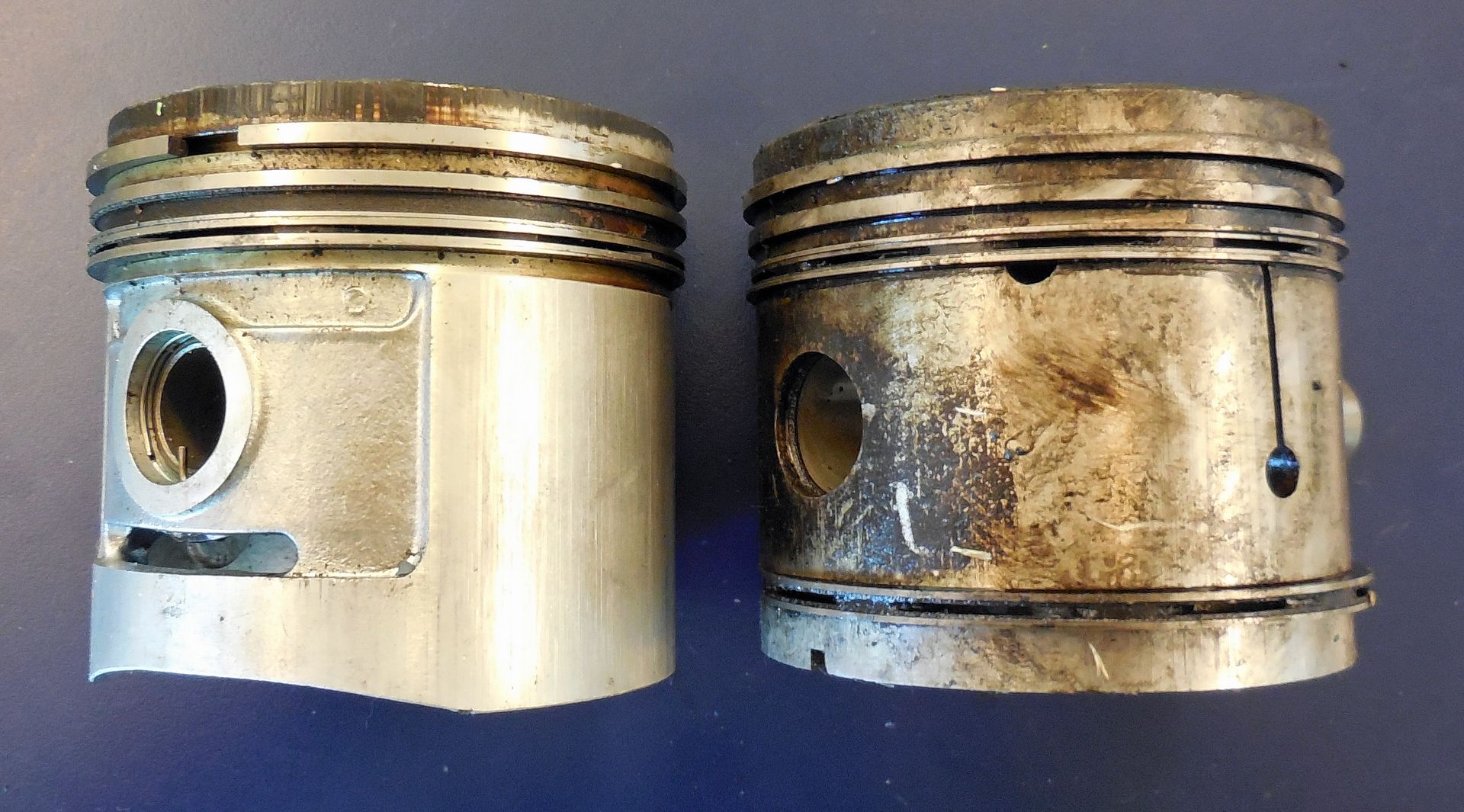
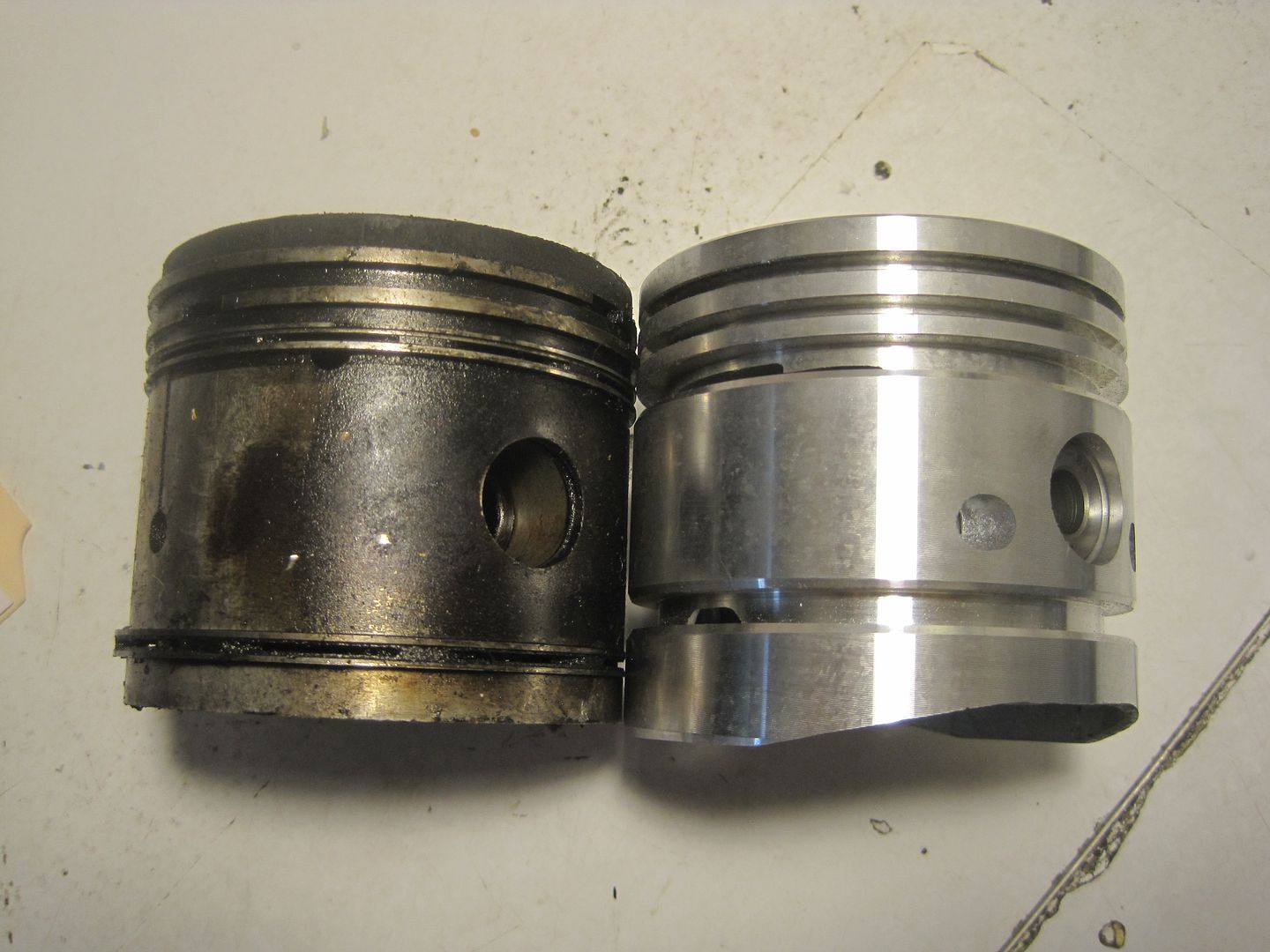
Quote: "That fourth ring helps stabilize the long skirt on a 4-ring...."
Not so! A piston ring, any ring, has to float freely in it's groove to do it's job-a stuck ring causes blow-by and/or high oil consumption. Since the ring is free-floating, it cannot impart any force to the piston, "stabilizing" or otherwise. Actually, the piston is stabilizing the ring, holding it square to the cylinder for the best ring-to-wall contact. Excessive piston clearance allows the piston to rock, "tipping" the ring thus causing it to lose full contact with the cylinder wall and wearing the ring face.
Again, a ring can't stabilize a piston. Now, some old school one piece oil rings had a thin 'zig-zag' type expander behind the ring; usually found on re-ring sets for worn piston skirts and/or cylinder walls, as I remember. Could this little strip of metal "stabilize" the piston, holding it centered in the bore (the piston skirt not touching the cylinder wall)? I doubt it. At mid-stroke, with the rod angled 1 7/8"-2" from center, and several hundred pounds of combustion pressure on the piston, I think the skirt is going to contact the cylinder wall! Same when the crank is pushing the piston up on the exhaust and compression strokes. If all that force on the piston skirt is transferred to the ring (to"stabilize" the piston), we're going to have some extremely short ring life!