
Original Type Grease Fitting Giving Me a Fit

shew01

Well-known member
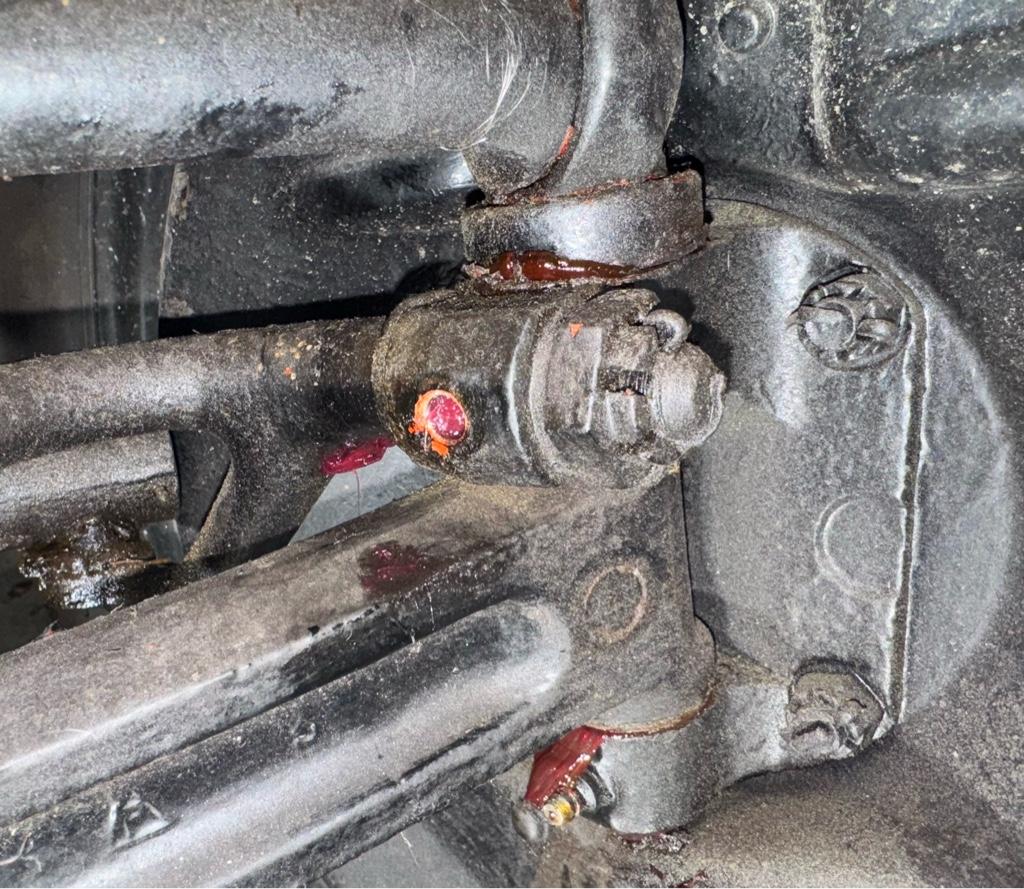
I recently purchased a 31 sedan, and I’m greasing it for the first time. This top grease fitting for the the front driver side spindle doesn’t want to take grease, and when I try to force grease into it, the hydraulic pressure of the grease blows the fitting out of its seat. How can I grease this joint?
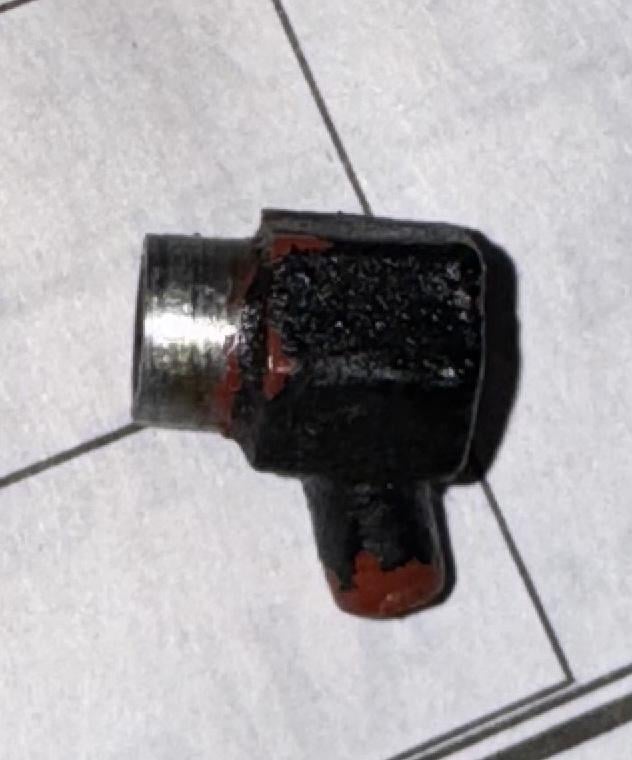
b2a847cf6fb4ccbcfe2c555a91b12aab.jpg

6ef6d9a93dbbf5a29f5ea201ad562875.jpg


Sent from my iPhone using Tapatalk
 
Well, I guess this is one way to do it. I used a heat gun on it for about two minutes ; then I pushed a lot of grease through the fitting (while it was in the mood to take grease) in hopes of forcing out the clog so I won’t have problems next time.

It was crude, but effective.

c158380a06bcc602c664051171db77fa.jpg


Sent from my iPhone using Tapatalk
 
I recently purchased a 31 sedan, and I’m greasing it for the first time. This top grease fitting for the the front driver side spindle doesn’t want to take grease, and when I try to force grease into it, the hydraulic pressure of the grease blows the fitting out of its seat. How can I grease this joint?

b2a847cf6fb4ccbcfe2c555a91b12aab.jpg

6ef6d9a93dbbf5a29f5ea201ad562875.jpg


Sent from my iPhone using Tapatalk
If just a driver why not tap and put modern fitting threaded like the other one you have..
 
If just a driver why not tap and put modern fitting threaded like the other one you have..


I tried changing my (other)Victoria to Zerks a while back and gave up. Several fittings were stubborn so I left them original. As luck would have it, I can’t find my stash of Zerks today. And I don’t have any taps.


Sent from my iPhone using Tapatalk
 
if you can get the part off the car and clean it up, I say braze the hole shut, redrill and press in a new original fitting. 90 plus years of people yanking and hydraulic pressure makes em pop out if they are press fit.
 
You may try to “knurl” the grease fitting where it fits into the spindle. This will increase the diameter of the fitting so it’s a tighter fit into the spindle. The easiest way may be to whack it with a center punch around the diameter in 4-5 places. The center punch will put a dent in the fitting, but will raise up the metal around the point of impact. If you mess it up, new ones from suppliers are cheap. Good luck
 
Any one ever had the bushing spin across the opening? Just wondering....
I took apart a front end and the holes in the bushings were not lined up with the grease holes. All four bushings. I interpreted this as the last person to rebush those spindles did not know what they were doing.
 
You may try to “knurl” the grease fitting where it fits into the spindle. This will increase the diameter of the fitting so it’s a tighter fit into the spindle. The easiest way may be to whack it with a center punch around the diameter in 4-5 places. The center punch will put a dent in the fitting, but will raise up the metal around the point of impact. If you mess it up, new ones from suppliers are cheap. Good luck


Good idea. I finally found my stash of new grease fittings, but the punch sounds like a great idea.


Sent from my iPhone using Tapatalk
 
I took apart a front end and the holes in the bushings were not lined up with the grease holes. All four bushings. I interpreted this as the last person to rebush those spindles did not know what they were doing.


[emoji12]

Yeah, I’ve found a few “non-stock” items on this car too.


Sent from my iPhone using Tapatalk
 
Alemite fittings are by nature designed to have the "force" of the gun behind them - to keep them in place. Think of them not as a "fitting" but rather a conduit.

Ford violated the essential nature of alemite in the design of the fitting in question - you can't use the "gun" to hold the conduit in place.

I've used a "C" clamp a couple of times - on those where it can be applied. The suggestion to centerpunch the shank is a good one but a bit "tender" to be applied in practice. (prone to the fitting launching sideways under the punch.)

Similarly, one can "pein" the hole on the part surface using either the punch or the ball pein itself. If you can't expand the fitting, contract the hole.

I've tried using the tapered punch INTO the hole in the fitting to "swell" the body where it presses in. This works too but you may swell it so much it won't fit the hole.

The best functional solution is to thread the hole and use a Zerk fitting - it obviates Henry's design - but that wasn't the best anyway.

One expects that Ford Repair Shops had a steady supply of "new" Alemites in this pattern for exactly this sort of challenge.

Joe K


Thanks for the response. Good ideas.


Sent from my iPhone using Tapatalk
 
I threaded mine for the modern zerx with the spring loaded ball that way you keep water and dirt out of the fitting the original ford 1 doesn't have the spring loaded ball and dirt gets inside the fitting.
 
The original grease fittings on a Model A were an earlier version of the modern Zerk fittings with the ball check valve.
 
My roadster had been fitted with plastic spindle bushes. The problem with these was an interference fit tight enough to prevent rotation in the housing did not occur. So the holes for grease had rotated out of line on all 4 bushes, when I dismantled them. I think acetal plastic may have been rigid enough but the bushes looked like some type of nylon or HDPE. Too flexible to stay in place. I just replaced with bronze bushes reamed to size.
SAJ in NZ
 
Back
Top