
You are using an out of date browser. It may not display this or other websites correctly.
You should upgrade or use an alternative browser.
You should upgrade or use an alternative browser.
Todays Quiz !
- Thread starter fordlovr
- Start date


petehoovie
Well-known member
Looks **** a 1935 Ford grille....Could it be a '35 Ford Flathead V8 powered airplane?

fordlovr
Senior Member
Looks **** a 1935 Ford grille....Could it be a '35 Ford Flathead V8 powered airplane?
Getting close


51 MERC-CT
Well-known member


V8COOPMAN
Well-known member
Its a v8 powered Arrow Sport
Nnnnnot quite! THIS yellow example (pictured hanging in a terminal at San Francisco Intl., SFO) is a V8-powered Arrow Sport. That is it's black radiator hanging-down between the gear legs. DD
1939 pickup truck
Member
Am I 'seeing things' or is the fuselage cut off behind the cabin?
If so, it's a prop driven car.
Actualy, it is an aircraft cabin above the wing, with twin tail booms.
Looking forward to learning much more about this unique FORD bird
If so, it's a prop driven car.
Actualy, it is an aircraft cabin above the wing, with twin tail booms.
Looking forward to learning much more about this unique FORD bird

VeryTangled
Well-known member
Hi Everyone, Yeah but that aircraft cabin has a lot of Ford "flavorings." Obviously the grill, but to my eye the area above the rear-most side cabin window, and the slope above that area towards the back of the "cabin" feel "Ford-ish."
I was also thinking there is a lot of drag going on there! And if there are really auto parts in there, like body-parts, they are sorta heavy.
Shades of the thread about "worse hobbies".
I was also thinking there is a lot of drag going on there! And if there are really auto parts in there, like body-parts, they are sorta heavy.
Shades of the thread about "worse hobbies".
V8COOPMAN
Well-known member
What is this? I know its an Aeroplane!Take note of the grill. No Google or Wikipedia allowed . I have the answer , and am sure some of you will too.
OK, times up!
It's a McGaffey Aviate......only one built, if I remember correctly. If you'll note the propeller pitch, it turns CW as viewed from the front. Most-likely gear-driven off of the REAR end of the flathead. DD

moefuzz
Senior Member
.
Coopman, I didn't find any conclusive info regarding whether the
Avaite was geardrive, belt driven or direct driven.
I did find that other experimentals that used Ford V8's were often limited to
or recommend to maximum engine speed of around 3050 rpm.
Others were pushers and easily driven off the rear of the crank/engine.
Other models in the day and of the style were gear driven but that gave way to belt
drive in order to save the weight of the rather heavy duty gear drive that both reversed
the rotation and halved the prop speed.
Other similiar models used Plymouth, Hudson/Terraplane and Studebaker inline flat 6
engines with either gear or the later belt drive.
This picture is from a 1935 French magazine,
The article was attached but it's all in french so....
So the question is,
Is the prop direct driven or front gear driven?
Is the visible shaft taken off the back of the engine from a gear
or belt drive which would mean that:
Is the engine offset?
Is the rod (a set) used for structure support of rad/cowel/prop?


The story goes that McGaffy wanted do build an aircraft out of parts that you could buy off the shelf at the local auto supply.

.
"The McGaffey Aviate—was an effort to meet the American public's hope that flying an airplane could be as easy and inexpensive as driving a car.
Not only did the aviation public wish to have an airplane as easy to buy as an automobile (the rock bottom price on a Model T was only $295), the manufacturers of private aircraft were equally eager to have their products perceived as airborne automobiles, with equal utility and even greater social cachet. Piper, Taylorcraft, Aeronca, and others dolled their airplanes up with phony grills, wheels instead of sticks, and interiors as much like cars as possible. Even upscale aircraft like Loening Amphibians were decorated and spoken of in limousine terms.
The lust for the best of both possible worlds also resulted in several attempts to combine the two in one vehicle, as best exemplified by the Fulton Airphibian and Molt Taylor's jewel, the Aerocar.
This infectious passion overcame even the director of the U.S. Bureau of Air Commerce, Eugene L. Vidal, a very experienced pilot trained in the Army Air Service, with a strong background in commercial air transportation. In a fit of enthusiasm, Vidal called for a national competition for an aircraft that would be in the $700 price range: FAPD (Fly-Away Pipe Dream). It was also to be "foolproof —an achievement that still eludes all manufacturers. Vidal probably knew that, while what he was asking for was unachievable, he was certain to reap a harvest of interest in aviation. The winner of the competition was the twin-boom pusher Stearman Hammond using a Menasco engine, but it was considerably over the target price.
A more realistic competitor was the McGaffey Airplane Development Company's neat little Aviate, which used a converted Ford V-8. Neil McGaffey built the airplane in Pasadena, and Vance Breese flight-tested it at Mines Field in Los Angeles.
The announced price on the Aviate was a mere $1625. McGaffey planned to sell the engine, nominally rated at 100 horsepower but more likely generating about 95, for $350. The pod-like cabin, which featured a 1935-Ford-style grill forward and twin booms aft, carried two people. I've been told that Claire Vance had a hand in the design, and the aircraft is similar in outline to his famous Bendix entry.
The announced performance for the Aviate was creditable, with a top speed of 115 miles per hour, a cruise of 100, and a landing speed of only 38. The 34-foot-span, fabric-covered wing was built of solid spruce spars and metal ribs, with the rest of the aircraft almost all metal. The automobile motif was carried further with the use of a standard automobile radio, Ford brake drums, and other smaller components.
The Aviate appeared in mid-1935, and was in existence at least through August 1938. It would be interesting to learn of its ultimate disposition.
For the buffs, the darker sections in the picture are battleship grey and the lighter are ivory grey, all trimmed in "green—for McGaffey—green."
Capt. Charles Spencer (Pan Am) wrote to say that his father, Capt. C. C. Spencer (Pan Am, Ret.), was a partner in the design. The senior Spencer is still flying actively with the California Forest Service. Other automobile-engined aircraft during the period included the Fahlin Plymocoupe, with a six-banger Plymouth engine; the Ford Arrow; the Campbell F (a really sleek airplane); the Horace Keene Ace; and others; but none caught on. "
.
Coopman, I didn't find any conclusive info regarding whether the
Avaite was geardrive, belt driven or direct driven.
I did find that other experimentals that used Ford V8's were often limited to
or recommend to maximum engine speed of around 3050 rpm.
Others were pushers and easily driven off the rear of the crank/engine.
Other models in the day and of the style were gear driven but that gave way to belt
drive in order to save the weight of the rather heavy duty gear drive that both reversed
the rotation and halved the prop speed.
Other similiar models used Plymouth, Hudson/Terraplane and Studebaker inline flat 6
engines with either gear or the later belt drive.
This picture is from a 1935 French magazine,
The article was attached but it's all in french so....
So the question is,
Is the prop direct driven or front gear driven?
Is the visible shaft taken off the back of the engine from a gear
or belt drive which would mean that:
Is the engine offset?
Is the rod (a set) used for structure support of rad/cowel/prop?
The story goes that McGaffy wanted do build an aircraft out of parts that you could buy off the shelf at the local auto supply.
.
"The McGaffey Aviate—was an effort to meet the American public's hope that flying an airplane could be as easy and inexpensive as driving a car.
Not only did the aviation public wish to have an airplane as easy to buy as an automobile (the rock bottom price on a Model T was only $295), the manufacturers of private aircraft were equally eager to have their products perceived as airborne automobiles, with equal utility and even greater social cachet. Piper, Taylorcraft, Aeronca, and others dolled their airplanes up with phony grills, wheels instead of sticks, and interiors as much like cars as possible. Even upscale aircraft like Loening Amphibians were decorated and spoken of in limousine terms.
The lust for the best of both possible worlds also resulted in several attempts to combine the two in one vehicle, as best exemplified by the Fulton Airphibian and Molt Taylor's jewel, the Aerocar.
This infectious passion overcame even the director of the U.S. Bureau of Air Commerce, Eugene L. Vidal, a very experienced pilot trained in the Army Air Service, with a strong background in commercial air transportation. In a fit of enthusiasm, Vidal called for a national competition for an aircraft that would be in the $700 price range: FAPD (Fly-Away Pipe Dream). It was also to be "foolproof —an achievement that still eludes all manufacturers. Vidal probably knew that, while what he was asking for was unachievable, he was certain to reap a harvest of interest in aviation. The winner of the competition was the twin-boom pusher Stearman Hammond using a Menasco engine, but it was considerably over the target price.
A more realistic competitor was the McGaffey Airplane Development Company's neat little Aviate, which used a converted Ford V-8. Neil McGaffey built the airplane in Pasadena, and Vance Breese flight-tested it at Mines Field in Los Angeles.
The announced price on the Aviate was a mere $1625. McGaffey planned to sell the engine, nominally rated at 100 horsepower but more likely generating about 95, for $350. The pod-like cabin, which featured a 1935-Ford-style grill forward and twin booms aft, carried two people. I've been told that Claire Vance had a hand in the design, and the aircraft is similar in outline to his famous Bendix entry.
The announced performance for the Aviate was creditable, with a top speed of 115 miles per hour, a cruise of 100, and a landing speed of only 38. The 34-foot-span, fabric-covered wing was built of solid spruce spars and metal ribs, with the rest of the aircraft almost all metal. The automobile motif was carried further with the use of a standard automobile radio, Ford brake drums, and other smaller components.
The Aviate appeared in mid-1935, and was in existence at least through August 1938. It would be interesting to learn of its ultimate disposition.
For the buffs, the darker sections in the picture are battleship grey and the lighter are ivory grey, all trimmed in "green—for McGaffey—green."
Capt. Charles Spencer (Pan Am) wrote to say that his father, Capt. C. C. Spencer (Pan Am, Ret.), was a partner in the design. The senior Spencer is still flying actively with the California Forest Service. Other automobile-engined aircraft during the period included the Fahlin Plymocoupe, with a six-banger Plymouth engine; the Ford Arrow; the Campbell F (a really sleek airplane); the Horace Keene Ace; and others; but none caught on. "
.
Attachments


Last edited:
51 MERC-CT
Well-known member
As was this engine out of an Arrow Sport.OK, times up!
It's a McGaffey Aviate......only one built, if I remember correctly. If you'll note the propeller pitch, it turns CW as viewed from the front. Most-likely gear-driven off of the REAR end of the flathead. DD

fordlovr
Senior Member
OK, times up!
It's a McGaffey Aviate......only one built, if I remember correctly. If you'll note the propeller pitch, it turns CW as viewed from the front. Most-likely gear-driven off of the REAR end of the flathead. DD
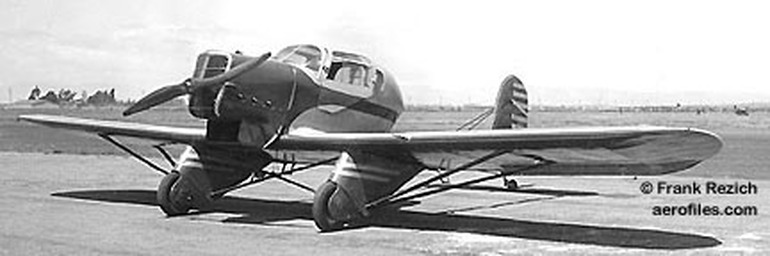
Wow!v8coopman and moefuzz win a chocolate fish each. Certainly took the wind out of my sails.My information says it used the v8 ,radiator, wheels and tyres along with some other parts.Built August 1935. Also ''Aviate'' .get it? A vee eight, aviation. It survived until at least 1938. Thanks
Attachments


V8COOPMAN
Well-known member
Ford was not involved in this project in any way. The Company walked away from the airplane business in 1933 when Henry's test pilot was killed test flying a monoplane prototype.
That would have been Harry Brooks, Henry's test pilot. He ran out of fuel while piloting this Ford experimental "FLIVVER". DD

VeryTangled
Well-known member
Hi Everyone, Great thread!
Found a little more and another photo (on Flickr)...
From: http://mysteriousbill.weebly.com/mcgaffey-aviate.html
McGaffey Aviate- 1935
2seater
85hp Ford V-8
Span: 34'0"
Length: 23'9"
Load: 558 lbs
Max Speed 115 MPH
Cruising Speed 100 MPH
Landing Speed 38 MPH
Range: 400 miles
Built by Fredd M. Smith and Neill McGaffey. Twin-boom, single tail, panted wheels. One made. It not only had an auto engine, but instruments, tires, brakes and many small components were automotive, as well, giving meaning to its name as a play on "a V-8."
